
New range of colours for 26YM Honda ADV350
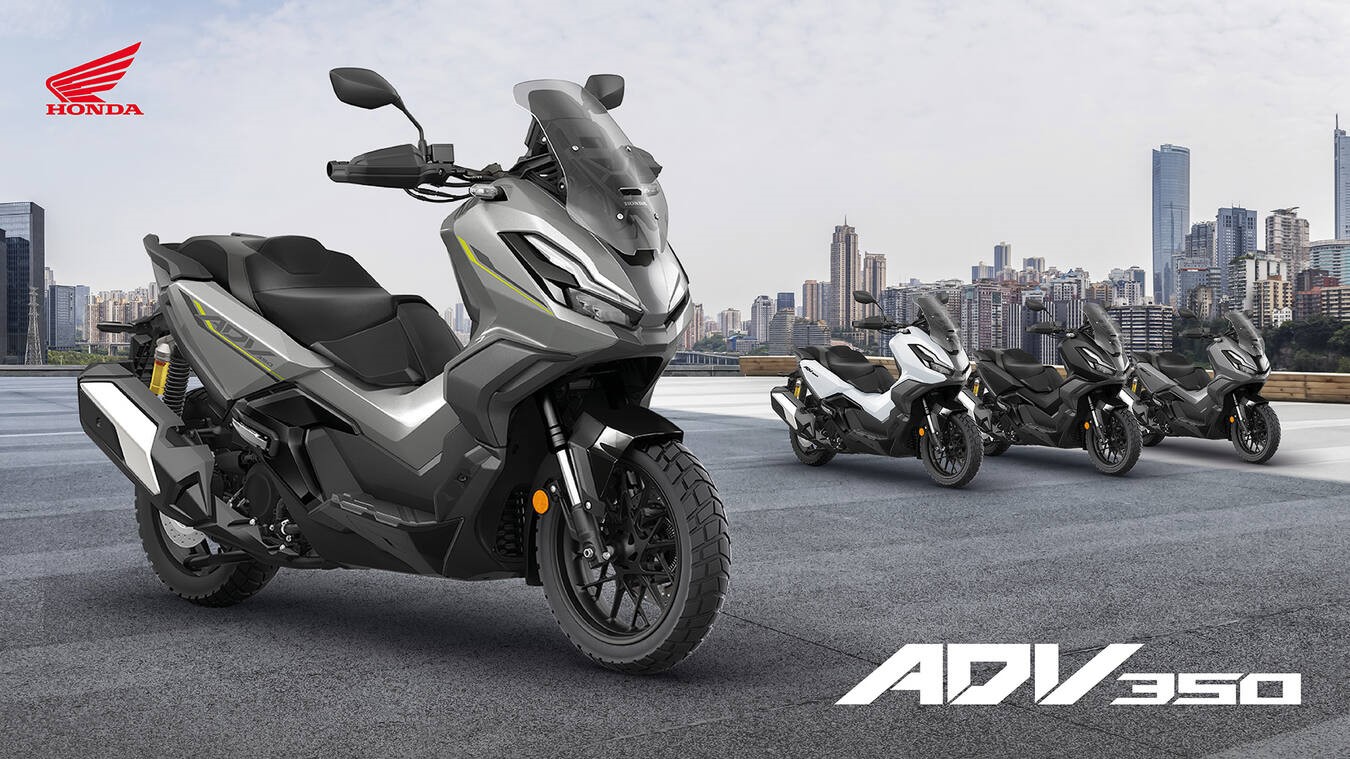
- Four new contemporary colours accentuate the unique rugged lines of the ADV350
- Refresh for Europe’s best-selling scooter over 300cc in 2024 and 2025
- Another success story for Honda Italia Industriale SpA in Atessa, Italy
Honda has announced a refreshed colour palette for its 26YM ADV350 scooter. First introduced in 22YM, the ADV350 mixes the sophistication of a premium scooter with the ability to deal with the roughest of tarmac – and comes wrapped in rugged adventure styling.
The ADV350 takes its styling cues directly from the X-ADV, which is Honda’s best-selling motorcycle in Europe in 2025 with over 10,000 sales – a number which makes it the second best-selling motorcycle on the market. The ADV350 has been a similarly big hit – it was the biggest selling scooter over 300cc in Europe in 2024.
It success rests on its unique adventure-style design backed up by rock-solid fundamentals and comprehensive list of premium equipment: motorcycle-style 37mm USD forks, tubular steel frame, remote reservoir rear shocks, ample ground clearance, underseat storage space for two full-face helmets, a USB charging port, Smart Key operation, height-adjustable screen and LCD instrument panel integrated with Honda RoadSync to keep riders connected while on the move.
There’s plenty of acceleration on tap, for urban and highway use. With exhaust and ECU updates, the 330cc enhanced Smart Power+ (eSP+) SOHC four-valve engine delivers peak power of 21.5kW and 31.5Nm torque.
Safety is provided in the form of standard Honda Selectable Torque Control (HSTC) and both Emergency Stop Signals and auto-cancel indicators are standard equipment.
The ADV350 is manufactured at Honda Italia Industriale SpA on the Adriatic coast of Italy. With a history that dates back to 1971, the factory has produced 40 different types of motorcycle and 30 different scooter models, and is home of both the ADV350 and the perennially popular SH series. To see behind the scenes at Atessa please visit: Honda's Italian Connection – YouTube.
The 26YM ADV350 will be available in the following new colour options:
- *NEW* Pearl Falcon Grey
- *NEW* Iridium Gray Metallic
- *NEW* Mat Pearl Cool White
- *NEW* Mat Coal Black Metallic
26YM Honda ADV350
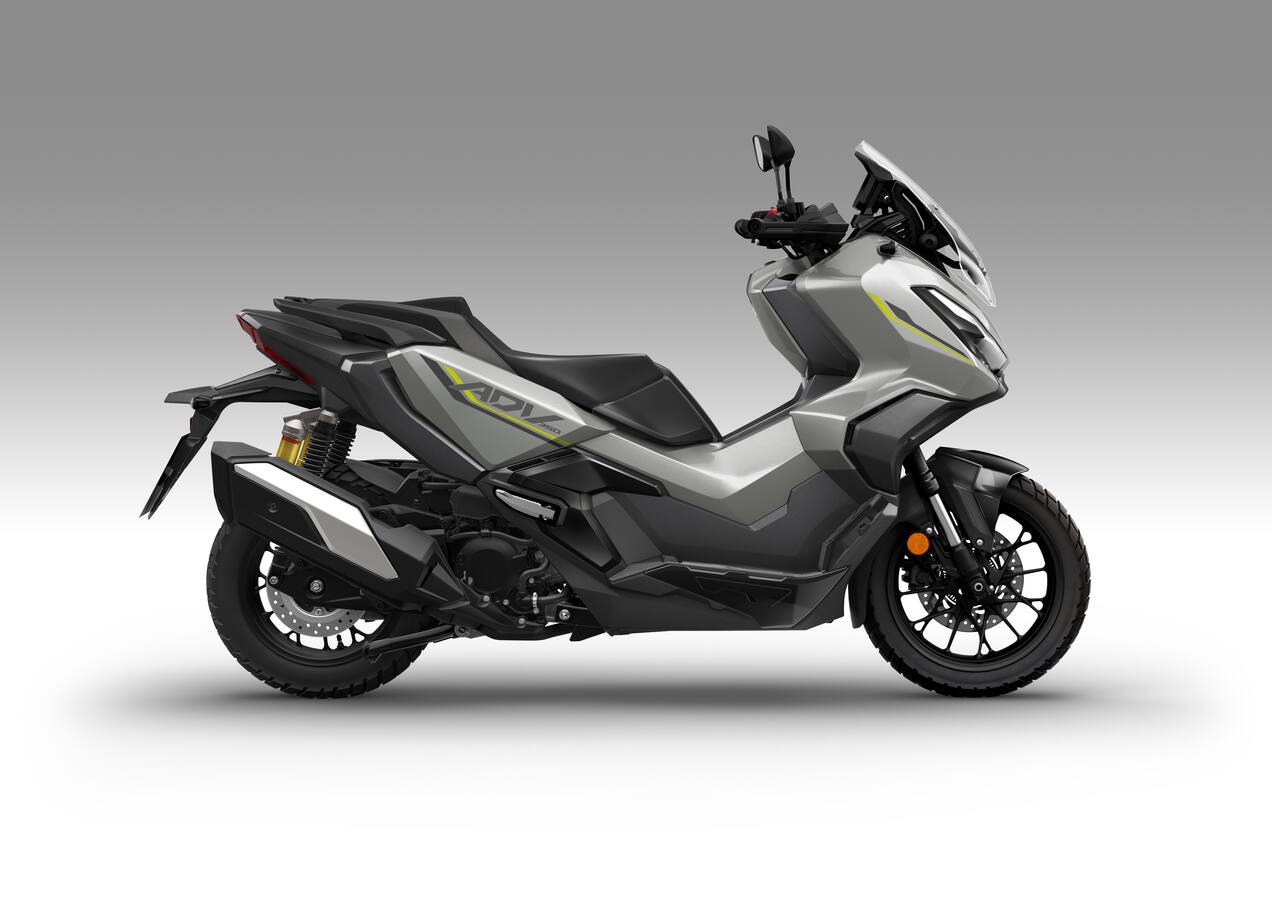
Model Updates: The ADV350 mixes the tough adventure style of its X-ADV sibling with a rugged chassis specification that includes a tubular steel frame and 37mm USD forks. And it’s proven to be a popular combination; the ADV350 is Europe’s best-selling scooter over 300cc. Updated for 25YM, the ADV350 gained spring preload-adjustable remote reservoir rear shocks, a five-inch TFT screen with Honda RoadSync smartphone connectivity and four-way toggle switch, storage compartment light and auto-cancelling indicators to bolster an already impressive specification list. Mechanically, the 330cc engine gained revised muffler internals, an upgraded catalyser, new ECU settings and an O2 sensor to help achieve Euro5+ status. Producing a healthy 21.5kW and 31.5Nm, with rear wheel grip managed by HSTC, the ADV350 is the perfect urban companion. The screen is height adjustable and there’s room for two full-face helmets under the seat. A USB socket in the glovebox and Smart Key operation are further practical touches. Four fresh new paint options add to its wide-ranging appeal for 26YM.
–
Contents:
- Introduction
- Model overview
- Key features
- Accessories
- Technical specifications
–
1. Introduction
In 2016, when Honda unveiled the X-ADV – part big-bore scooter, part adventure motorcycle and clothed in an all-new style of bodywork – a rich vein of desire was opened with a bike that Europe didn’t know it needed. As an example of genuine innovation, it has few equals in the past decade.
Its success has more than justified Honda’s decision to break that new ground. Taking this inspiration and injecting it into the scooter market, the ADV350 – unveiled for 22YM and manufactured at Honda Italia Industriale – mixed the sophistication and practicality of a polished scooter with rugged ADV style design. It was built around the concept of ‘New Urban Adventure’ and drew direct inspiration from the X-ADV.
And it landed just right. The ADV350 is a model that clearly appeals to a broad European demographic (especially younger riders), as over 35,000 units have been sold since its introduction. For its 25YM update, the ADV350 moved up the development curve through thoughtful updates to handling, performance, and technology. For the 26YM update, the ADV350 receives a completely new colour palette to keep the bike fresh and further its appeal.
As ever, the ADV350 is a scooter born ready to explore the city, and beyond.
–
2. Model Overview
With its tough stance the ADV350 already stands out from the homogenous crowd, with rugged angles and block colours that promote the off-road look. The X-ADV is its obvious styling benchmark, which itself takes notes from Honda’s CRF series of off-road performance machines.
Practicality has not been forgotten; there’s room for two full-face helmets under the seat (now with internal light), USB socket in the glovebox and convenience of Smart Key operation. The screen is four stage height-adjustable and a new, five-inch TFT display integrates Honda RoadSync smartphone connectivity with an intuitive four-way toggle control switch.
The adventurous styling showcases the ADV350’s unique front end, the riding position offers natural control and the chassis – with its tubular steel frame – is tuned to deliver agile steering, feedback and feel. 37mm USD forks, with top/bottom motorcycle style yokes and remote reservoir rear shocks – revised for 25YM to feature spring preload adjustability – bring premium bump-absorption performance.
Lightweight 15-inch front/14-inch rear wheels wear 120/70-15 front and 140/70-14 rear block-pattern tubeless tyres, allowing the ADV350 ample grip across all conditions. A 256mm single disc is matched to a 240mm rear.
There’s plenty of acceleration on tap, for urban and highway use. With exhaust and ECU updates, the 330cc, enhanced Smart Power+ (eSP+) SOHC four-valve engine delivers peak power of 21.5kW and 31.5Nm torque.
Comprehensive safety is provided in the form of standard Honda Selectable Torque Control (HSTC), Emergency Stop Signals and auto-cancel indicators.
The 26YM ADV350 will be available in the following colour options:
- *NEW* Pearl Falcon Grey
- *NEW* Iridium Gray Metallic
- *NEW* Mat Pearl Cool White
- Mat Coal Black Metallic
–
3. Key Features
3.1 Styling & Equipment
- Dual LED headlights lead the adventure style, set high above the front wheel and towards the edge of the body
- Five-inch TFT display, with four-way toggle switch control and Honda RoadSync functionality
- Everyday practicality comes in the form of a (now illuminated) under-seat compartment and a four-stage height-adjustable screen
- Emergency Stop Signal (ESS) warns other road users of sudden braking
The ADV350’s styling gives more than a slight taste of adventure. Dual LED headlights (all lighting is LED) are set high above the front wheel, towards the edge of the body, with the fairing sides cut out to show off the USD forks. Further accentuating the off-road feel, the painted panels are set high on blacked-out lower and rear seat cowl, giving an impression of the higher centre of gravity of machines like the X-ADV and even competition-ready CRFs.
A host of detail features are found around the ADV350 to add genuine versatility. The screen adjusts easily with a slide-lock mechanism through four stages and 133mm of travel. In the high position airflow is controlled, travelling around the shoulders to reduce fatigue during longer, higher speed journeys. For city environments – where some cooling air is often appreciated, as is open visibility – the low position is perfect.
There’s plenty of room under the seat – 48L in total – which means two full-face helmets can tuck neatly away. The compartment can be divided using a separator plate, to suit the owner’s preference and the new internal light is a useful addition. A USB socket is also found in the front left glove box, for secure smartphone charging. Seat height is an easy-to-manage 795mm. The 25YM update saw detail changes that increased the ease of installing Genuine Honda Accessories, such as pre-wiring for the Fog Lights and Attachment Stays for the Floor Pipes built in.
A five-inch full colour TFT screen uses optical bonding to improve visibility in bright sunlight. By sealing the gap between the cover glass and TFT screen with resin, glare is reduced, and backlight transmittance improved. The unit is also compatible with IOS and Android smartphones thanks to standard Honda RoadSync connectivity.
This feature – alongside an easy-to-use, backlit four-way toggle-switch on the left handlebar – allows straightforward, on-screen turn-by-turn navigation as well as the option (via a Bluetooth helmet headset) for the rider to make calls or listen to music. All an owner has to do is download the Honda RoadSync app from either the Play Store or the App Store, connect to the ADV350, and go.
Another convenient feature is the Smart Key, which controls the main ignition switch knob and seat locking from the rider’s pocket, and automatically locks the ADV350 when the rider walks away. It also manages the optional 50L Smart top box; with the Smart Key present the box is unlocked. An answer back switch also flashes the indicators for easy location.
The Emergency Stop Signal (ESS) system also operates (and self-cancels) the rear indicators during a hard-stop situation, alerting road users behind. The indicators also auto-cancel in normal use for heightened convenience in urban environments.
3.2 Chassis
- Lightweight tubular steel frame, features motorcycle-style 37mm USD forks
- Remote reservoir rear shocks – now spring preload adjustable – deliver agile handling and natural control
- Six-spoke cast aluminium wheels run block-pattern tubeless tyres
- Disc brakes front and rear
As a scooter designed to handle the rough-road rigours of the city – and even light off-road conditions – the ADV350’s chassis is built to be confidence-inspiring. A lightweight tubular steel frame provides core strength; wheelbase is set at 1520mm, with rake of 26.5° and 90mm trail. Kerb weight is 186kg.
Motorcycle-style 37mm USD forks (with 125mm stroke) are clamped by motorcycle-style top and bottom yokes, increasing rigidity for the entire front end. The 25YM update saw the ADV350 gain twin remote reservoir shock absorbers, adjustable for spring preload, which offer excellent suspension reaction on a variety of road surfaces. With 130mm travel, they work a one-piece aluminium swingarm.
The wheel design is unique in the Honda scooter range. Cast aluminium and finished in black, the lightweight 15-inch front/14-inch rear use an X-shaped 6-spoke criss-cross pattern. 120/70-15 front, and 140/70-14 rear block-pattern tubeless tyres offer a supple ride thanks to wide tread width and ample air volume. A 256mm single disc performs stopping duties up front, mated to a 240mm rear, with the benefit of two-channel ABS for braking control.
–
3.3 Engine
- 330cc enhanced Smart Power+ (eSP+) SOHC four-valve engine
- Peak power of 21.5kW @ 7,500rpm with 31.5Nm torque @ 5,250rpm
- 11.7L fuel tank and 28.6km/l economy (WMTC mode) gives a potential 330km+ range
The 330cc, enhanced Smart Power+ (eSP+) SOHC four-valve engine achieves both high environmental performance and strong output characteristic – for use in and out of the city – through comprehensive adoption of low friction technology.
Peak power of 21.5kW @ 7,500rpm is matched to 31.5Nm torque @ 5,250rpm. Bore and stroke are set at 77mm x 70.8mm, with compression ratio of 10.5:1. A roller-type rocker arm, plain journal crank bearings and sealed crankcase deliver long-term reliability together with strong performance. To enhance piston cooling, an oil jet, as used on the CRF450R, sprays oil right to the back of the piston, advancing ignition timing and improving combustion performance. Oil capacity is 1.8 litres.
Air is supplied via a 5.5 litre airbox and a 36mm throttle body feeds fuel/air mixture to 28mm inlet valves. The intake port draws air in efficiently, using a ‘tumble’ flow within the cylinder for consistent fuel combustion and exhaust gases are expelled via a straight exhaust port.
Internal friction is reduced through a 5mm offset cylinder, hydraulic cam chain adjuster and use of a scavenger pump. Used on high performance machines, the pump lowers the internal pressure within the engine, reduces oil agitation and decreases pumping losses and internal rotational friction.
A balancer shaft further reduces vibration and contributes to a smooth, enjoyable ride. An automatic centrifugal clutch works V-Matic transmission (with ratios set for fast low speed reaction and smart acceleration) and belt final drive.
The ADV350’s engine is also equipped with two level Honda Selectable Torque Control (HSTC). The system detects any difference between the front and rear wheel speeds, calculates the slip ratio and then controls engine torque via the fuel injection to regain rea wheel traction. HSTC can be switched ON/OFF via a switch on the left handlebar. A ‘TC’ indicator in the display blinks when the system is managing the grip.
Fuel economy is a frugal 28.6km/l (WMTC mode); the 11.7L tank capacity gives a potential 330km+ range.
–
4. Accessories
A full range of Genuine Honda Accessories are available for the ADV350 either individually or in carefully curated packs for user convenience:
The Comfort Park is versatile collection of parts designed to enhance rider comfort and convenience:
- Deflector Set
- Heated Grips
- Console Bag
- High Screen
The Style Pack builds in additional protection and looks:
- Optional Seat
- Stainless Plate
- Handlebar Holder
The Adventure Pack is a robust, purpose-built accessory set designed to significantly boost the bike’s off-road appearance and enhance its road presence and visibility:
- Side Pipes
- Led Fog Lights and Attachments
The Urban Pack is designed to enhance urban commuting capability by combining cutting-edge technology with practical, city-focused features and increasing carrying capacity:
- Rear Carrier
- 50L Smart Top Box with electronic opener and backrest
- Aluminium Cover for Top Box
- Loud Security Buzzer
Also available:
- U Lock
- Outdoor Cover
–
5. Technical Specifications
|
ENGINE |
|
|
Type |
Liquid-cooled four-stroke, four-valve SOHC single, eSP+ |
|
Displacement |
330 cc |
|
Bore x Stroke (mm) |
77 mm x 70.8 mm |
|
Compression Ratio |
10.5:1 |
|
Max. Power Output |
21.5 kW at 7,500 rpm |
|
Max. Torque |
31.5 Nm at 5,250 rpm |
|
Noise Level (dB) |
max. 81.7 dB |
|
Max Speed |
133 km/h |
|
Oil Capacity |
1.8 L |
|
Starter |
E-Starter |
|
FUEL SYSTEM |
|
|
Carburation |
PGM-FI Fuel Injection |
|
Fuel Tank Capacity |
11.7 L |
|
CO2 Emissions WMTC |
79 g/km |
|
Fuel Consumption |
3.4 L/100km |
|
ELECTRICAL SYSTEM |
|
|
Battery Type |
AGM YTZ10 |
|
Battery Capacity |
12 V 8.6 Ah |
|
DRIVETRAIN |
|
|
Clutch Type |
Automatic centrifugal clutch dry type |
|
Transmission Type |
CVT |
|
Final Drive |
V-Belt |
|
FRAME |
|
|
Frame Type |
Tubular steel underbone |
|
CHASSIS |
|
|
Dimensions (L'W'H) |
2,200 mm x 895 mm x 1,295 mm |
|
Wheelbase |
1,520 mm |
|
Caster Angle |
26.5° |
|
Trail |
90 mm |
|
Seat Height |
795 mm |
|
Ground Clearance |
145 mm |
|
Kerb Weight |
186 kg |
|
SUSPENSION |
|
|
Suspension Front |
37 mm Upside down forks 125 mm travel |
|
Suspension Rear |
Twin shock 130 mm travel |
|
WHEELS |
|
|
Wheels Front |
Cast aluminium |
|
Wheels Rear |
Cast aluminium |
|
Tyres Front |
120/70-15MC 56P |
|
Tyres Rear |
140/70-14MC 62P |
|
BRAKES |
|
|
ABS Type |
Two-channel ABS |
|
Brakes Front |
Twin piston Nissin caliper. 256 mm, single disc |
|
Brakes Rear |
Mono piston Nissin caliper. 240 mm, single disc |
|
INSTRUMENTS & ELECTRICS |
|
|
Instruments |
Five-inch TFT panel multi-information display |
|
Headlight |
LED |
|
Taillight |
LED |
|
Connectivity |
RoadSync |
|
USB |
USB-C |
|
Auto Winker Cancel |
Yes |
|
HSTC |
Two level + OFF |
|
Additional Features |
ESS, SMART Key, |
All specifications are provisional and subject to change without notice.
# Please note that the figures provided are results obtained by Honda under standardised testing conditions prescribed by WMTC. Tests are conducted on a rolling road using a standard version of the vehicle with only one rider and no additional optional equipment. Actual fuel consumption may vary depending on how you ride, how you maintain your vehicle, weather, road conditions, tire pressure, installation of accessories, cargo, rider and passenger weight, and other factors.
26YM HONDA X-ADV
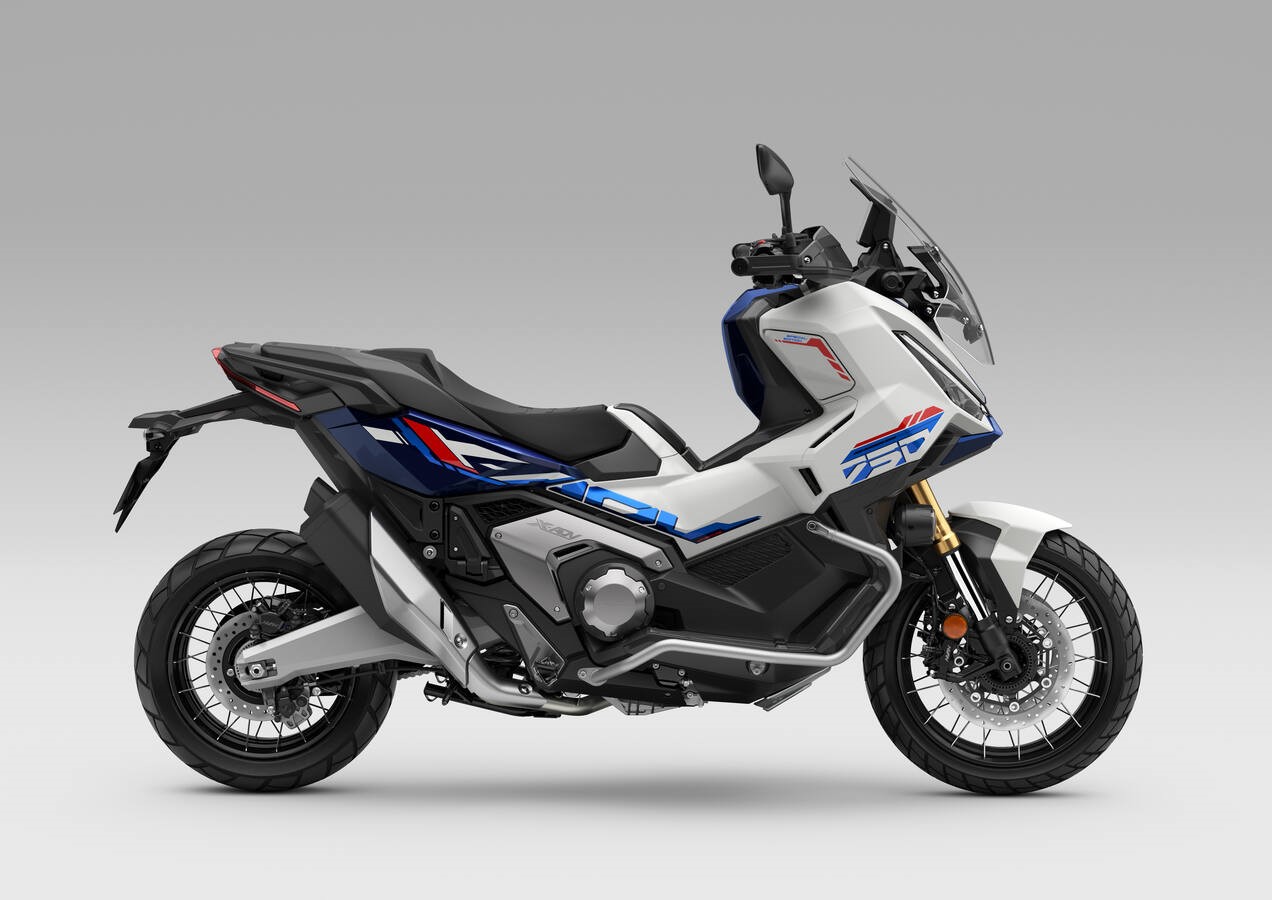
Model updates: The ground-breaking X-ADV uniquely mixes adventure bike ability and big-scooter usefulness and practicality. Updated for 25YM, it received a styling refresh with twin LED headlights that featured Daytime Running Lights with – in a world’s first for motorcycles – integrated indicators, plus standard-fit cruise control, and a Dual Clutch Transmission (DCT) upgrade for smoother low-speed response. And in alignment with Honda’s long-term environmental targets (and alongside use of other recycled materials around the bodywork), high-gloss biomass plastic Durabio was used for the fairing, reducing CO2 emissions during manufacture. Also constructed from DurabioTM, the screen adjusts easily with a single left hand through three stages. The X-ADV’s rich specification includes Throttle By Wire (TBW) management, four default riding modes with pre-set combinations of settings for Power, Engine Braking and Honda Selectable Torque Control refined for the model update. The seat base features an extra 10% urethane foam for comfort and smoother damper action, while the 22L seat storage compartment includes a USB-C socket, and a glovebox adds further convenience. A revised 5-inch TFT display allows smartphone connectivity via Honda RoadSync through an intuitive – and backlit – four-way toggle switch on the left handlebar. An all-new Special Edition colourway joins the 26YM paint options, guaranteeing that the X-ADV will continue to turn heads across Europe.
–
Contents:
- Introduction
- Model overview
- Key features
- Accessories
- Technical specifications
–
1. Introduction
It’s not often in the world of motorcycling that a fresh line of thinking emerges to create a new breed of machine. But Honda specialises in innovation and for 17YM unveiled a completely new concept, straight out of left field – the X-ADV.
The thought processes that led to its birth? Consider the attributes of the average adventure-style motorcycle – tough ‘go-anywhere’ appeal, an upright riding position giving superb visibility and remarkable all-round usefulness, work or play. Then look at the typical commuter: it might be a scooter or motorcycle, but in either case it will be easy to manage, nimble and loaded with convenience, efficiency and useful storage space. Honda’s forward-thinking engineers combined the two together, and something special happened.
The machine they created had a rugged, stylish SUV image fully at home navigating the urban sprawl. And while it was loaded with all the premium features that enable easy life in the big city, it also had the looks, engine power and chassis ability to inject every ride with the promise of adventure.
The X-ADV captured the essence of two-wheeled freedom in an exciting new form and garnered the attention of an army of riders around Europe, eager for something new, and has proved itself a genuine sales success.
And it has not stood still. In 21YM Honda upped the X-ADV’s engine performance, trimmed weight, enhanced looks and added even more usefulness; in 2023 the X-ADV was Honda’s second best-selling motorcycle in Europe, and since its introduction to the line-up, nearly 60,000 have been sold across the continent.
For 25YM the X-ADV received updates to style, tech, all-round usability, plus a new colour palette. It also adopted a more sustainable manufacturing process to continue its charge as an innovative two-wheeled pathfinder.
–
2. Model Overview
Long standing apart from the crowd, the X-ADV has always cut a unique shape. For the 25YM refresh, the bodywork was redesigned to introduce an even sharper, more aggressive look with a premium frontal light signature. Dual LED headlights feature highly visible Daytime Running Lights (DRL), which in a world’s first for motorcycles, also subtly integrated the bike’s indicators. For easy ground reach the seat is carefully contoured at the shoulders. The under-seat storage has a 22L volume and houses a USB-C charging point; there’s also a useful glovebox.
A 5-inch full colour TFT screen features a clear array of images, colourways and menu structures, and is designed for easy readability on bright days and features Honda RoadSync connectivity. Managed by an easy-to-use four-way lefthand backlit toggle switch, the rider can enjoy on-screen, turn-by-turn navigation in addition to other smartphone features. Cruise control was a useful 25YM addition for longer highway journeys and works exceptionally well with the DCT to provide a high-quality, less tiring ride when touring.
The parallel twin-cylinder engine blends strong low-to mid-range performance with easy manners and excellent fuel efficiency. Peak power is set at 43.1kW with an impressive 69Nm of torque. Throttle By Wire (TBW) serves up four default rider modes with pre-set combinations of settings for Power, Engine Braking and Honda Selectable Torque Control plus a ‘customisable’ USER option. The 3-level Honda Selectable Torque Control (HSTC) features newly refined inputs for its Gravel and Rain settings. The Dual Clutch Transmission (DCT) has automatic shifting schedules that integrate with the riding modes, as well as the option to select the favourite shift pattern in the USER set-up; it has also been updated for smoother low-speed response.
A tough chassis is comprised of a tubular steel frame, 41mm USD front forks, rear monoshock (with Pro-Link) and aluminium swingarm. A 17-inch front wheel is matched to a 15-inch rear with dual, radial-mount four-piston calipers braking up front.
The 26YM X-ADV will be available in the following colour options:
- Graphite Black
- Pearl Glare White
- Matte Deep Mud Gray
Also, a unique Special Edition X-ADV will be available in a *NEW* tricolour Mat Pearl Glare White special edition with blue and red graphic set, that channels Honda’s larger adventure bikes – the Transalp and Africa Twin.
–
3. Key Features
3.1 Styling & Equipment
- Sharp, slim and aggressive styling defined by twin-LED projector headlights with DRLs and subtly integrated indicators
- Full-colour 5-inch TFT screen, with backlit switchgear and Honda RoadSync smartphone connectivity
- Large 22L storage space houses an under-seat USB-C socket, with more space available from the glovebox
The X-ADV’s head-turning styling – conceived and developed by Honda’s R&D team in Italy – evolved in 21YM to become slimmer and sharper, the silhouette tight and deliberately upright, each body-panel honed with strong intent.
It moved on again for 25YM with an even more razor-edged look up front from a lithe fairing that defined the almost origami-like dynamism of interlocking angles and shaping. And, leading from the front, penetrating new dual LED projector headlights that feature Daytime Running Lights (DRLs) subtly integrate the indicators; Honda’s ‘hidden eye’ technique blacks out the area around projector lenses making the DRLs stand out. All other lighting is LED. In addition, Honda adopted a sustainable Durabio and other recycled plastics and rubber materials are used in the bodywork.
Honda has set “efficient use of resources” as part of its environmental targets and aims to achieve “100% sustainable material usage” by 2050. The 25YM X-ADV was the first Honda motorcycle model to actively use sustainable materials such as recycled plastics and biomass plastics that have a low environmental impact.
- Recycled materials from Honda automobile bumpers are used for the luggage box and seat bottom for the first time
- Pre-consumer recycled polypropylene material*[1] is used for the black-coloured cover
- The biomass plastic “DURABIO™”*[2] is used for the fairing and windscreen
- The world's first*[3] use of DURABIO™, a high-gloss colouring material, in motorcycle fairings reduces CO2 emissions from the conventional painting process
Ergonomically, the 820mm seat height (newly re-shaped for easy ground reach) and wide handlebar set at 940mm ensure a high eye point for riders for outstanding visibility. The seat base now features a 10% increase in the amount of urethane used to increase ride comfort, whilst a change in the layout of the seat damper has also improved the quality of the opening and closing motion of the unit.
For commuting or touring, the X-ADV’s link-type screen easily adjusts without tools through five positions from to maximise or minimise airflow. Redesigned, with a revised internal structure and controls, the number of adjustment steps has been reduced and the process streamlined. The previous model required 5 steps of operation with both hands, but this new model allows height adjustment with 3 steps of operation with one hand, further improving operability. The total height difference is 139mm, with an 11° rake between the highest and lowest points.
Premium technology, in the form of a 5-inch full colour TFT screen, uses optical bonding to improve visibility in bright sunlight. By sealing the gap between the cover glass and TFT screen with resin, glare is reduced, and visibility improved. The display itself is customisable between ‘Bar’, ‘Circle’ and ‘Simple’ display patterns and offers smartphone connectivity via the Honda RoadSync app.
Honda RoadSync allows straightforward, on-screen turn-by-turn navigation as well as the option (via a Bluetooth helmet headset) for the rider to make calls, listen to music or receive voice feedback of weather conditions. All an owner needs to do is download the free Honda RoadSync app from either the Play Store or the App Store, connect to the X-ADV, and go.
Tough plastic hand guards deflect wind and rain, while adding protection for hands and levers from stones when off-road. A shot-peened aluminium bash plate provides additional protection to the underside.
Cruise control integrates with the DCT smoothly and is very easy to use; activation is from the right switchgear, with ‘plus’, ‘minus’ and ‘resume’ set from the left. The under-seat 22L luggage space can accommodate a full-face helmet and is lit with an integral LED, placed to deliver uniform illumination without glare. For added convenience, a USB-C charging socket is located at the rear of the compartment. A centre stand – with tilt sensor – is fitted as standard and allows the X-ADV to be parked on an incline without fear of toppling.
For added convenience the X-ADV uses a Smart Key, which lives in the rider’s pocket and does away with the need to use a key for ignition, fuel cap and seat. With the Smart Key present, one push of the knob-type main switch powers the bike up and makes it possible to turn, giving the rider control of the ignition/steering lock and, via two rocker switches, the fuel cap and seat. It also has an ‘answer back’ function, which makes the indicators flash for easy identification from a distance, and locks and unlocks the optional Smart Top Box. A clutch mechanism in the main switch stops the handlebars unlocking by force for added security.
The rear indicators also have a self-cancelling Emergency Stop Signal (ESS) function. If negative acceleration of 6.0m/s2 is detected at a minimum speed of 53km/h with either brake working, the hazard lights flash to warn other road users a hard stop is in process. At the same speed the threshold is reduced if ABS is activated to a negative acceleration of over 2.5m/s2.
The indicators also auto-cancel. Rather than using a simple timer, the system compares front and rear wheel speed difference and calculates when to cancel the indication relative to the situation.
–
3.2 Engine
- Throttle By Wire control; peak power figure of 43.1kW with 69Nm torque
- Economic engine is capable of achieving 3.6l/100km fuel efficiency
- Restricted 35kW A2 compliant specification also available
The design of the X-ADV’s liquid-cooled, SOHC eight-valve parallel twin-cylinder engine ensures punchy performance in the low-to-mid range. A relatively long-stroke architecture and specially shaped combustion chambers combine with the high-inertial mass crankshaft to produce large amounts of effortless torque from very low rpm. A forward cant brings the centre of gravity down for optimum stability.
Peak power is set at 43.1kW @ 6,750rpm, with maximum torque of 69Nm @ 4,750rpm. From 30 km/h the X-ADV will cover 20m in 1.7s, 50m in 3.2s, while at 60km/h the torquey engine is turning at just 2,500rpm.
For A2 licence holders a 35kW version is available, which can be easily converted to the full power version by a Honda dealer at the appropriate time. Equally, it is possible to restrict the full power version to 35kW by a Honda dealer remapping the ECU.
Twin balancers counteract vibration from higher rpm inertia without affecting the distinct ‘throb’ delivered by the engine’s irregular firing order and 270° phased crankshaft. Bore and stroke is set at 77 x 80mm. Where possible components are made to do more than one job: the camshaft drives the water pump, while one of the balancer shafts drives the oil pump.
By keeping the number of parts to a minimum in this way, the engine is kept light, efficient and reliable.
This means that the X-ADV engine sips fuel – with a measured consumption of 3.6L/100km (WMTC mode) – providing a potential range of over 360km from the 13.2-litre fuel tank. A revised catalyser and OBD2-2 sensor clean ensures emissions compliance.
–
3.3 Engine Electronics
- Throttle By Wire delivers four default riding modes
- USER customisation offers bespoke setup
- Honda Selectable Torque Control (HSTC) features three levels of intervention and has been updated for smoother control
With TBW managing engine performance and character there are four modes for the rider to choose from, covering all riding conditions. There are four levels of Mode selection, managed by the left-hand switchgear.
- STANDARD delivers a balanced middle point between engine power delivery (P), engine braking (EB), DCT shift response and HSTC intervention, with the strongest level of ABS intervention.
- SPORT gives more aggressive P delivery and strong EB, with low HSTC intervention, ‘high’ ABS and sporty DCT performance.
- RAIN transmits low P delivery and EB, high HSTC and ABS input with relaxed DCT schedule.
- GRAVEL employs high P and EB with low HSTC, ABS and specific gravel DCT setting.
- USER offers two custom options of low/medium/high between engine power delivery and engine braking and low/medium/high/off for HSTC. There are also five levels of DCT shift pattern to use.
HSTC offers refined control as it uses TBW to manage torque delivered to the rear wheel, with three levels of input. Levels 1 and 3 were optimised for the 25YM update to deliver smoother management.
- Level 1 allows the minimum intervention for some rear wheel spin – on gravel or dirt for instance, and its level of intervention is reduced from the previous design.
- Level 2 is the default setting and provides confidence-inspiring traction for general riding conditions.
- Level 3 provides maximum control for slippery roads.
HSTC can also be switched OFF.
–
3.4 Dual Clutch Transmission (DCT)
- Differing shifting schedules link with riding modes
- USER mode allows choice of 5 settings, from smooth to aggressive
Honda’s DCT technology is now in its 17th year of production, and almost 280,000 units of DCT-equipped Honda two-wheelers have been sold in Europe since 2010. It delivers consistent, seamless gear changes up or down and very quickly becomes second nature in use. It uses two clutches: one for start-up and 1st, 3rd and 5th, the other for 2nd, 4th and 6th, with the mainshaft for each clutch located inside the other for compact packaging.
The system delivers consistent, seamless gear changes and very quickly becomes second nature in use. Each clutch is independently controlled by its own electro-hydraulic circuit. When a gear change occurs, the system pre-selects the target gear using the clutch not currently in use. The first clutch is then electronically disengaged as, simultaneously, the second clutch engages.
The 25YM X-ADV update allowed smoother starting from standstill and control at low speed – under 10km/h – for U-turns. This required a ‘quick yet gentle’ driving force at small throttle openings.
Surpassing the operating parameters of the previous generation DCT the latest iteration now estimates the oil pressure of the clutch piston chamber and completely reviews the way feedback gain is applied, resulting in improved, more delicate clutch response. Alongside the way TBW now opens from closed, DCT also features a dedicated setting for extremely low speed running.
Consistent, fast and seamless gear changes are always on offer. Furthermore, as the twin clutches transfer drive from one gear to the next with minimal interruption of the drive to the rear wheel, any gear change shock and pitching of the machine is negligible, making the change feel direct as well as smooth. Extra benefits include durability (as the gears cannot be damaged by missing a gear) impossibility of stalling, low stress urban riding, reduced rider fatigue and – crucially – the ability to concentrate more on riding lines, braking and acceleration points.
The DCT system offers two distinct riding approaches – Automatic Transmission (AT), with pre-programmed shift patterns which constantly read vehicle speed, gear selected and engine rpm to decide when a shift should occur, and Manual Transmission (MT), for gear changes using the paddle-shift style triggers on the left handlebar.
Through TBW control there are five Automatic shifting schedules available. Level 1 is the most relaxed, with upshifts and downshifts operating at relatively lower rpm; it is linked with the RAIN riding mode. Level 4, on the other extreme, shifts up at higher rpm and also downshifts earlier for more engine braking effect; it is linked with the SPORT mode. Level 2 is linked with STANDARD riding mode, with Level 3 situated between STANDARD and SPORT.
For the GRAVEL riding mode the X-ADV uses a relatively sporty shifting pattern; this has the added functionality of a decreased level of ‘slip’ as the clutches operate from a fully open or closed throttle – to give the rider more direct feel for traction at the rear wheel, and the ability to perform controlled sliding off road.
The USER mode functionality allows the rider to select any of the DCT shift patterns with the preferred permutations of the other parameters – Power delivery, Engine Braking, ABS and HSTC.
–
3.5 Chassis
- Lightweight tubular steel diamond frame
- 41mm cartridge-style USD fork and Pro-Link swingarm
- Radial mount four-piston front brake calipers, 296mm discs and ABS
- 120/70 R17 and 160/60 R15 front and rear tyres
The X-ADV’s tubular steel diamond frame is light, strong and makes ample space for the under-seat compartment. Rake and trail are set at 27°/104mm with a wheelbase of 1590mm. A 39° steering angle (and turning radius of 2.8m) makes the X-ADV highly manoeuvrable in tight traffic. Long travel suspension –153.5mm up front and 150mm from the rear – is matched to 165mm of ground clearance to allow the X-ADV to conquer any surface. Overall wet weight is 237kg.
For handling rough terrain, the 41mm cartridge-type USD fork adjusts for spring preload and rebound damping. The spring preload adjustable rear shock is a single tube split pressure design and operates the aluminium swingarm – constructed from a machined-hollow cross member and U-shaped (in cross section) arms – through Pro-Link.
The 17-inch front wheel and 15-inch rear use stainless steel rust-resistant spokes and contribute to the X-ADV’s ability to comfortably soak up rough terrain. Block-pattern tyres add to the ride quality and L-shape valve stems make checking air pressure easy. Tyres are sized 120/70 R17 and 160/60 R15 front and rear.
Dual radial-mount opposed four-piston calipers bite 296mm discs and work through ABS.
–
4. Accessories
A full range of Genuine Honda Accessories are available for the X-ADV either individually or as part of five curated packs for convenience. These include:
Adventure Pack
Highlight the X-ADV’s off-road appearance with Front Fog Lights, Front Side Pipes, Black Knuckle Guard Extensions and Rider’s Footpegs.
Comfort Pack
A versatile collection designed to enhance rider comfort and convenience. The Comfort Pack includes the Comfort Seat with added cushion thickness, storage for essentials, Leg Deflectors and Heated Grips to keep you riding on colder days.
Style Pack
Elevates the premium feel by employing aluminium and stainless-steel parts such as Floor Panels, Parking Lever, Handlebar Holder, Parking Lever Cover and Lateral Covers.
Travel Pack
Increases carrying capacity for additional long-distance practicality with side Panniers (right 26L, left 33L), Pannier Inner Bags, decorated with Aluminium panels.
Urban Pack
Adds accessories that make the X-ADV such an excellent daily commuter, including a 50L Smart Top Box with a practical Inner Bag and decorated with an Aluminium Panel, a Top Box backrest and a Luggage Divider for the under-seat storage compartment.
Also available are:
- 50L Manual Top Box
- 38L Top Box
- Alarm System
- Passenger Backrest
- Akrapovic Slip-on muffler
–
5. Technical Specifications
|
ENGINE |
|
|
Type |
Liquid-cooled four-stroke eight-valve SOHC parallel twin |
|
Displacement |
745 cc |
|
Bore x Stroke (mm) |
77 mm x 80 mm |
|
Compression Ratio |
10.7 |
|
Max. Power Output |
43.1 kW at 6,750 rpm (35 kW at 6,000 rpm) |
|
Max. Torque |
69 Nm at 4,750 rpm |
|
Noise Level (dB) |
max. 87 dB |
|
Max Speed |
168 km/h |
|
Oil Capacity |
4 L |
|
Starter |
E-starter |
|
FUEL SYSTEM |
|
|
Carburation |
PGM-FI fuel injection |
|
Fuel Tank Capacity |
13.2 L |
|
CO2 Emissions (WMTC) |
85 g/km |
|
Fuel Consumption |
3.6 L/100km |
|
ELECTRICAL SYSTEM |
|
|
Battery Type |
AGM |
|
Battery Capacity |
12 V 11.6 Ah |
|
DRIVE TRAIN |
|
|
Clutch Type |
2x wet multiplate clutch |
|
Transmission Type |
6-speed Dual Clutch Transmission |
|
Final Drive |
Chain |
|
FRAME |
|
|
Type |
Diamond steel pipe frame |
|
CHASSIS |
|
|
Dimensions (L'W'H) |
2,215 mm x 940 mm x 1370 mm |
|
Wheelbase |
1,590 mm |
|
Caster Angle |
27° |
|
Trail |
104 mm |
|
Seat Height |
820 mm |
|
Ground Clearance |
165 mm |
|
Kerb Weight |
237 kg |
|
Turning radius |
2.8 m |
|
SUSPENSION |
|
|
Suspension Front |
41 mm SFF-CA USD, 153.5 mm stroke |
|
Suspension Rear |
Monoshock damper, Prolink swingarm, 150 mm travel |
|
WHEELS |
|
|
Front |
17M/C X MT3.50 Spoke Wheel |
|
Rear |
15M/C X MT4.50 Spoke Wheel |
|
Tyre Front |
120/70R17 M/C (58H) |
|
Tyre Rear |
160/60R15 M/C (67H) |
|
BRAKES |
|
|
ABS Type |
2-channel ABS |
|
Front |
Radial mounted four-piston brake caliper, 296 mm floating double disc |
|
Rear |
Single piston caliper, 240 mm single disc |
|
INSTRUMENTS & ELECTRICS |
|
|
Instruments |
5-inch TFT Panel Multi information display |
|
Headlight |
LED |
|
DRL |
Yes |
|
Taillight |
LED |
|
Connectivity |
RoadSync |
|
USB |
Type – C |
|
Auto Winker Cancel |
Yes |
|
Security System |
HISS |
|
Cruise Control |
Yes |
|
Riding modes |
Sport, Standard, Rain, Gravel and User Mode |
|
HSTC |
3 Level + OFF |
|
Additional Features |
Smart Key, Screen adjustable +139 mm |
All specifications are provisional and subject to change without notice.
Please note that the figures provided are results obtained by Honda under standardised testing conditions prescribed by WMTC. Tests are conducted on a rolling road using a standard version of the vehicle with only one rider and no additional optional equipment. Actual fuel consumption may vary depending on how you ride, how you maintain your vehicle, weather, road conditions, tire pressure, installation of accessories, cargo, rider and passenger weight, and other factors.
26YM HONDA FORZA 750
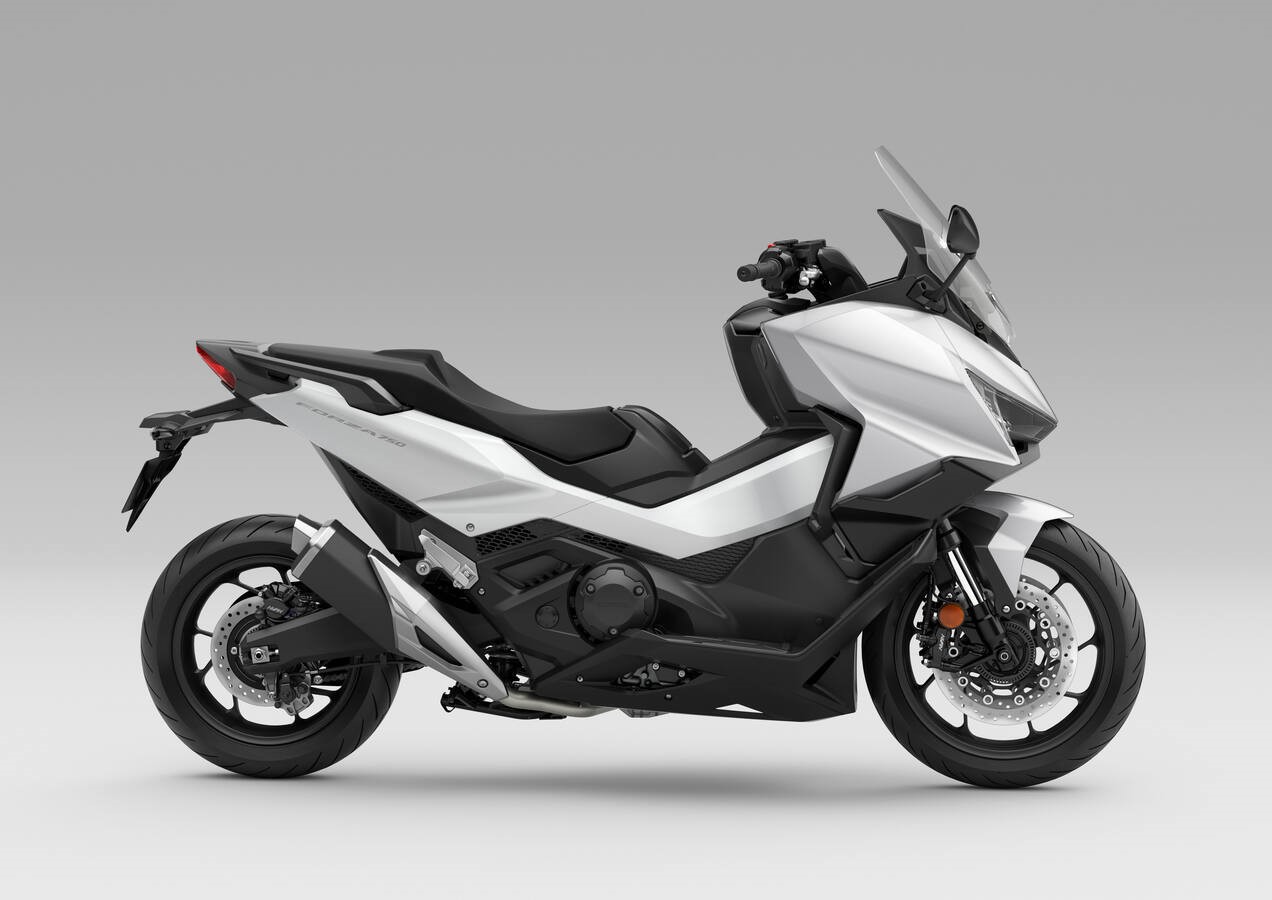
Model updates: Crowning the prestigious Forza range, the Forza 750 is the ultimate city slicker offering an exciting ride and luxurious comfort wrapped in a high-tech package. A big-bore scooter that impresses in all areas, the 25YM saw a dynamic style refresh and specification boost – led by new twin LED headlights with integrated DRLs and indicators, as well as standard fit cruise control and an updated five-inch TFT screen with Honda RoadSync connectivity. Effortless acceleration is on tap from the torquey 745cc twin-cylinder engine, equipped with Throttle-By-Wire, three default riding modes and three Level Honda Selectable Torque Control. A tubular steel frame, aluminium swingarm, Pro-Link rear suspension and 17/15-inch front/rear wheels provide surefooted handling, with strong braking from dual radial-mount four-piston front calipers. The under-seat storage can hold a full-face helmet. A 35kW version is also available for A2 licence holders. A new colour keeps the 26YM Forza 750 fresh and further enhances its desirability.
Contents:
- Introduction
- Model overview
- Key features
- Accessories
- Technical specifications
–
1. Introduction
Since the turn of the millennium, Honda’s Forza range of scooters have proven to be a powerful force in Europe, with brand-within-brand levels of recognition. The success is down to a compelling combination of ingredients: the classic Grand Touring (GT) elements of strong road presence and genuine comfort for two, mixed with sporty, agile handling and punchy engine performance that makes every ride a blast.
Furthermore, every Forza model has always been known as a supremely smart, stylish and premium product, loaded with useful features that make life on the move that much easier, with a build quality and styling that exudes class. In 2021 the Forza 125 and Forza 350 were joined by a range-topping, large capacity sibling – the Forza 750.
Fast, agile and luxurious, the Forza 750 launched to critical acclaim and has made its presence felt in a hotly contested segment of the market. As equipped for the daily commute, in and out of town, as it is for a weekend tour, it is the epitome of quality and practicality. A rational choice, yes, but true to its Forza pedigree, it’s also something else – a whole load of stylish fun.
For 25YM the Forza 750 received updates to style, tech and all-round usability that further cemented its aspirational status, as well as moving toward more sustainable production.
–
2. Model Overview
The Forza 750’s taut, angular bodywork offers ample high-speed wind protection, plenty of rider leg room and low seat height – and a distinct lack of any excess bulk. Dual headlights with Daytime Running Lights and in-built indicators led the 25YM style update while sustainability was enhanced by the use of DurabioTM material in certain areas. There’s under-seat storage space to take a full-face helmet and the handy glovebox for everyday items. An updated five-inch TFT instrument display offers Honda RoadSync linking the rider to their smartphone. Ignition, locking and seat opening is via Smart Key. Cruise control is now standard-fit.
Powered by a torquey, fuel-efficient 745cc twin-cylinder engine, Throttle By Wire (TBW) allows adjustable engine character through three default rider modes: RAIN, STANDARD and SPORT, plus a customisable USER mode. Honda Selectable Torque Control (HSTC) offers a fine level of intervention over three levels (with 25YM refinements in RAIN mode) while the Dual Clutch Transmission (DCT) features automatic shifting schedules that link with the riding modes. Low speed response and feel has been optimised.
A tubular steel frame, aluminium swingarm, 41mm USD forks, radial-mount four-piston brake calipers, Pro-Link rear suspension and 15-inch/17-inch front/rear wheel combination comprise the well-equipped chassis and deliver sports motorcycle levels of handling in scooter form.
The 26YM Forza 750 will be available in the following colour options:
- Mat Ballistic Black Metallic
- Mat Warm Ash Metallic
- *NEW* Pearl Glare White
–
3. Key Features
3.1 Styling & Equipment
- Classy and roomy GT styling provides ample weather protection for rider and pillion
- Bio-based DurabioTM and recycled materials used in manufacture of bodywork
- High technology count, with Smart Key operation, LED headlights with Daytime Running Lights (DRL), 5-inch TFT display with illuminated handlebar control, smartphone connectivity, cruise control and much more
As befits a GT scooter, the Forza 750’s sleek front fairing mounts the mirrors high and wide and provides ample wind protection for high-speed cruising, without the type of excessive bulk that hinders around-town agility. The Forza 750’s bodywork is a taut, angular design which exudes premium maxi-scooter style. Up front, the headlight unit features Daytime Running Lights for a premium face.
The electric screen design cocoons rider and pillion in a tranquil pocket of air; at 480mm it is 100mm (25%) wider than the previous design and operates through 120mm of height adjustment with a 10° difference in angle (forwards) at maximum extension. The screen also features an automatic lowering function, which lowers the screen to its lowest position when the ignition is turned off, contributing to convenience when parking. The screen is also equipped with a memory function that automatically raises the screen to its last set height from the last trip. This functionality activates when driving from 5km/h.
In addition, manufacture of the screen and fairing uses DurabioTM (a bio-based polycarbonate resin), with more recycled plastic/rubber materials also used in other areas of the bodywork.
But on top of the all-important riding functionality – and as head of the sophisticated Forza family – the Forza 750 is also a rolling statement of aspiration, with style that exudes premium appeal and a presence that will attract attention whenever, and wherever, it’s ridden.
Of course, the practical details matter. There’s plenty of leg and foot room up front thanks to the reprofiled fairing and footstep, while the carefully contoured seat is instantly comfortable and ensures easy ground reach. Seat height is set at 790mm.The under-seat luggage space has 22L of volume and accepts a full-face helmet. There’s also a useful, and easy-to-access, glove compartment in the right-side inner fairing which can stow everyday items. The USB-C charging socket is located in a prominent position on the handlebars. Cruise control integrates with the DCT smoothly and is very easy to use; activation is from the right switchgear, with plus/minus and resume/set from the left.
Key data is relayed to riders through an updated five-inch full colour TFT screen, which uses optical bonding to improve visibility in bright sunlight. By sealing the gap between the cover glass and TFT screen with resin, glare is reduced, and legibility improved. The display itself is customisable between ‘Bar’, ‘Circle’ and ‘Simple’ display patterns and offers smartphone connectivity via Honda RoadSync.
Honda RoadSync – alongside an easy-to-use, backlit four-way toggle-switch on the left handlebar – allows straightforward, on-screen turn-by-turn navigation as well as the option (via a Bluetooth helmet headset) for the rider to make calls, listen to music or receive voice feedback of weather conditions. All an owner needs to do is download the free Honda RoadSync app from either the Play Store or the App Store, connect to the Forza 750, and go.
For added convenience the Forza 750 uses a Smart Key, which lives in the rider’s pocket and does away with the need to use a key for ignition, fuel cap and seat. With the Smart Key present, one push of the knob-type main switch powers it up and makes it possible to turn, giving the rider control of the ignition/steering lock and, via two rocker switches, the fuel cap and seat. It also locks and unlocks the optional Smart Top Box and has an ‘answer back’ function which makes the indicators flash for easy identification from a distance. A clutch mechanism in the main switch stops the handlebars unlocking by force.
The rear indicators have an Emergency Stop Signal (ESS) function. If negative acceleration of 6.0m/s2 is detected at a minimum speed of 53km/h with either brake working, the hazard lights flash to warn other road users a hard stop is in process. At the same speed the threshold is reduced if ABS is activated to a negative acceleration of a minimum 2.5m/s2.
They also auto-cancel; rather than using a simple timer, the system compares front and rear wheel speed difference and calculates when to cancel the indication relative to the situation.
–
3.2 Engine
- Peak power of 43.1kW, with 69Nm torque and 7,000rpm redline
- Throttle By Wire engine management
- 28.3km/l possible (WMTC mode)
- 35kW A2 licence version available
The proven design of the liquid-cooled, SOHC 8-valve parallel twin-cylinder engine ensures punchy performance in the low-to-mid range. Mechanically unchanged for 26YM, its relatively long-stroke architecture and specially shaped combustion chambers combine with the high-inertial mass crankshaft to produce large amounts of effortless torque from very low rpm. A forward cant brings the centre of gravity down for optimum stability.
Peak power is 43.1kW @ 6,750rpm with maximum torque of 69Nm @ 4,750rpm, capped by a 7,000rpm redline. The Forza 750 will cover 0-50m in 3.9s and at 60km/h the engine is turning over at just 2,500rpm.
Twin balancers counteract vibration from higher rpm inertia without affecting the distinct ‘throb’ delivered by the engine’s irregular firing order and 270° phased crankshaft. Bore and stroke are set at 77mm and 80mm respectively. Where possible, components are made to do more than one job: the camshaft drives the water pump, while one of the balancer shafts drives the oil pump. By keeping the number of parts to a minimum in this way, the engine is kept light, efficient and reliable.
For A2 licence holders a 35kW version is available, which can be easily converted to the full power version by a Honda dealer at the appropriate time. Equally, it is possible to restrict the full power version to 35kW by a Honda dealer.
The Forza 750 engine is exceptionally frugal – with a measured consumption of 28.3km/l (WMTC mode) providing a potential 375km cruising range from the 13.2-litre fuel tank.
–
3.3 Engine Electronics
- Throttle By Wire allows three default riding modes, plus USER customisation
- 3-level Honda Selectable Torque Control features smooth management and refined Rain mode
With TBW managing the engine electronics, there are three modes for the rider to choose from, covering a wide range of riding conditions. Mode selection is managed between the left-hand switchgear and TFT display.
STANDARD delivers a balanced middle point between engine power delivery (P), Engine Braking (EB) and HSTC
SPORT gives more aggressive P delivery and EB, with low HSTC intervention
RAIN transmits low engine power delivery and braking, with high HSTC
USER offers custom options of low/medium/high between P/EB, low/medium/high/off for HSTC.
Honda Selectable Torque Control (HSTC) offers unobtrusive operation and refined control as it manages rear wheel torque thanks to TBW, over three levels:
- Level 1 allows the minimum intervention for the lightest control over rear wheel spin.
- Level 2 is the default setting and provides confidence-inspiring traction for general riding conditions.
- Level 3 provides maximum control for slippery roads and was made smoother in operation for the 25YM update.
HSTC can also be switched OFF.
–
3.4 Dual Clutch Transmission (DCT)
- Improved starting/ slow-speed response uses same clutch oil pressure estimation update as 24YM Africa Twin
- Differing shifting schedules link with riding modes
- USER mode allows choice of settings from smooth to aggressive
Honda’s DCT technology is now in its 17th year of production, and almost 280,000 units of DCT-equipped Honda two-wheelers have been sold in Europe since 2010. It delivers consistent, seamless gear changes up or down and very quickly becomes second nature in use. It uses two clutches: one for start-up and 1st, 3rd and 5th, the other for 2nd, 4th and 6th, with the mainshaft for each clutch located inside the other for compact packaging.
Each clutch is independently controlled by its own electro-hydraulic circuit. When a gear change occurs, the system pre-selects the target gear using the clutch not currently in use. The first clutch is then electronically disengaged as, simultaneously, the second clutch engages.
The 25YM update allowed smoother starting from standstill and control at low speed – under 10km/h – for U-turns. This required a ‘quick yet gentle’ driving force at small throttle openings.
Surpassing the operating parameters of the previous generation DCT the latest iteration now estimates the oil pressure of the clutch piston chamber and completely reviews the way feedback gain is applied – rather than just relying on an oil pressure sensor upstream of the clutch piston – resulting in improved, more delicate clutch response. Alongside a refinement to the way TBW now opens from closed, the DCT also features a dedicated setting for extremely low speed running.
Consistent, fast and seamless gear changes are always on offer. Furthermore, as the twin clutches transfer drive from one gear to the next with minimal interruption of the drive to the rear wheel, any gear change shock and pitching of the machine is minimised, making the change feel direct as well as smooth. Extra benefits include durability (as the gears cannot be damaged by missing a gear) impossibility of stalling, low stress urban riding, reduced rider fatigue and – crucially – the ability to concentrate more on riding lines, braking and acceleration points.
The DCT system offers two distinct riding approaches – Automatic Transmission (AT), with pre-programmed shift patterns which constantly read vehicle speed, gear selected and engine rpm to decide when a shift should occur, and Manual Transmission (MT), for gear changes using the paddle-shift style triggers on the left handlebar.
Through TBW control there are four Automatic shifting schedules available. Level 1 is the most relaxed, with upshifts and downshifts operating at relatively lower rpm; it is linked with the RAIN riding mode. Level 4, on the other extreme, shifts up at higher rpm and also downshifts earlier for more engine braking effect; it is linked with the SPORT mode. Level 2 is linked with STANDARD riding mode, with Level 3 situated between STANDARD and SPORT.
The USER mode functionality allows the rider to select any of the DCT shift patterns with the preferred permutations of the other parameters – Power delivery, Engine Braking and HSTC.
–
3.5 Chassis
- Tubular steel diamond frame, 41mm USD fork, Pro-Link suspension and aluminium swingarm
- Radial mount four-piston front brake calipers, 310mm discs and ABS
- ‘3by3’ 17-inch front and 15-inch rear cast wheel combination
For core strength the Forza 750 uses a rugged tubular steel diamond frame, which neatly packages all ancillaries and gives ample space for the under-seat storage area. Rake and trail are set at 27°/104mm with wheelbase of 1580mm. Overall wet weight is 236kg.
The spring preload adjustable rear shock is a single tube split pressure design and operates the aluminium swingarm – constructed from a machined-hollow cross member and U-shaped (in cross section) arms – through Pro-Link.
‘3by3’ 17-inch front and 15-inch rear cast aluminium wheels deliver confident handling and stability, whilst looking stylish, and are wrapped in 120/70 R17 and 160/60 R15 tyres front and rear. Dual radial-mount opposed four-piston calipers grip 310mm discs and work through ABS.
–
4. Accessories
A full range of Genuine Honda Accessories are available for the Forza 750 either individually or in carefully curated packs for user convenience:
The Comfort Park is versatile collection of parts designed to enhance rider comfort and convenience:
- Deflector Set
- Comfort Seat
- Heated Grips
- Console Bag
The Style Pack builds in additional protection and looks:
- Parking Lever
- Parking Lever Cover
- Lateral Cover
- Floor Panel
- Fog Lights
The colour matched Travel Pack increases carrying capacity:
- Panniers (Right 26L, Left 33L)
- Colour Matched Pannier Panels
- Pannier Inner Bags
Also colour matched, the Urban Pack ups daily commuting ability:
- Aluminium Rear Carrier
- 50L Smart Top Box
- Top Box Cushion (2 versions available, with grey or red stitching to match the Comfort Seat)
- Colour Matched Smart Top Box Panel
- 25L Top Box Inner Bag
- Under-seat Luggage Divider
Also available:
- Aluminium Panels for Panniers and Top Box
- 50L Manual Top Box
- 38L Manual Top Box
- Alarm System
- Passenger Backrest
- Akrapovic Slip-on muffler
–
5. Technical Specifications
|
ENGINE |
|
|
Type |
Liquid-cooled 4-stroke 8-valve, SOHC parallel 2-cylinder |
|
Displacement |
745cc |
|
Bore & Stroke |
77mm x 80mm |
|
Compression Ratio |
10.7:1 |
|
Max. Power Output |
43.1kW @ 6,750rpm (35kW/6,000rpm) |
|
Max. Torque |
69Nm @ 4,750rpm (65Nm/4,000rpm) |
|
Oil Capacity |
4.0L |
|
Noise Level (dB) |
L-wot – 76.5 L-urban – 71.3 |
|
FUEL SYSTEM |
|
|
Carburation |
PGM-FI electronic fuel injection |
|
Fuel Tank Capacity |
13.2 litres |
|
Fuel Consumption |
3.6L/100km |
|
ELECTRICAL SYSTEM |
|
|
Starter |
Electric |
|
Battery Capacity |
12V/11.0AH |
|
ACG Output |
510W/5000rpm |
|
DRIVETRAIN |
|
|
Clutch Type |
Wet multiplate hydraulic dual-clutch |
|
Transmission Type |
Six-speed dual clutch transmission |
|
Final Drive |
Chain |
|
FRAME |
|
|
Type |
Diamond; steel pipe |
|
CHASSIS |
|
|
Dimensions (L'W'H) |
2200m x 790mm x 1480mm |
|
Wheelbase |
1580mm |
|
Caster Angle |
27° |
|
Trail |
104mm |
|
Seat Height |
790mm |
|
Ground Clearance |
135mm |
|
Kerb Weight |
236kg |
|
SUSPENSION |
|
|
Type Front |
41mm USD,120mm stroke |
|
Type Rear |
Monoshock damper, Pro-Link swingarm, 120mm travel |
|
WHEELS |
|
|
Type Front |
‘3 by 3’ spoked wheel |
|
Type Rear |
‘3 by 3’ spoked wheel |
|
Rim Size Front |
17M/C x MT3.50 |
|
Rim Size Rear |
15M/C x MT4.50 |
|
Tyres Front |
120/70-R17M/C |
|
Tyres Rear |
160/60-R15M/C |
|
BRAKES |
|
|
ABS System Type |
Two-channel ABS |
|
Type Front |
310mm double hydraulic disc with radial four-piston caliper |
|
Type Rear |
240mm single hydraulic disc with Mono-piston caliper |
|
INSTRUMENTS & ELECTRICS |
|
|
Instruments |
Five-inch colour TFT Meter |
|
Security System |
Smart Key system |
|
Headlight |
LED |
|
Taillight |
LED |
All specifications are provisional and subject to change without notice.
# Please note that the figures provided are results obtained by Honda under standardised testing conditions prescribed by WMTC. Tests are conducted on a rolling road using a standard version of the vehicle with only one rider and no additional optional equipment. Actual fuel consumption may vary depending on how you ride, how you maintain your vehicle, weather, road conditions, tire pressure, installation of accessories, cargo, rider and passenger weight, and other factors.
Vibrant style: refreshed colour palettes for Honda’s 26YM Forza 750 and X-ADV
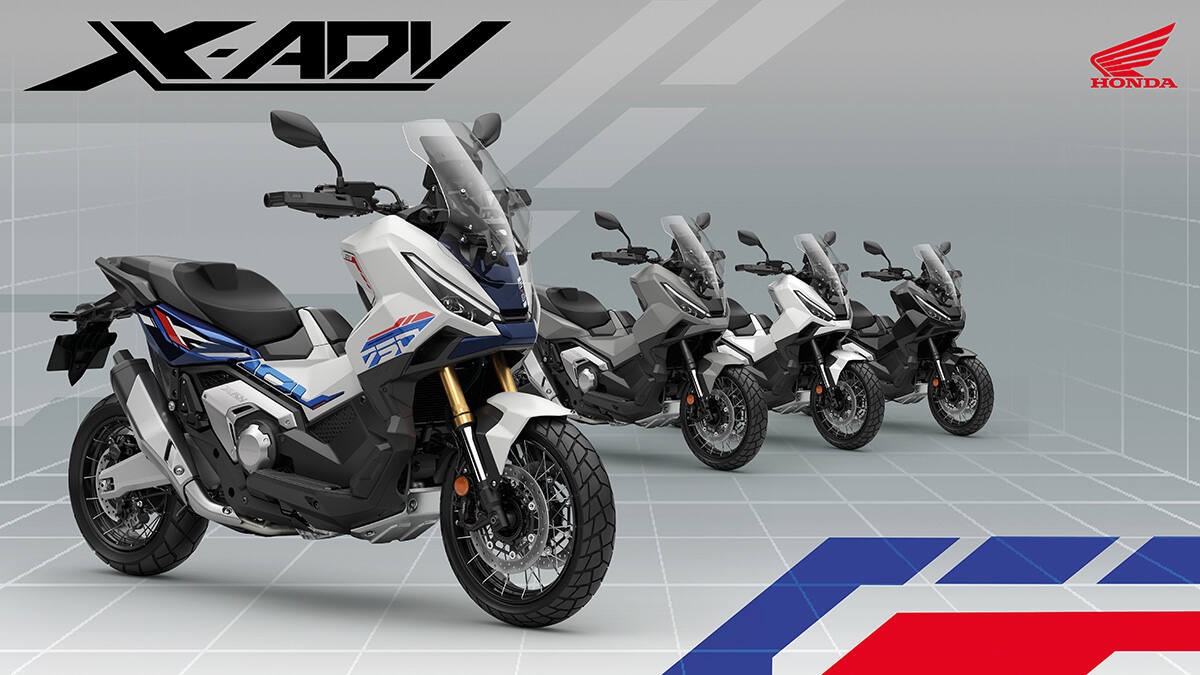
- New colour for 26YM Forza 750 enhance urban style
- Revised colourway and livery set on 26YM X-ADV enhance unique styling
Two of Honda’s most popular European models, the Forza 750 and X-ADV, are to get revised colour options for 26YM, bringing further appeal to the pair of premium machines. The X-ADV is one of Honda’s runaway success stories, with the model currently Honda’s third best-selling bike in 2025 so far.
Mechanically unchanged for 26YM, both models remain built around the torquey, yet fuel-efficient 745cc twin-cylinder powerplant paired with Honda’s acclaimed Dual Clutch Transmission (DCT). They also retain the premium chassis features and settings that have helped deliver ‘big bike’ handling such as the aluminium swingarm operating a Pro-Link rear suspension linkage, 41mm USD front forks and radial-mounted four-piston brakes.
The innovative duo also retain their bodywork made from recycled and biomass plastics as part of Honda’s long-term aim to achieve ‘100% sustainable material usage’ by 2050. DurabioTM, the corn-based material, was first used on the windscreen of the Africa Twin, but the X-ADV marked the world’s first application of coloured DurabioTM as a bodywork part. This pioneering technique helps reduce CO2 emissions associated with the conventional painting process.
The new colour palette for the Forza 750 centres on neutral, mature colours that help define the shapely bodywork, whilst the 26YM X-ADV features a new ‘Tricolour’ special edition that pays homage to the larger Transalp and Africa Twin adventure models.
The 2026 Honda X-ADV will be available in;
- Graphite Black
- Mat Deep Mud Gray
- Pearl Glare White
- *NEW* Mat Pearl Glare White special edition with blue and red graphic set
Whilst the 2026 Forza 750 will be offered in;
- Mat Ballistic Black Metallic
- Mat Warm Ash Metallic
- *NEW* Pearl Glare White
To further individualize the bikes, a revised range of accessories will be available for 26YM, including a new passenger backrest and an Akrapovic slip-on muffler.
The GSX-R1000R returns
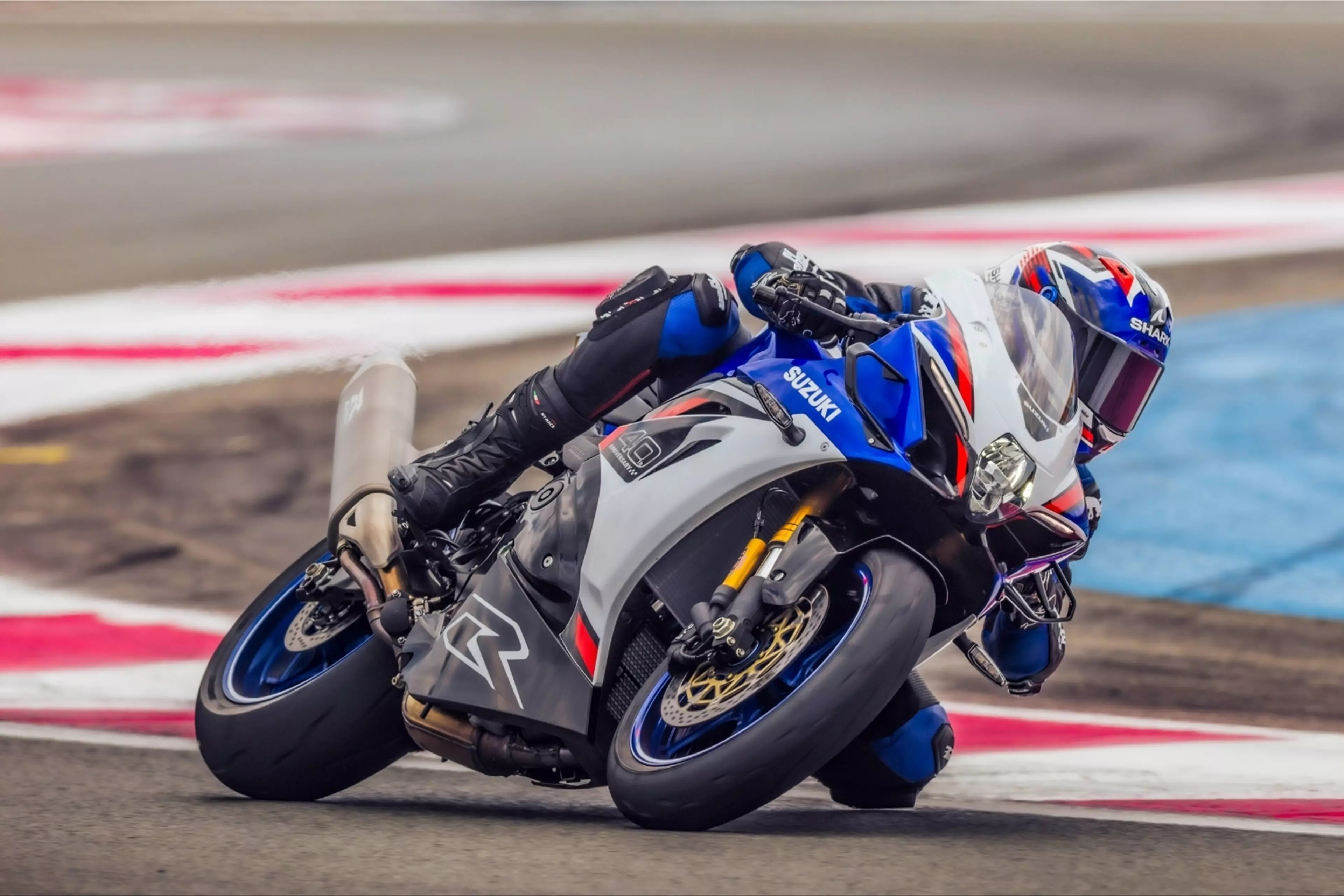
Suzuki has announced that the GSX-R1000R will return to the UK. Designed to perform, built to thrill, the GSX-R1000R gets an updated engine to meet Euro5+ regulations whilst maintaining high levels of performance output. Changes include a new crankshaft, crankcases, pistons, connecting rods, and a higher compression ratio. There’s also a new exhaust, an updated suite of electronics, and winglets that increase downforce at higher speeds.
Despite a number of changes made to satisfy the latest emissions standards, the updates to the engine also enhance the GSX-R1000R’s performance potential, making it capable of withstanding the tuning required to compete successfully in premier class endurance, superbike, and superstock racing competitions.
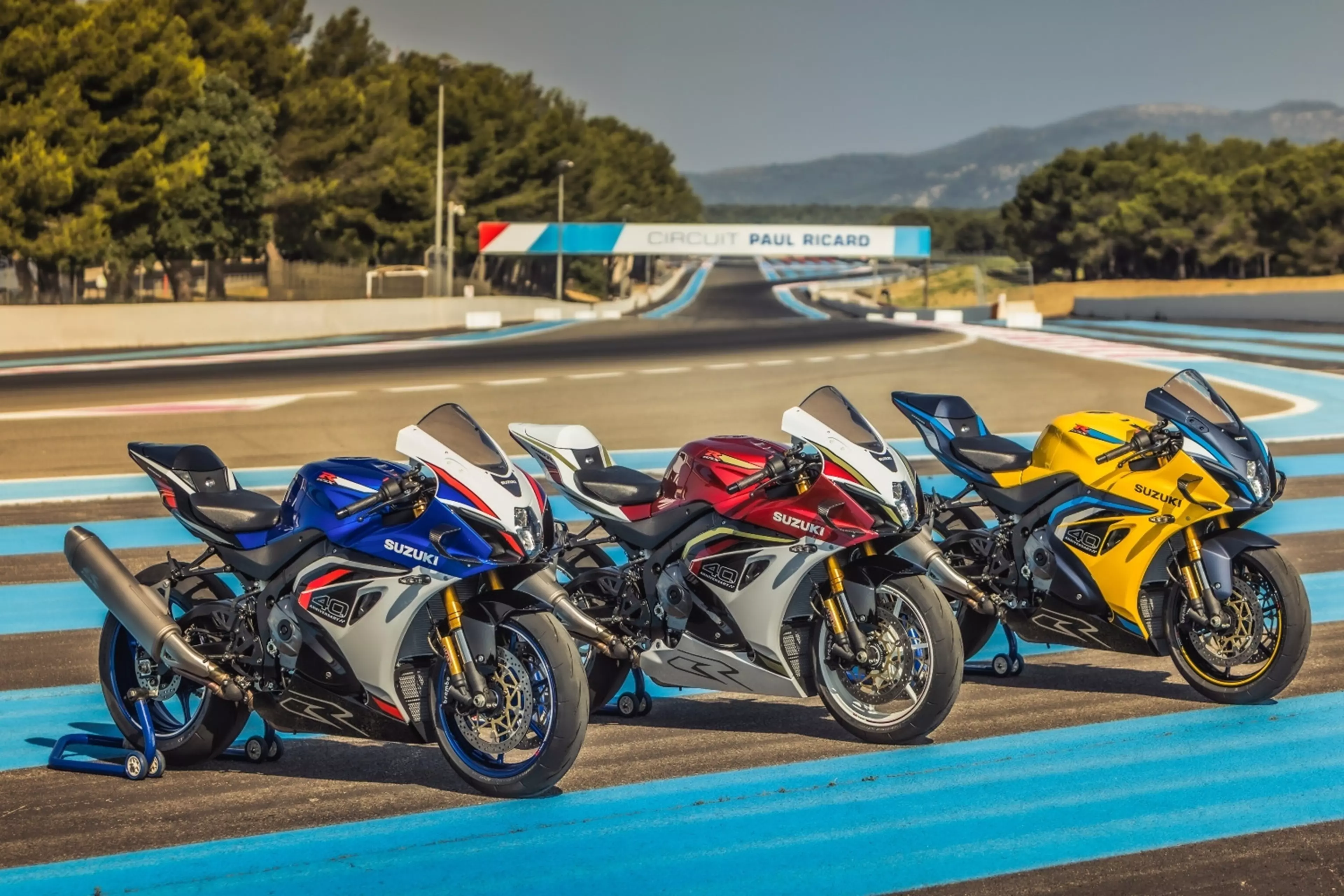
The announcement comes ahead of the prestigious Suzuka 8-Hour endurance racein Japan and the third round of the 2025 FIM Endurance World Championship, a championship that the GSX-R1000 has won 15 times since 2001. The announcement also comes as part of this year’s 40th anniversary celebrations of the GSX-R range, when the GSX-R750F changed the world of sportsbikes forever in 1985. As a result, the GSX-R1000R will come in a trio of colour schemes inspired by classic GSX-R liveries of the past, each adorned with a 40th anniversary logo on the fairing and fuel tank.
Engine
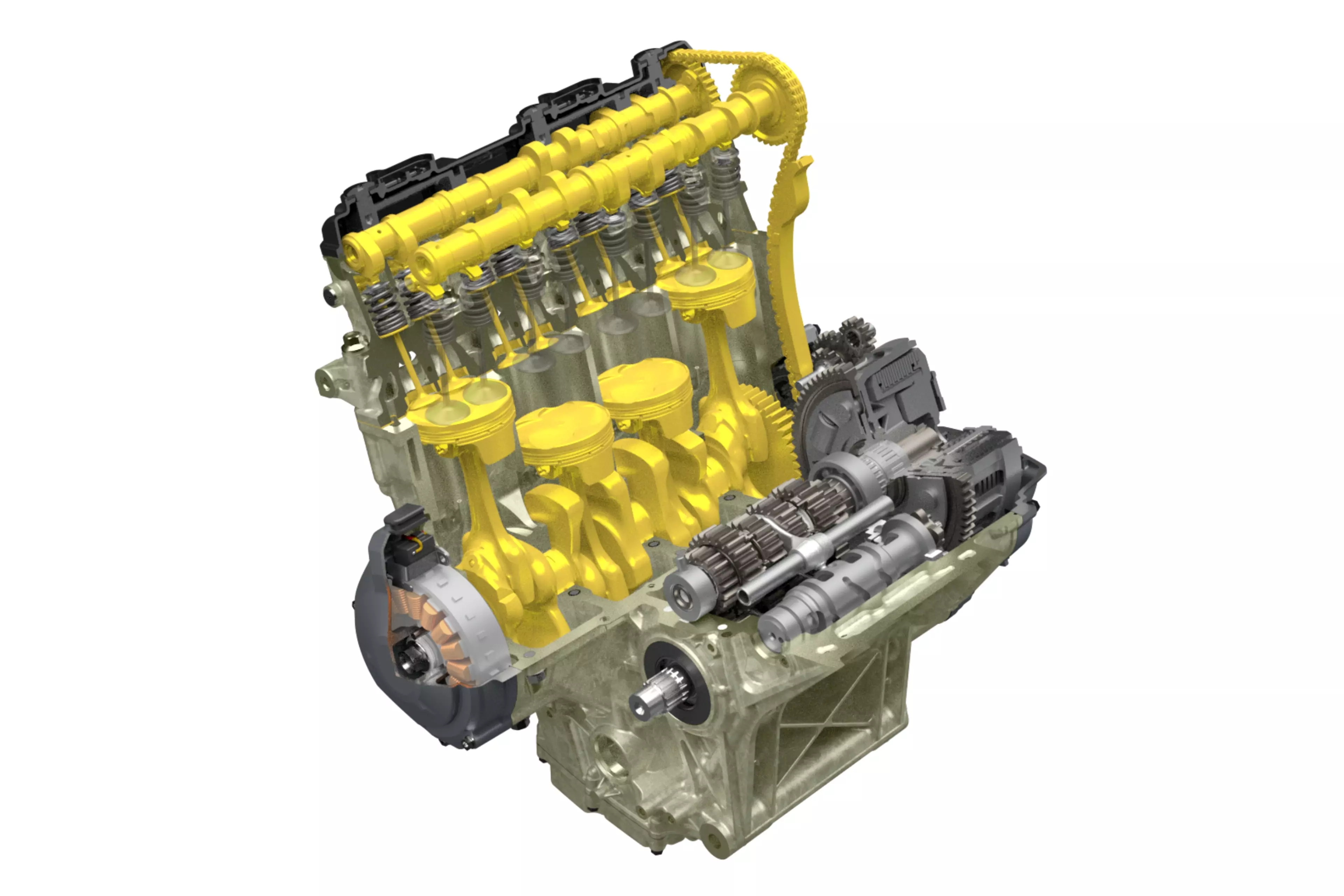
The GSX-R1000R’s 1000cc, inline four-cylinder engine still uses Suzuki’s MotoGP-developed variable valve timing system. Developed on the firm’s GSX-RR prototype racer, which won the 2020 MotoGP world championship, the mechanical system is built into the intake cam sprocket and an adjacent guide plate. It uses 12 steel balls and slanted grooves to rotate the sprocket and retard the intake valve timing at a pre-set rpm, boosting high-rpm power without sacrificing midrange and lower-rpm output. It also retains a finger follower valve train, though the shape of the fingers on both the intake and exhaust sides were changed and optimised to match the new cam profile. In addition, the exhaust valve diameter was changed from 24mm to 25mm, plus there are new camshafts and a wider cam chain. Maximum valve lift remains the same, with reduced overlap to help meet emissions targets.
There’s a new fuel pump to increase fuel pressure, and changes to the fuel injectors, with the secondary top feed injector changing from 10 to eight holes to contribute to cleaner emissions. To help maintain power output, new throttle bodies boast a larger bore; up to 48mm from 46mm, while air delivered to the throttle bodies travels through newly designed single-stage funnels, further boosting peak power.
New, forged aluminium pistons have short skirts, cutaway sides and a short, DLC-coated wrist pin to reduce friction. The piston heads were reshaped to increase the compression ratio to 13.8:1 and accommodate the size of the increased exhaust valve diameter. The new pistons contribute to power output, reduced vibration, and durability.
The connecting rods are chrome-molybdenum steel with a carburised surface treatment to increase strength and are designed to enhance reliability when under higher levels of tune for racing.
The crankshaft adopts a new design with thicker journals, increased from 35mm to 37mm, designed to accommodate higher loads and withstand higher levels of tune in racing environments, plus new crankcases were designed in conjunction with the new crankshaft.
As well as being highly attractive and etched with a GSX-R logo, the new exhaust silencer body is more compact, reducing its capacity from 8.3 to 5.5 liters. A larger capacity elliptical catalytic converter in the collector is positioned closer to the engine to facilitate quicker warming, which helps improve its performance.
Peak power is 195PS at 13,200rpm, with peak torque 110.0Nm at 11,000rpm.
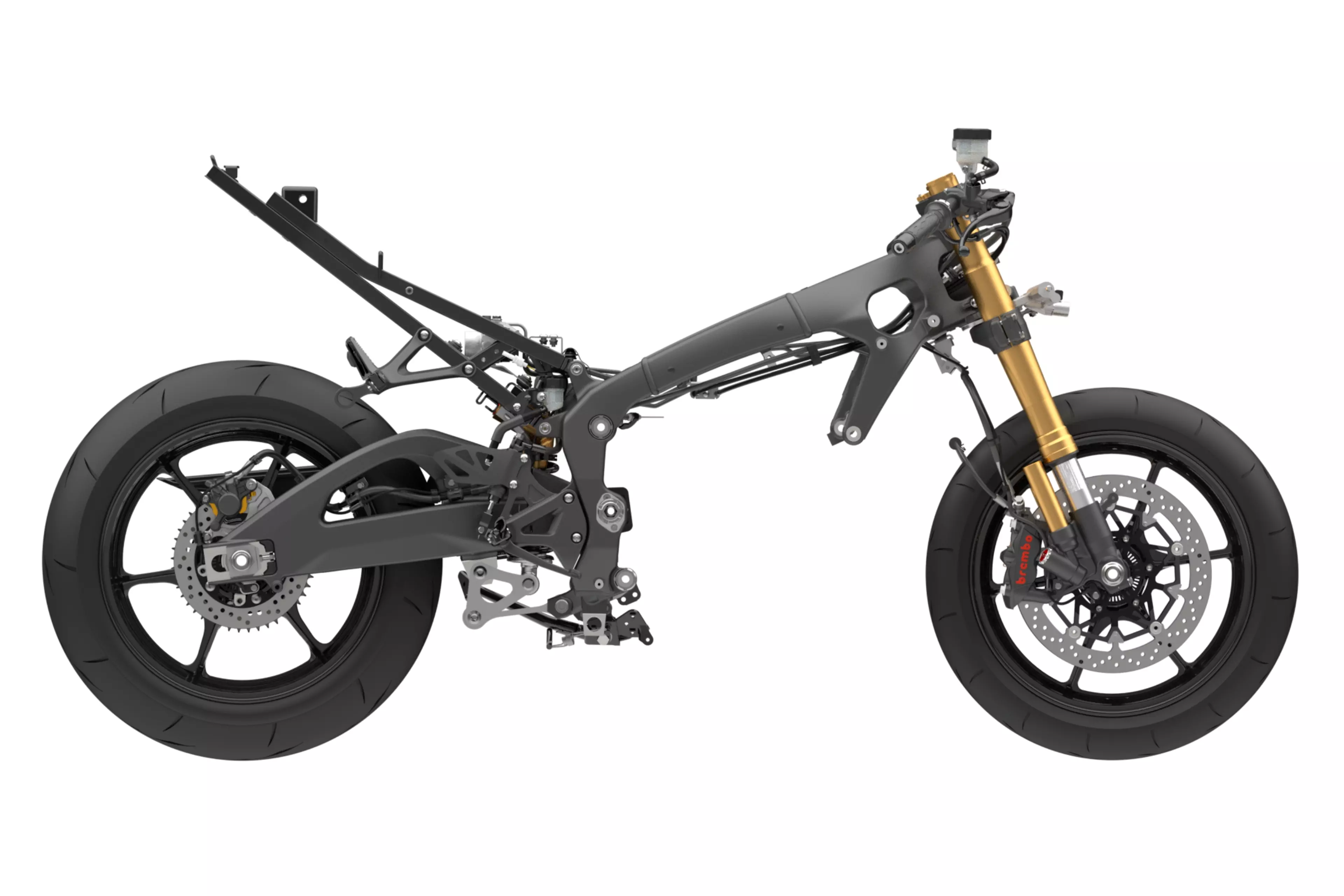
The new GSX-R1000R uses the same lightweight twin-spar aluminium frame, subframe, and braced aluminium swingarm as the previous version. Suspension comes courtesy of Showa, with its balance free front forks at the front, and a balance free rear shock at the rear, and there’s an electronically-controlled steering damper.
At the front, brakes are Brembo monoblock calipers, biting 320mm discs. At the rear sits a single caliper and 220m disc. There’s also a new ABS unit that saves 51 grams over the previous version GSX-R1000R. Lightweight cast aluminium wheels wear Bridgestone BATTLAX RACING STREET RS11 tyres: 120/70ZR17M/ at the front, 190/55ZR17M/C at the rear.
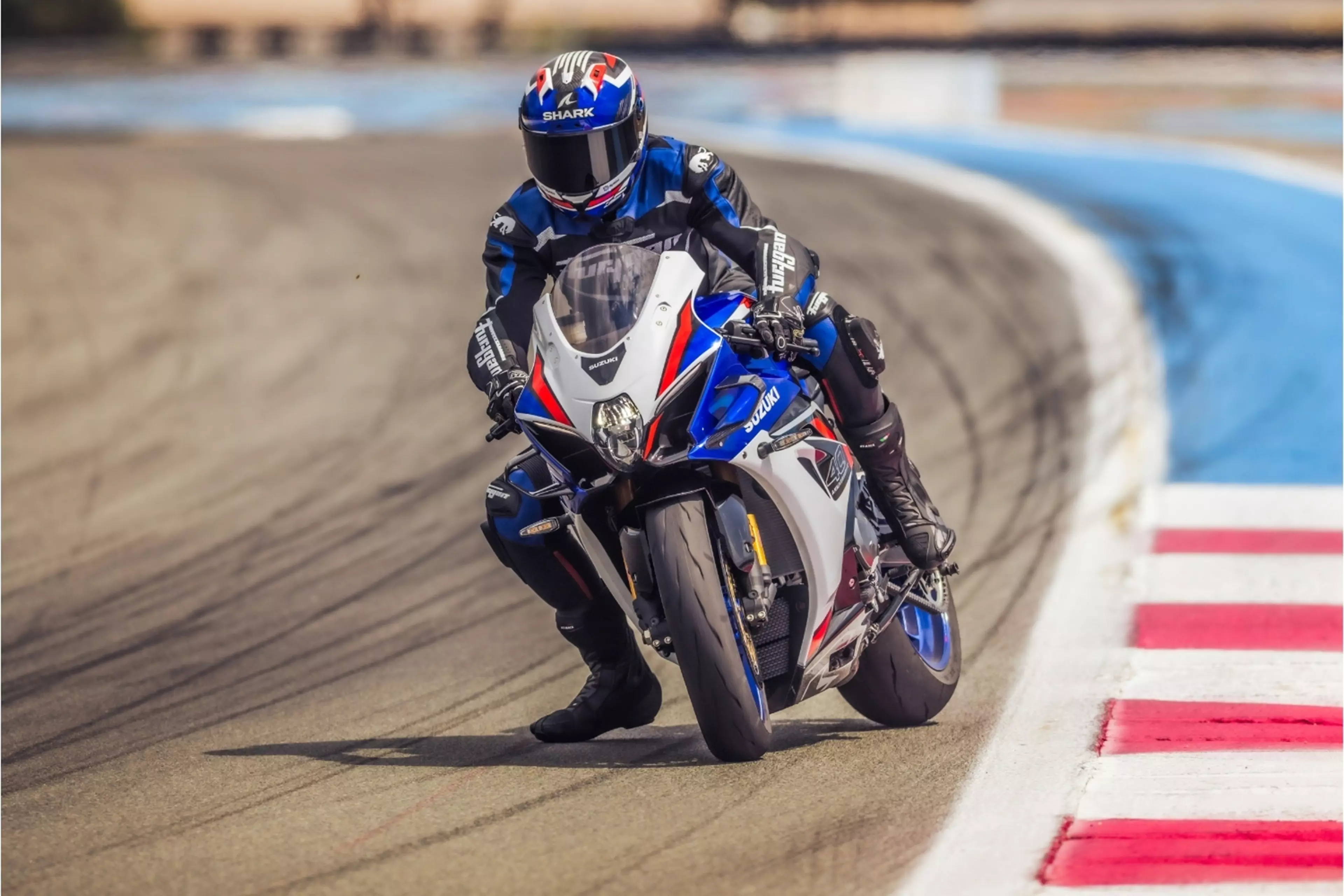
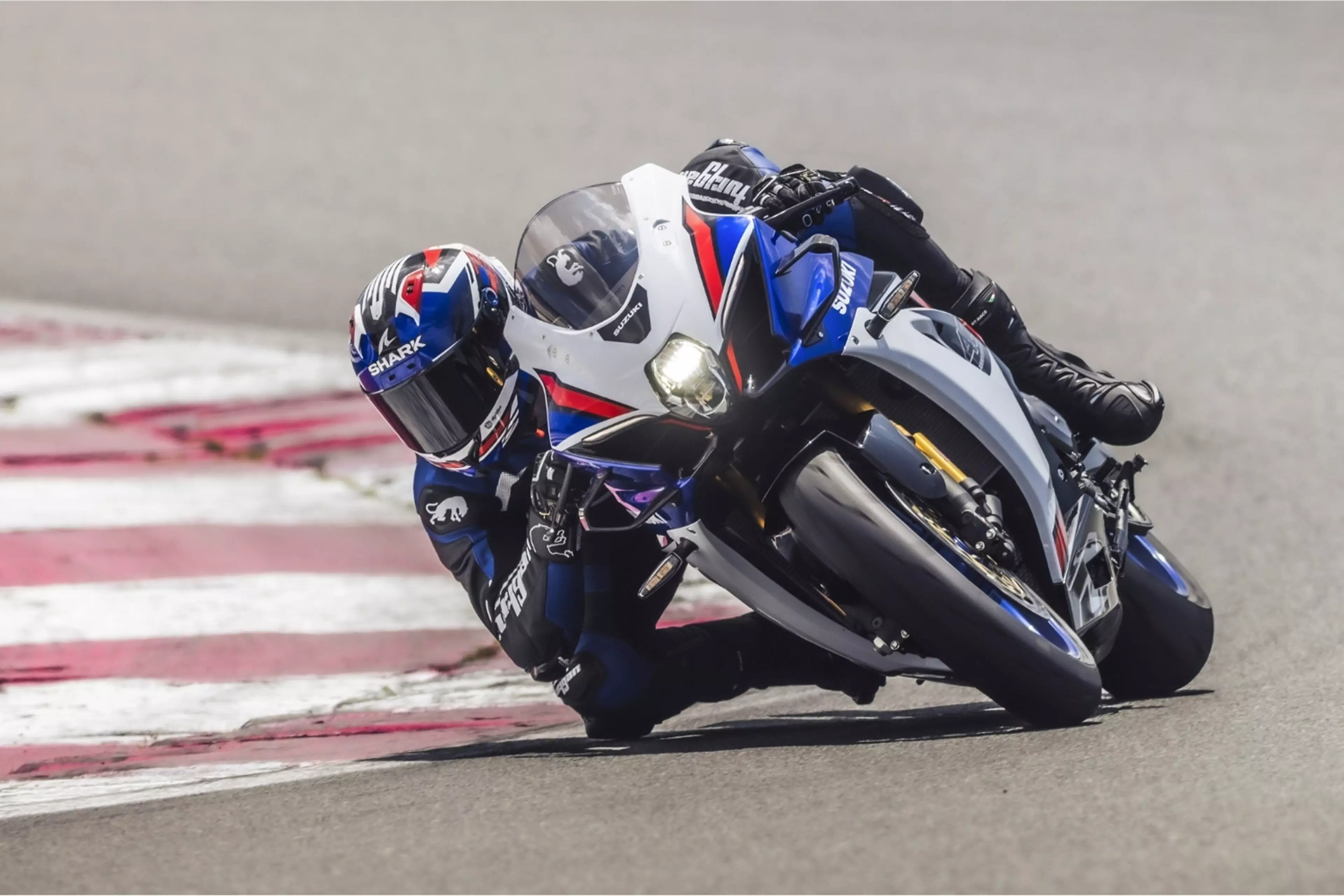
Developed in conjunction with the Suzuki CN Challenge race team, which contested the 2024 Suzuka 8-Hour with an experimental GSX-R1000R, new winglets provide increased downforce at higher speeds, aiding stability and reducing wheelie.
Produced in Japan, they are made of dry carbon with a hollow structure, and the size and shape of the winglets were developed through a long process of experimental builds and thorough test runs to achieve the optimum effect without making handling feel heavy.
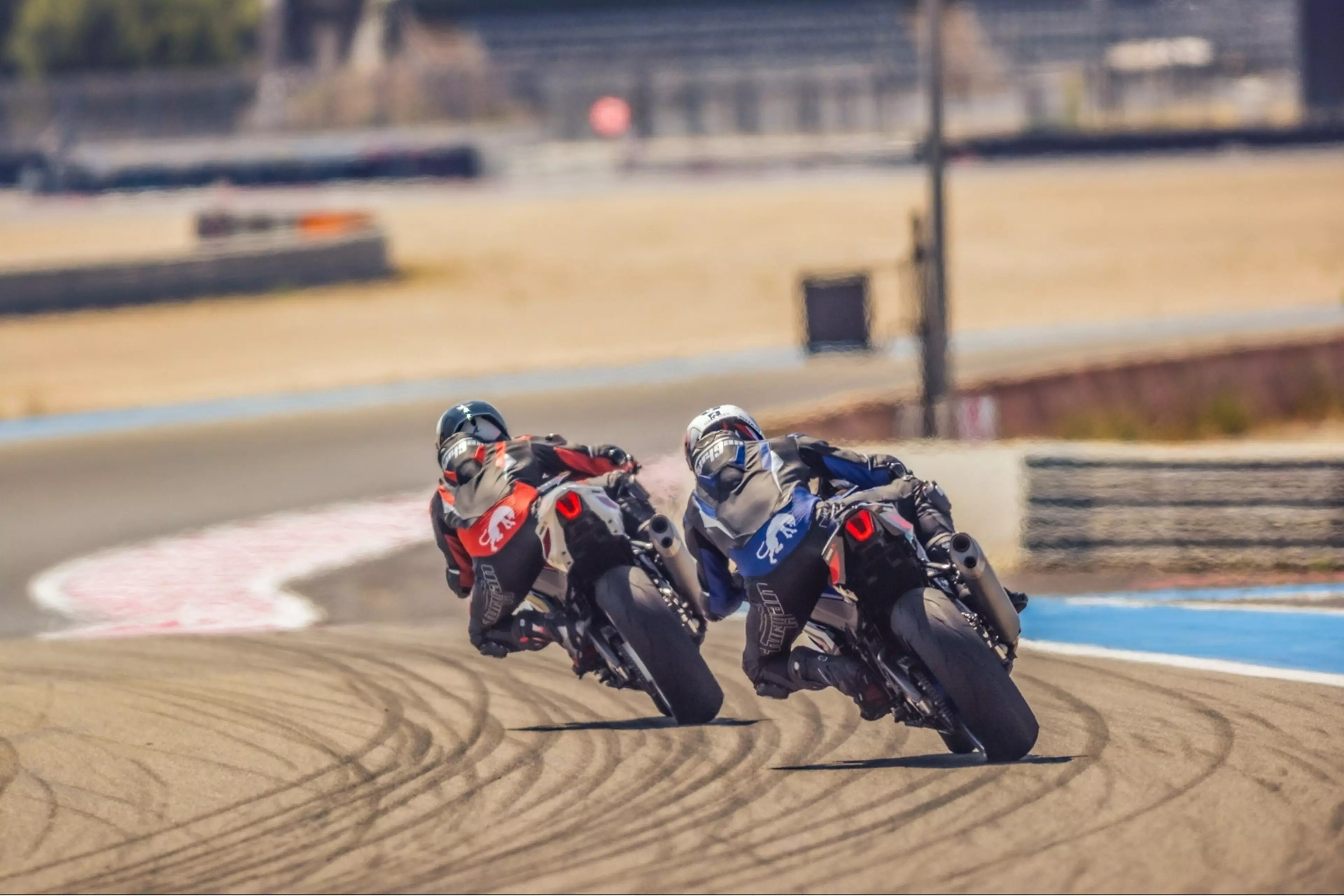
Electronics
An updated suite of electronics further enhances the GSX-R1000R’s performance potential and allows riders to tailor its character to suit their preferences or riding conditions. Armed with a six direction IMU, the GSX-R1000R gets an updated traction control system that incorporates Suzuki’s new Roll Torque Control and anti-wheelie, with 10 modes to choose from plus the ability to disengage entirely.
Suzuki’s Roll Torque Control uses data from the IMU and wheel speed sensors to calculate the bike’s lean angle and speed to predetermine what level of power output is optimal. It works in conjunction with the traction control to deliver a sense of stability through the corner. Its benefit is that it works to prevent wheel spin, rather than activate when slip is detected, making for more seamless acceleration and the reduced cutting of power and ‘pumping’.
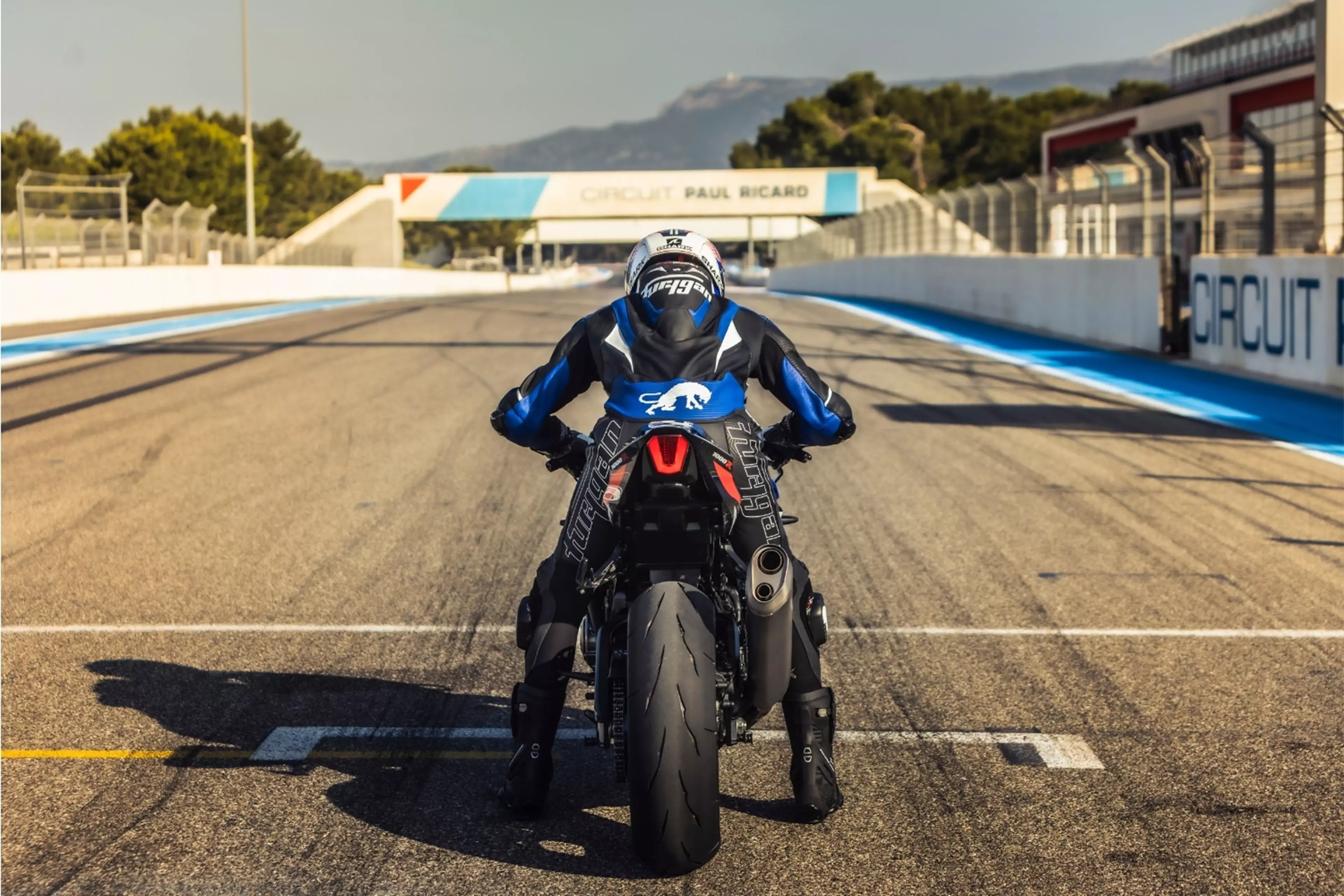
There’s a ride-by-wire throttle, bi-directional quickshifter, lean angle-sensitive ABS and slope-dependent control, launch control, low RPM assist, and Suzuki’s easy start function.
A new Li-ion HY battEliiy P-series starter battery is more compact and lightweight, and is designed with a focus on exceptional reliability, durability, enhanced startability, and an extended lifespan.
Headlights, positioning lights, and taillights are full LED.
Styling
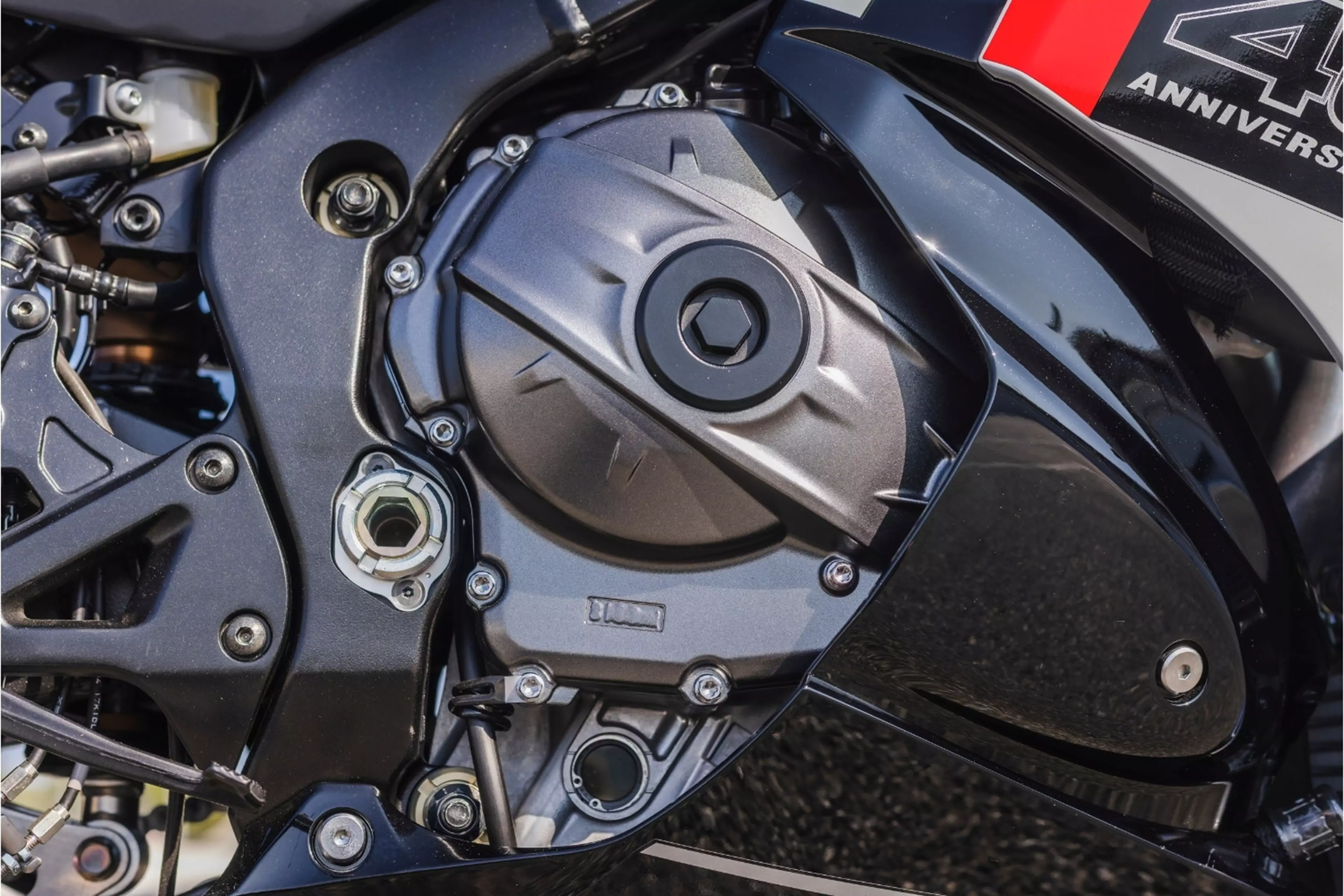
Three new colour schemes pay homage to classic GSX-R liveries of old, with a classic blue and white take joined by a red and white version and a yellow and matt blue option. Each features a 40th anniversary decal on the fairing and the fuel tank. A retro ‘R’ logo adorns the bellypan of all three. There are also GSX-R logos on the seat and exhaust silencer, and the magneto and clutch covers are finished in grey.
Pricing and availability
The GSX-R1000R will arrive in UK dealerships in the spring of 2026, with pricing to be announced in due course. It will be on display at MCL at the NEC in November.
Suzuki launches new retro models: GSX-8T and GSX-8TT
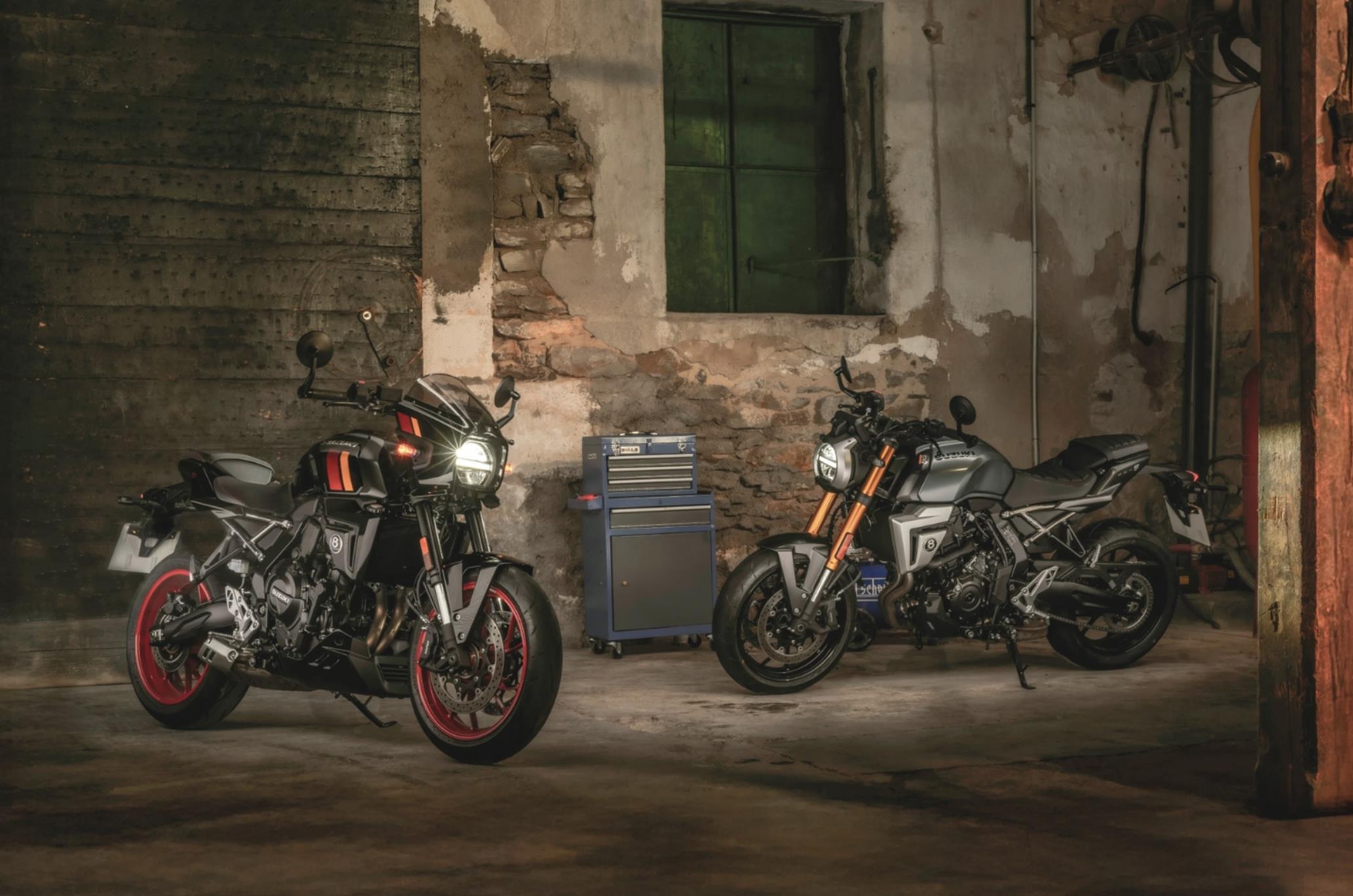
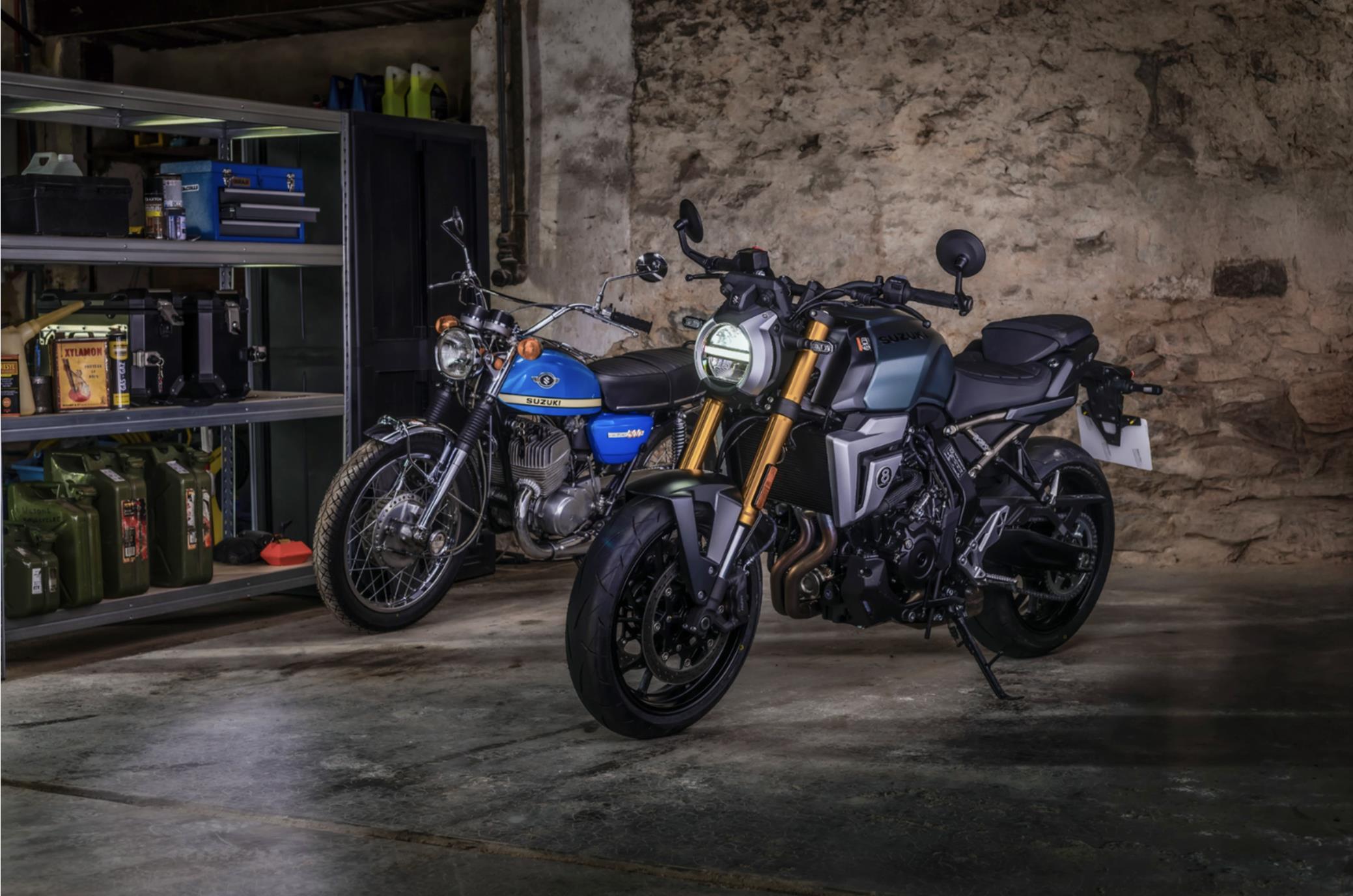
Suzuki has launched two brand-new models on its award-winning 800cc platform, with the GSX-8T and GSX-8TT combining retro spirit with next generation performance. The 8T takes styling cues from classic bikes of the 1960s and 1970s, such as the iconic Suzuki T500, while the 8TT builds on that platform further but with inspiration coming from the faired race bikes of the period, such as the legendary Yoshimura GS1000 AMA superbike.
-
Both models use Suzuki’s 776cc parallel twin engine with its 270° crankshaft design, which gives it unrivalled drive and lowdown power, while double overhead cams and four valves per cylinder enable a free-revving nature.
-
The engine is housed in a twin-spar steel frame with a separate lightweight subframe. An electronics suite comprises traction control, power modes, a bi-directional quickshifter, and colour TFT screen.
-
Both the 8T and 8TT get a new fuel tank, seat, seat unit, and handlebars complete with bar-end mirrors.
- The 8T adopts a new round headlight with full LED lighting, blending modern technology with classic styling. The 8TT adds a headlight cowling that shares more than a passing resemblance to vintage road race machinery from the 70s and 80s.
Design
The 8T and 8TT’s design brief was to produce two machines that embody the retro spirit of Suzuki’s heritage and iconic models of past decades. Drawn by designers in Italy and further sculpted in Japan, both models use a new 16.5-litre fuel tank, which connects each side to new radiator shrouds – brushed silver on the 8T and black on the 8TT – adorned with the circular GSX8 logo.
The 8T evokes the charm of classic bikes, and a new circular headlight design with a flat bottom section is further reminiscent of motorcycles of the 70s and 80s, though it is full-LED with a bright, horizontal LED strip across the middle.
Inspired by classic road race machines, the 8TT retains the same headlight unit as its 8T stablemate but wraps it in a cowling that bears a striking resemblance to the GS1000S of the late 1970s. It is fitted with a screen that further completes the look, as well as providing the functional benefit of added weather protection.
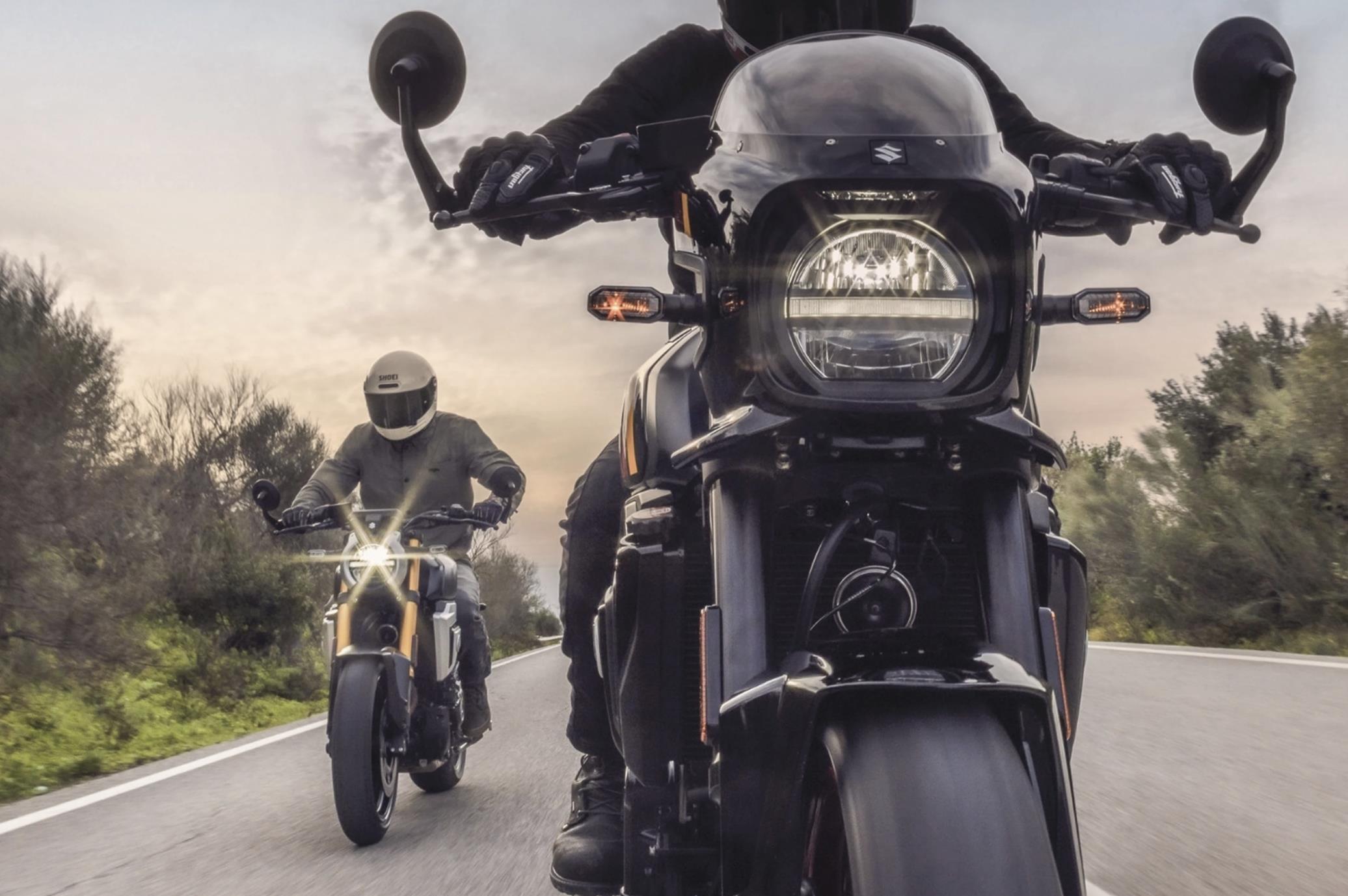
New circular bar-end mirrors ensure a sleek and low profile. Their design was refined to ensure visual harmony with the overall silhouette, and special attention was paid to detail, including hand-polishing the parting lines and gate marks of the aluminium die-cast stays. The mirrors offer excellent rearward visibility by minimising interference from the rider’s body.
Underneath the 776cc parallel twin engine, the 8TT also adopts a lower cowling, further enhancing its racier aesthetic.
A new seat, inspired by the tuck-and-roll seats of the 1960s and 70s slots onto the top of the subframe of the 8T. It features high-density foam cushioning for enhanced comfort and a premium riding experience. Additionally, the shape of the seat front improves ease of mounting and dismounting and provides excellent foot reach.
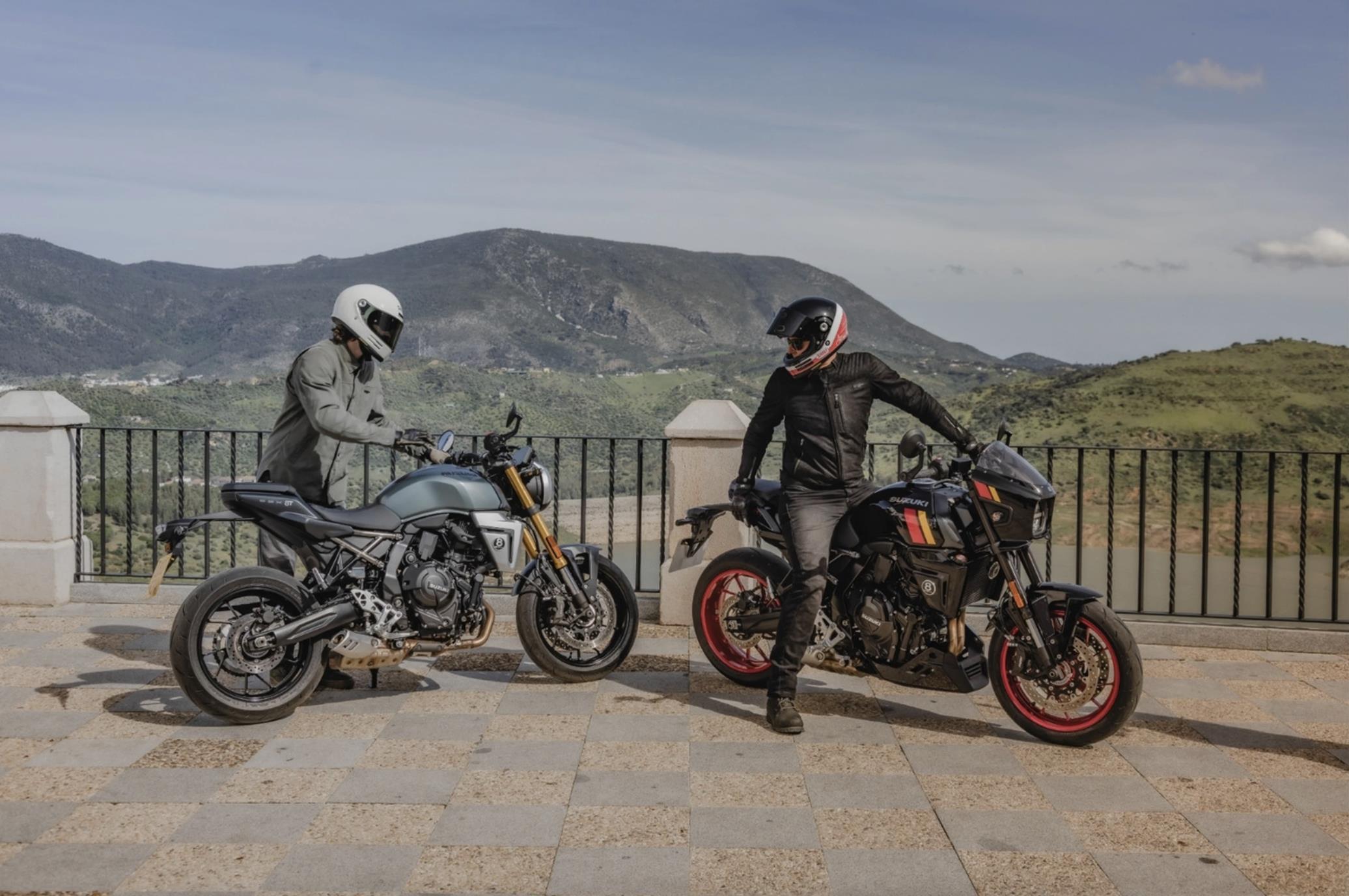
On the 8TT the seat still ensures a comfortable ride but is finished with a flatter top more reminiscent of race bike seats.
With a matt finish to its black seat unit, brushed radiator shrouds, gold forks, and black wheels, the GSX-8T will be available with a Candy Burnt Gold, Metallic Matt Steel Green, or Metallic Matt Black fuel tank.
The 8TT adds more pops of colour and retro racing flair thanks to striped decals on its tank and cowling, with matching wheels. A Glass Sparkle Black variant is offset by red wheels and red and gold decals, while a Pearl Matt Shadow Green version is completed with gold wheels and gold and bronze stripes.
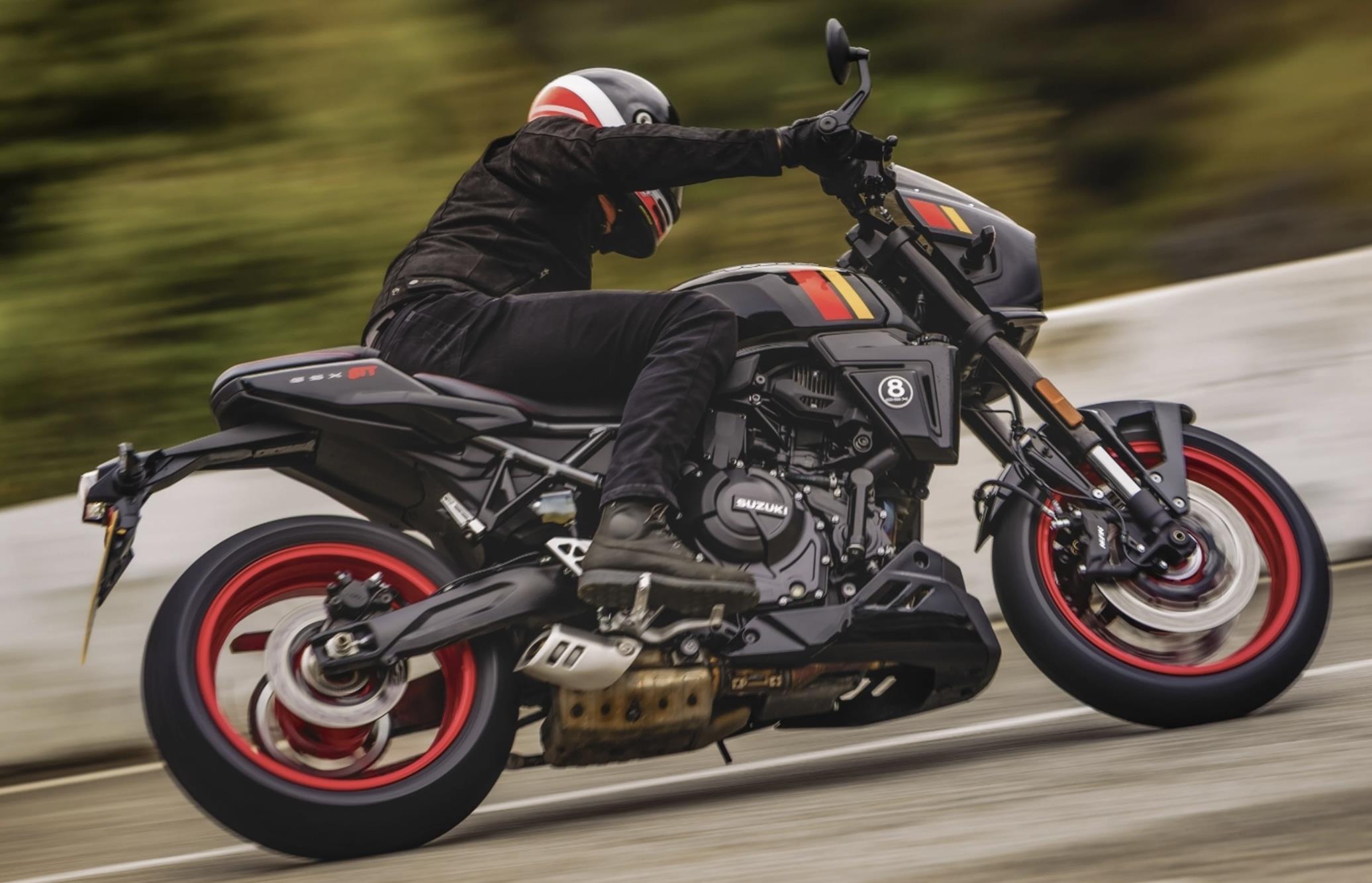
Engine
While retro spirit comes from the styling of the 8T and 8TT, next generation performance is delivered by Suzuki’s award-winning 776cc parallel twin engine; widely praised for its drive from the bottom end and through its midrange, making it a useable, flexible, and fun powerplant. This character and punchy performance is enhanced by a 270° crankshaft design, helping fire the 8T and 8TT from corner to corner. Peak torque is 78Nm at 6800rpm, and peak power comes in at 82.9PS at 8500rpm.
A cross balancer reduces vibrations and aids in the motor’s compact design, and a short exhaust muffler keeps the bike’s side profile clean and compact while still providing an exciting exhaust note.
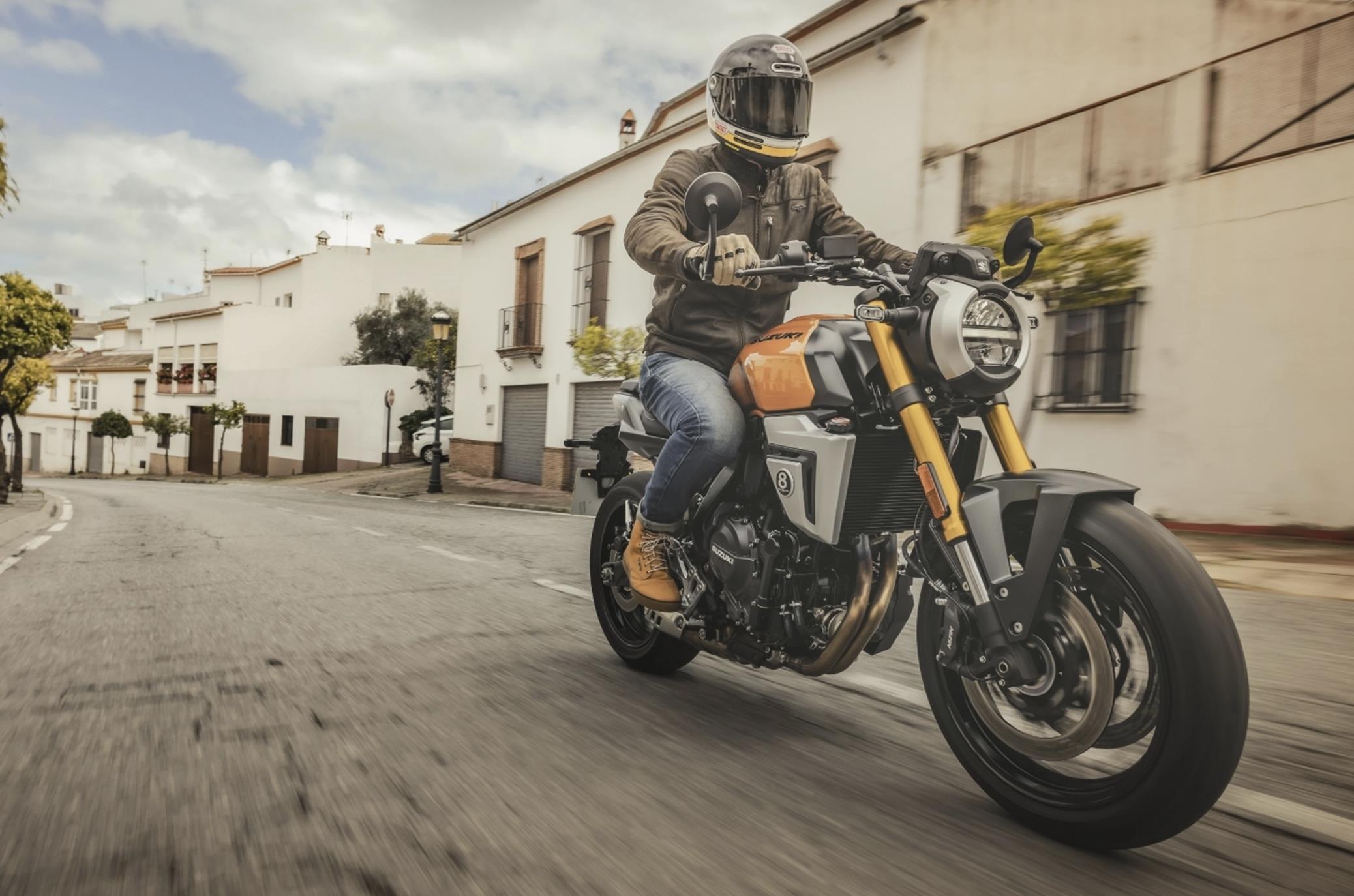
Chassis
Both models use the same steel frame and subframe, and aluminium swingarm. They are suspended by upside down KYB forks – gold on the 8T and black on the 8TT – and a KYB rear shock. Wide, tapered aluminium handlebars provide an engaging and comfortable riding position, offering plenty of leverage for steering input. Stopping power comes via twin 310mm discs up front with radially-mounted Nissin calipers, and a 240mm disc at the rear.
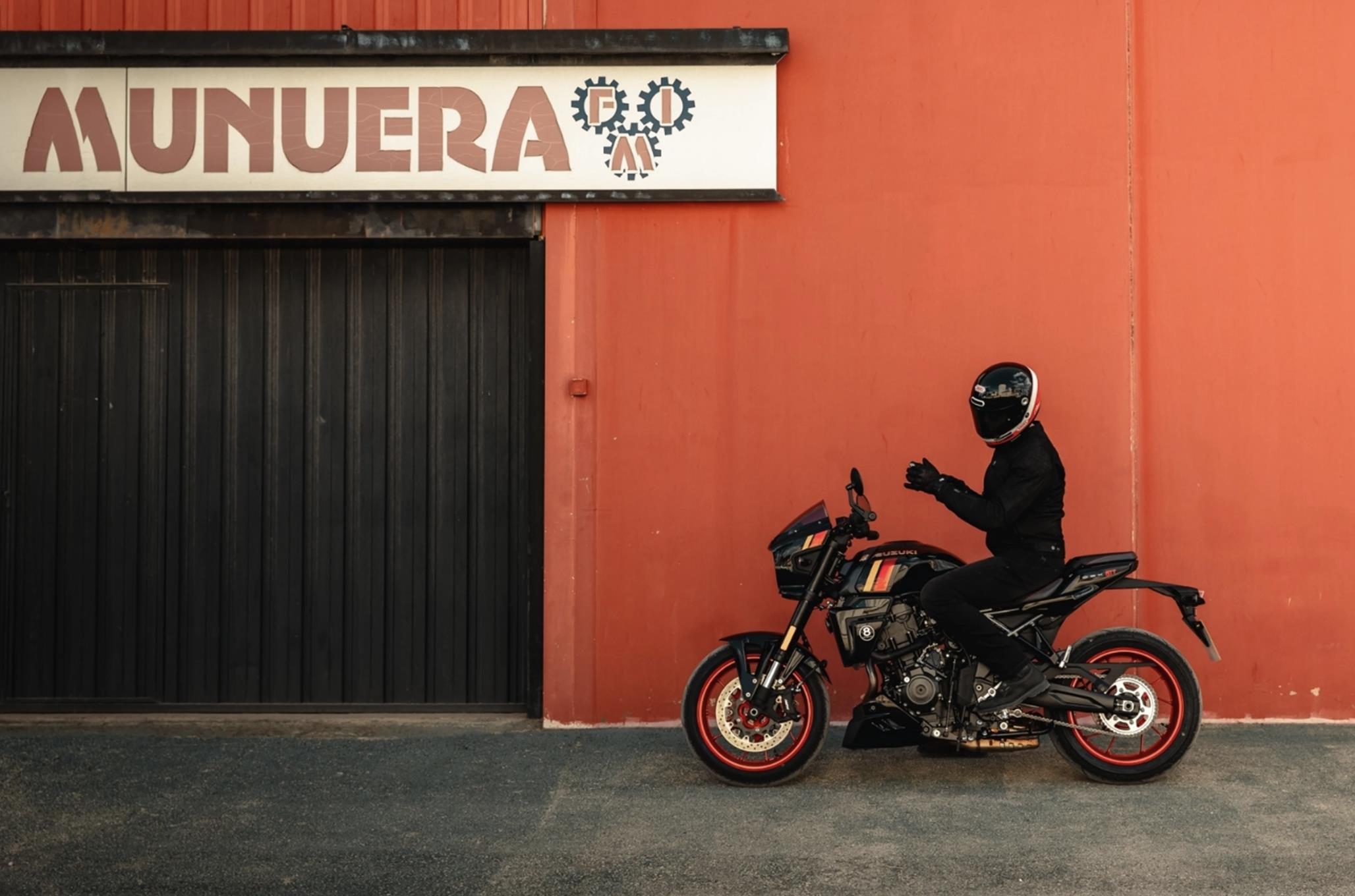
Pricing and availability
The GSX-8T and GSX-8TT will come with an OTR price of £9,599 and £9,999 respectively and will be arriving in dealerships in the coming weeks. Both come with Suzuki’s standard three-year warranty plus up to seven-years extended warranty, activated by regular servicing at an authorised Suzuki dealership.
Pricing announced for new Suzuki DR-Z4S and DR-Z4SM
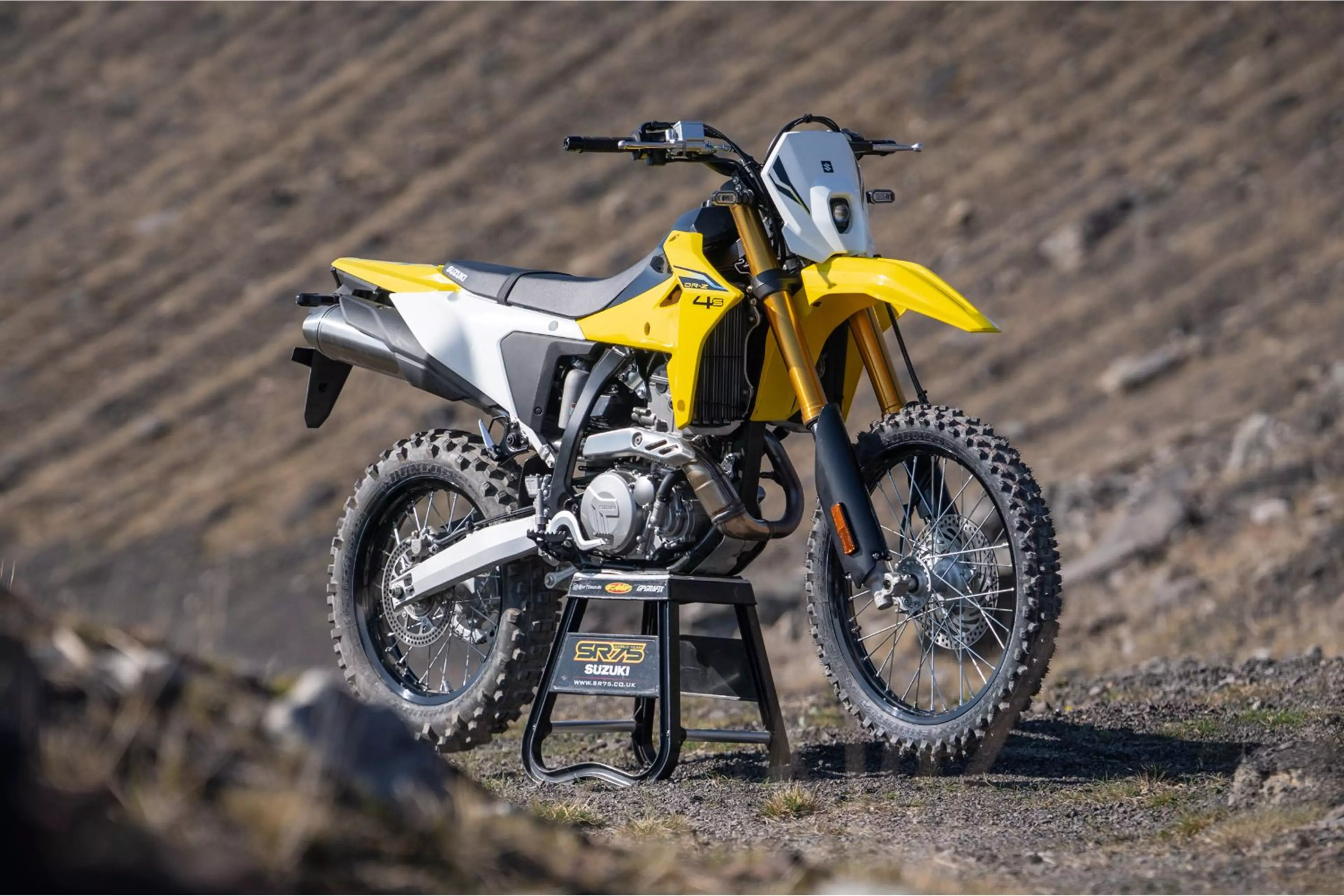
Suzuki GB has announced pricing for the new DR-Z4S and DR-Z4SM models, which were revealed at Eicma last year. Both the dual-purpose trail bike, the DR-Z4S, and its supermoto stablemate, the DR-Z4SM, will come with an OTR price of £7,999.
Both bikes use a new 398cc single-cylinder engine and a new twin-spar steel frame with a separate, bolt-on aluminium subframe and aluminium swingarm. The DR-Z4S sports 21” and 18” spoked wheels and long-travel suspension from KYB, with 280mm of fork travel, 296mm of rear wheel travel, and 300mm of ground clearance. The SM is equipped with 17” wheels and has 260mm of front suspension travel and 277mm rear wheel travel.
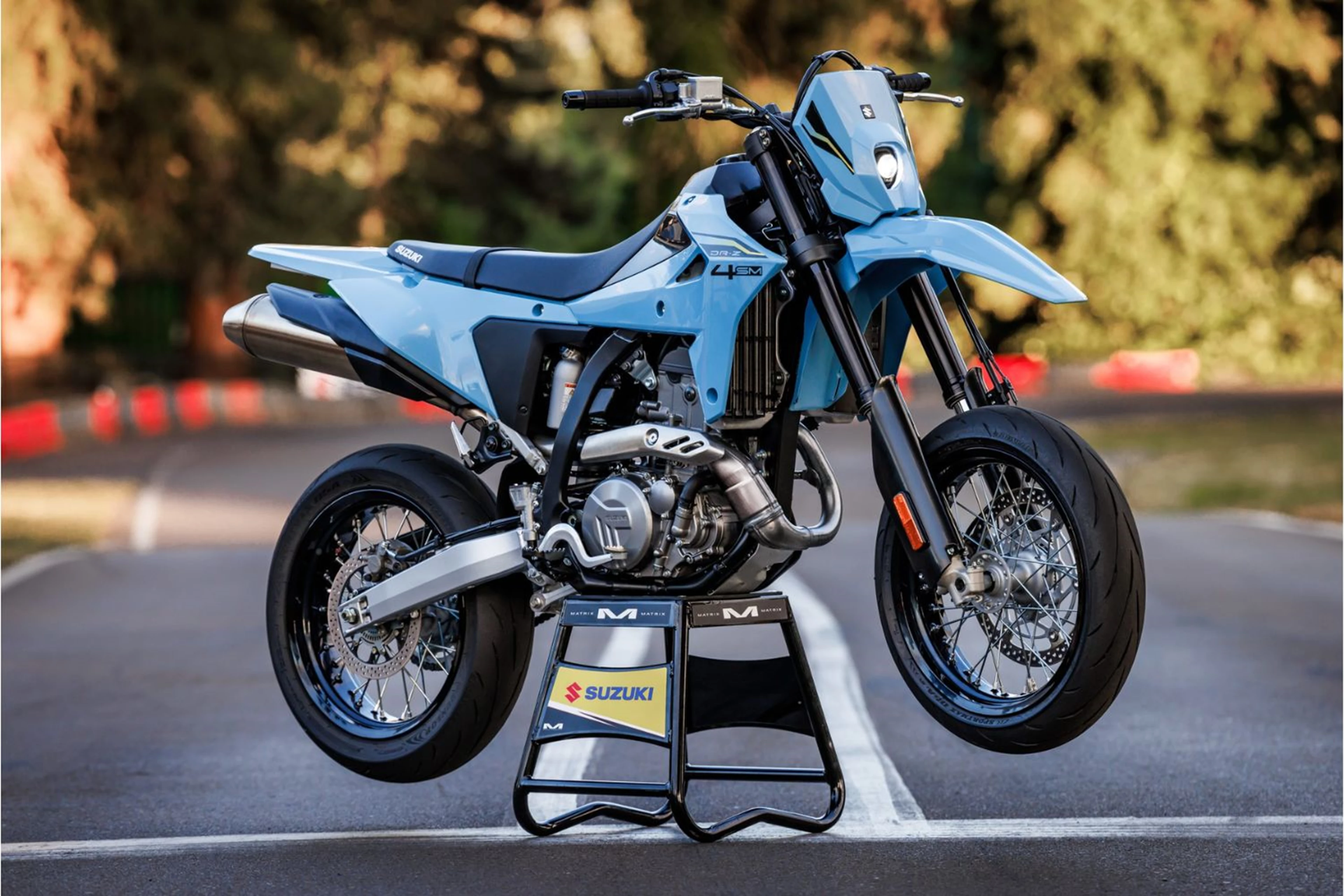
An electronics package comprises three power modes and two standard traction control modes, a tailored off-road traction control setting, plus the ability to disengage the system entirely. There’s also the ability to disengage the ABS at the rear or at both ends on the 4S, for more control off-road, and at the rear of the 4SM.
Both models channel RM-Z-inspired styling, with the DR-Z4S available in Suzuki’s trademark off-road yellow as well as dark grey, while the 4SM comes in white and a new blue/grey livery, dubbed Sky Grey.
When the bikes arrive in dealerships at the end of the summer buyers will benefit from Suzuki’s standard three-year warranty and can enjoy the extended seven-year service activated warranty if they have their DR-Z serviced at an authorised Suzuki dealership.
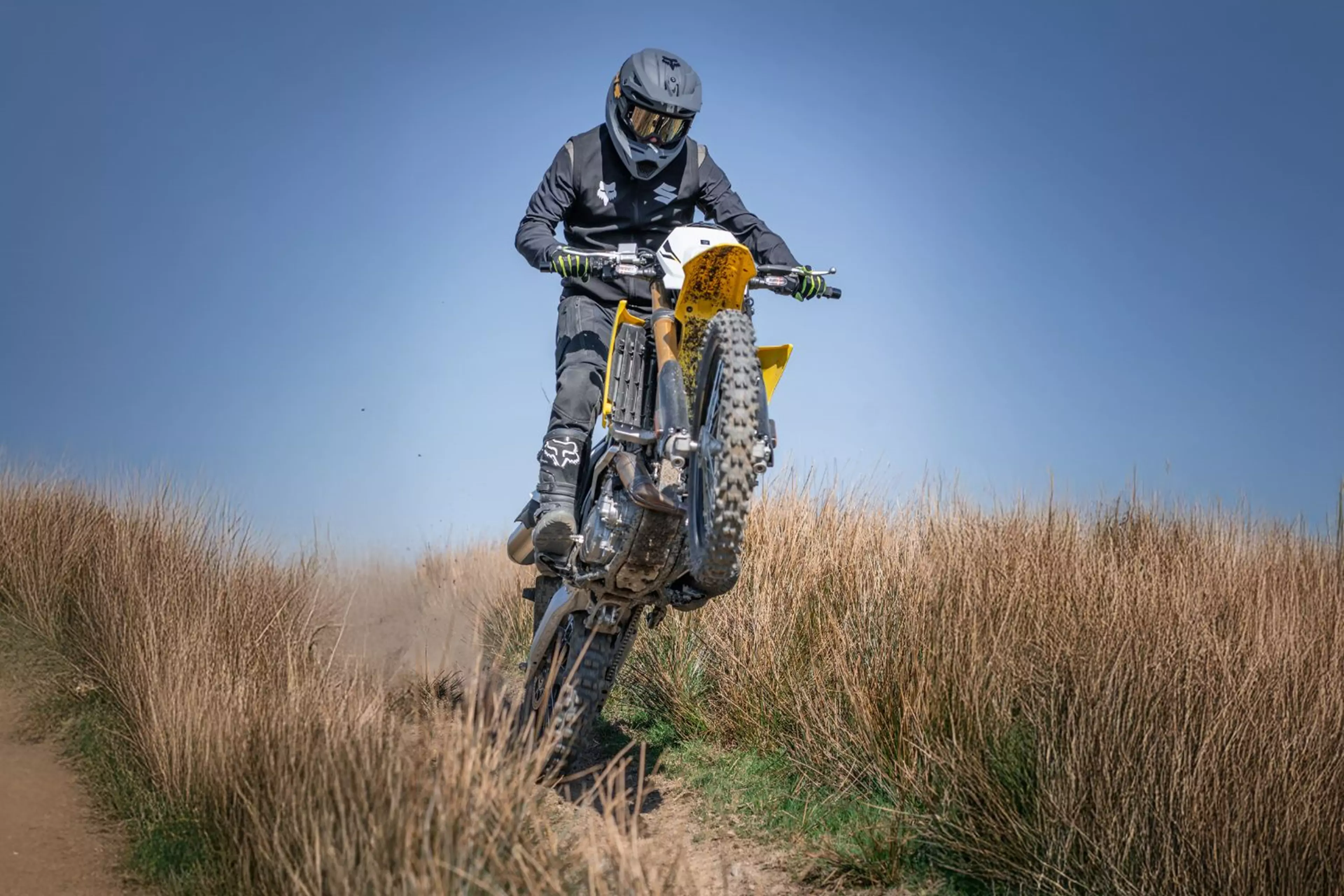
Suzuki GB’s head of motorcycles, Jonathan Martin, said, “These may be spiritual successors to the DR-Z400S and DR-Z400SM, and they take everything that made those bikes so popular – such as their robustness and reliability – but they build on that foundation and reputation with a brand-new chassis and a new version of our 400cc single cylinder engine.
“Delivering superior levels of performance in their respective categories was our aim; for instance, ensuring the DR-Z4S is equipped with a suspension package that can take on the roughest of trails and will perform for an experienced rider off-road, while also remaining friendly for a newer rider. Engine capacity remains the same as the previous DR-Z models, but cumulative torque is improved, which in turn gives a linear throttle response and predictable power delivery, important for negotiating tougher trails or picking up the throttle out of corners on the track.
“We’re looking forward to seeing them in dealerships and are sure buyers or those taking a test ride will feel the high quality, impressive performance, but also our commitment to providing value.”
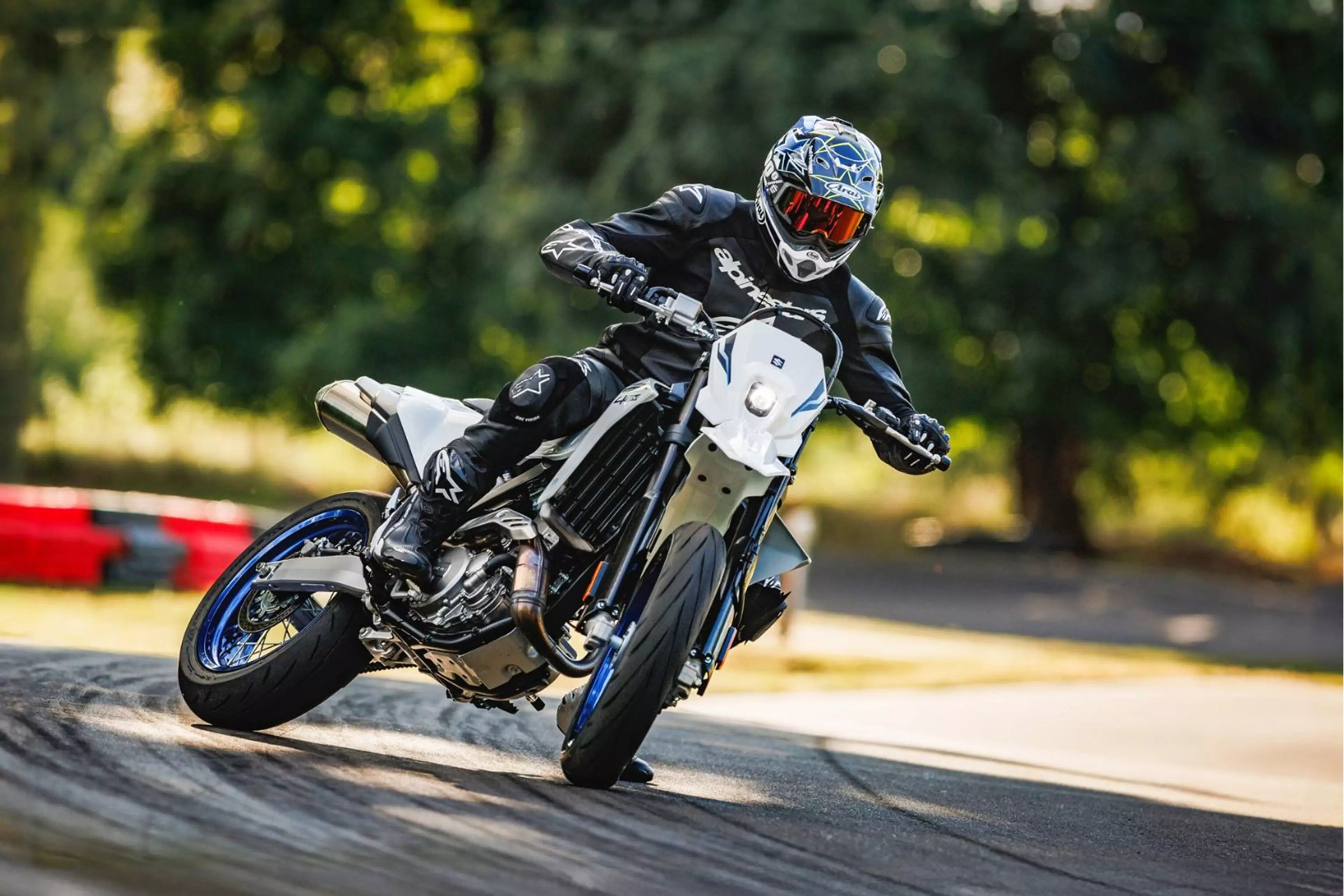
Both models come with Suzuki's standard three-year manufacturer warranty and are eligible for Suzuki's extended seven-year warranty through regular servicing at an authorised Suzuki dealership.
HONDA TO BRING THE MAGIC OF THE MOVIES TO GOODWOOD FESTIVAL OF SPEED IN 2025
- Film-set inspired stand will showcase pan-brand product offering with a range of interactive consumer experiences
- European debuts for the static Honda 0 SUV, dynamic Prelude, and Civic Type R Ultimate Edition, alongside a new all-electric urban concept vehicle – the Super EV Concept
- Visitors will also experience models from Honda’s best-selling motorcycle line-up – starring the EV Fun Concept, Urban EV Concept and the brand’s V3 engine concept, the world’s first with an electrical compressor – and the Miimo robotic mower
- On the Hill, there will be a dynamic run from the Honda-powered Williams FW11 – the brand’s first Formula One championship winning machine from 1986 – while it also marks 60-years since the brand's first Formula 1 race victory
- Followed by 2024 Dakar Rally winner Ricky Brabec, riding his 2020 race winning CRF450 RALLY factory bike, and John McGuinness (MBE) on the CBR1000RR-R Fireblade SP superbike, commissioned to commemorate his 100th start at the Isle of Man TT
Honda will bring the magic of the movies to the British countryside when it returns to the Goodwood Festival of Speed from 10-13 July, with scene-stealing performances from across its award-winning product portfolio and motorsport history.
All inspired by the brand’s commitment to electrified innovation, as it showcases its accelerated pursuit of carbon neutrality with an expanded hybrid line-up and advanced next-generation EVs. Underpinned by many technologies that have been developed during Honda’s storied success within top-level motorsports.
On the stand, and fresh from its debut at the Consumer Electronics Show (CES) in Las Vegas, the Honda 0 SUV prototype model will make its European premiere at Goodwood.
While on two wheels, a pair of models first shown at the EICMA motorcycle show in November 2024 will be on display: the EV Fun Concept – Honda’s first ‘full size’ EV motorcycle – and the Urban EV concept, which embodies Honda’s vision of urban electric mobility with a function-focused design. Honda will also be displaying – for the first time in the UK – its V3 motorcycle concept, the world’s first with an electrical compressor, which will take centre stage as part of the brand’s ‘Dream Tech’ roadshow.
Following its appearance as a concept at the festival in 2024, the all-new Prelude e:HEV hybrid coupe returns for its much-anticipated sequel, as it prepares to make its first dynamic run in Europe on the Hill.
And rounding out the on-stand experience, there will be a meet-and-greet with every movie hero’s favourite sidekick – the Miimo robotic lawnmower.
The Stand
Designed to mimic the experience of a live film set, this year the Honda stand will give visitors the chance to channel their main character energy with a range of interactive experiences centred around the products on display.
First up, visitors can experience modern movie magic by climbing aboard a Civic Type R to shoot their own film trailer on our extended reality (XR) stage. Before diving into a world of mini movie studios – posing for their own AI action movie poster, riding a Gold Wing motorcycle through scenic desert highways, hanging from the wing of a HondaJet, or starring in their very own marine adventure.
Hans de Jaeger, Senior Vice President, Honda Motor Europe, said: “We are excited to return to the Goodwood Festival of Speed this year with a dynamic pan-brand showcase of everything Honda has to offer our European customers. Our business is about more than our products alone, but how our customers feel when they are using them, and this has been the inspiration behind our stand design this year. I look forward to seeing everyone visiting us and experiencing our brand across the four days.”
Hillclimb
The action will continue away from the Honda stand and throughout the Festival of Speed, with a variety of models heading up the Goodwood Hillclimb. This will not only see the dynamic public debut of both the Prelude and Civic Type R Ultimate Edition, but also the first appearance globally of a new all-electric urban concept vehicle – the Super EV Concept.
This has been designed to demonstrate how an A-segment model might offer fresh, ‘fun-to-drive’ electric performance alongside trademark Honda usability. Wrapped in a striking purple design, this small, sporty model has already carried out feasibility testing in the UK in the leadup to the event – as part of a wider global program.
On the Thursday, there will also be a heritage procession featuring every generation of the Civic Type R – led up the Hill by Isle of Man TT legend John McGuinness, riding his CBR1000RR-R Fireblade SP superbike, and followed by Honda’s luxury touring motorcycle, the Gold Wing , which this year is celebrating the 50th anniversary of its first production.
Motorsport
This year’s Goodwood Festival of Speed is celebrating 75 years of Formula 1, and Honda will be no different. As a key contributor to this history, the brand will not only mark 60-years since its first victory at the pinnacle of four-wheel racing, but also its first Constructors’ Championship success with the return of the Williams FW11.
Powered by the Honda RA166E engine, said to produce some 1,050 horsepower, it will be driven up the Hill this year by iconic British driver Nigel Mansell – one half of the title-winning duo from 1986.
Not only that, but there will be an appearance from two-wheel hero Ricky Brabec, riding his Dakar-winning CRF450 RALLY model as a further showcase of Honda’s more recent motorsport success.
All of which demonstrate how the brand, since its founding, has regarded racing as a proving ground for both its people and technologies, boldly taking on top-level motorsports across both two- and four-wheels.
Koji Watanabe, President, Honda Racing Corporation, said: “We always look forward to showcasing our storied motorsport heritage at the Goodwood Festival of Speed, as one of the world’s great celebrations of two- and four-wheeled racing. This year is no different, as we celebrate an icon of Honda’s success in F1 over the past 75 years – the Williams FW11. Not only was this our first championship-winning car in 1986, but it is also one of the sport’s most recognisable, and we are excited to welcome Nigel back into the cockpit this year. Alongside rides from our motorcycle legends, Ricky and John, it promises to be a fantastic celebration of Honda racing.”
For more information on the Honda products set to appear at the Goodwood Festival of Speed, head to: www.honda.co.uk.
Hondacustoms.com set to return to Wheels and Waves in 2025 – celebrating six years of customisation with the all-new GB350S
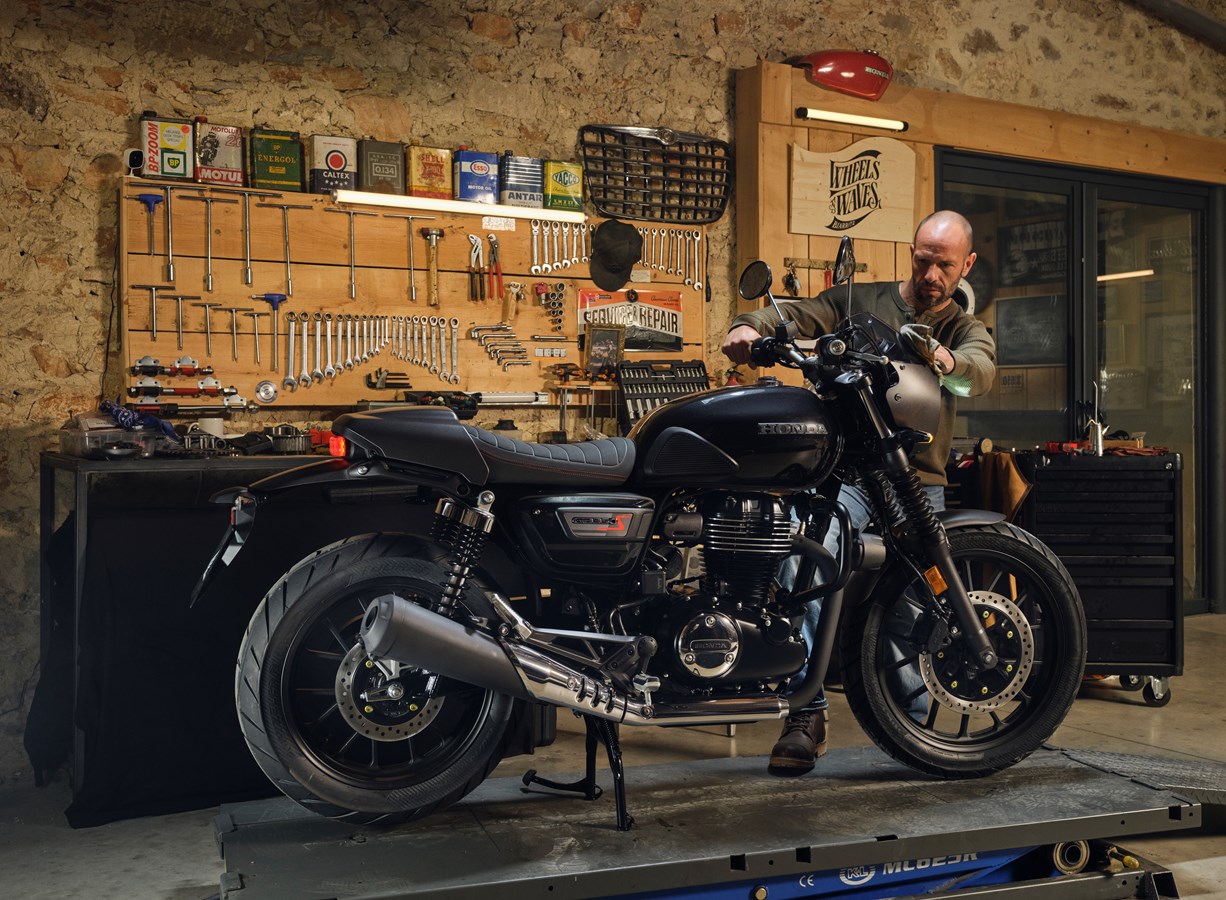
- Eleven bikes from seven countries celebrate individualisation and customisation
- All-new GB350S front and centre in this year’s competition
- All custom bikes will be on display at the Wheels & Waves festival in Biarritz from 11th to the 15th June 2025
- Online poll at hondacustoms.com will crown Europe’s favourite custom GB350S
- Winner to be announced at the end of the summer
Honda is once again embracing artistic flair and style with the 2025 running of its Hondacustoms.com customization competition at Wheels and Waves, Biarritz. This year will be the sixth running of the competition that sees a unique mixture of Honda dealer and specialist customizer-built bikes compete for fan and visitor votes.
This year will see the all-new to Europe GB350S as the base model for customisation for the entrants. The new for 2025 model has already found success in the market, with the GB350S the seventh best selling naked in Europe – confirming the burgeoning market for smaller capacity motorcycles.
The retro naked follows an eclectic mix of other Honda’s that have received the attention of some of Europe’s most creative minds: in 2020, the CB1000R was the first bike offered up for voting, followed in 2021 by the CB650R and the CMX500 Rebel in 2022. For 2023 the Dax, Grom and Monkey minibikes took centre stage, whilst last year saw the CL500 (and one CL250) transformed into a wide range of spectacular creations.
The Hondacustoms contest has become an annual event – working simultaneously in reality and online – that’s growing in popularity as imaginations run riot, with the platform receiving over 25,500 voting visitors throughout summer 2024, an increase of 18% on the previous year, and over 7,000 downloading the unique wallpapers available.
All eleven bikes can then be seen in person at the annual Wheels and Waves festival in Biarritz from Wednesday 11th to Sunday 15th June 2024, with the on-line voting open throughout the summer at hondacustoms.com. Website visitors can vote for their favourite customisation and download wallpapers for their phone or desktop.
As a sneak preview of what to expect, here are the top 5 bikes from Spain and Portugal’s ‘Dream Garage’ custom competition, all of which will be representing those countries in the ‘European championship’ in Biarritz. To see the other creations – currently being built – from France, UK, Italy Etc. please visit hondacustoms.com from Thursday June 12th.
For more information on the new Honda GB350S, click here.
Honda reaches 500 million unit milestone in cumulative global motorcycle production
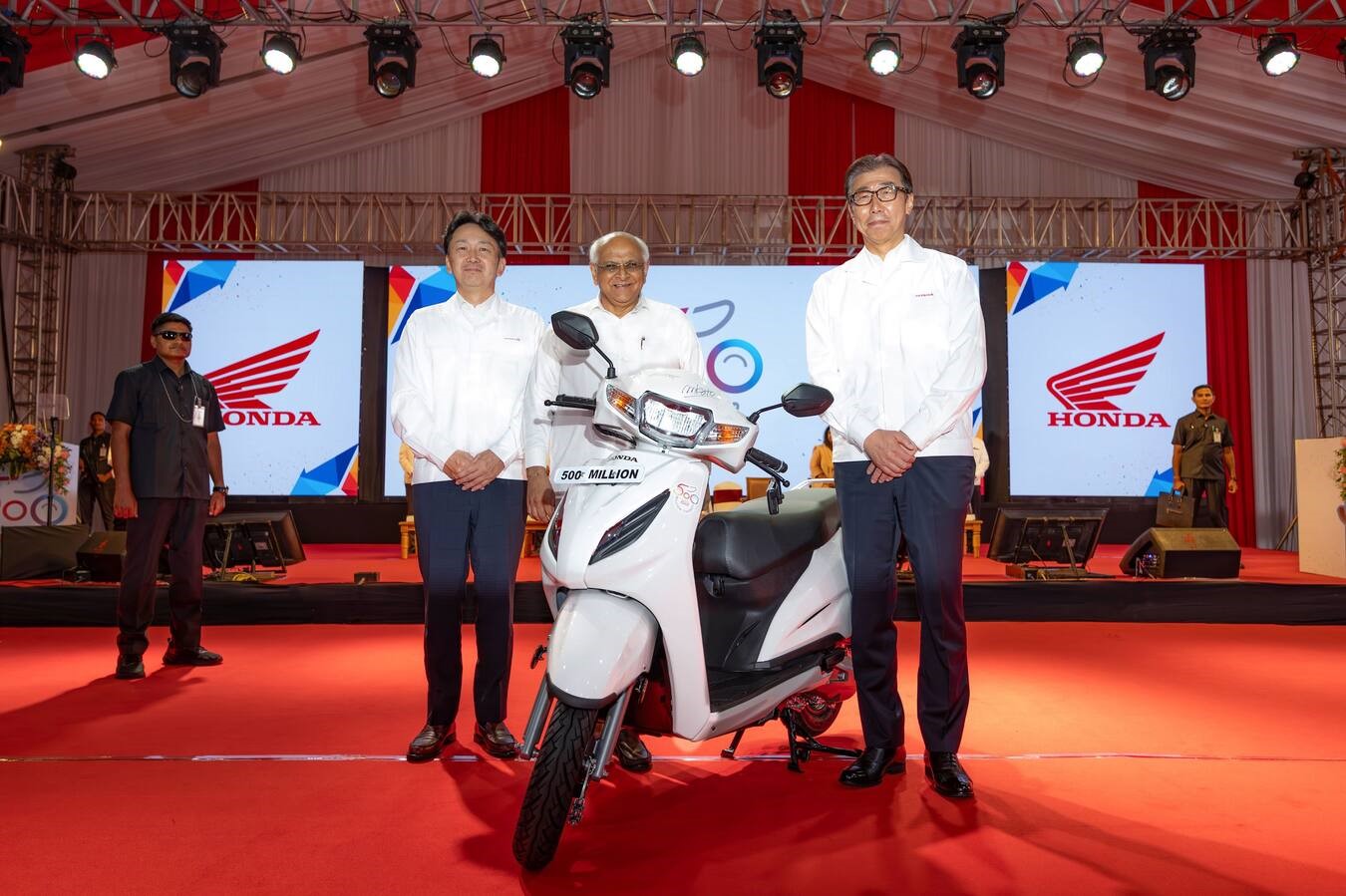
- First motorcycle model was produced in 1949
- Activa follows Super Cub (100 millionth) and Gold Wing (300 millionth) as latest motorcycle produced to hit major milestone
- First motorcycle factory outside of Japan opened in Belgium in 1963
- Honda motorcycle and scooter production facilities exist in 23 countries
Honda’s cumulative global production of engine/motor-powered motorcycles has reached 500 million units — a world-first* achievement — 76 years after the company began mass production of motorcycles in 1949 with the Dream D-Type.
Since its founding in 1948, Honda has developed and provided products and services that meet the needs of customers in many countries and regions based on its belief that “the purpose of technology is to make people’s lives easier.”
Honda began mass-production of motorcycles at its first overseas production facility in Belgium in 1963, and since then, has expanded its production globally in accordance with its fundamental principle of “producing locally where there is demand.” As a result, Honda achieved its 100 million-unit milestone in 1997, its 200 million-unit milestone in 2008, and its 300 million-unit milestone in 2014. In 2018, Honda’s annual production exceeded 20 million units for the first time in its history, and cumulative global production reached 40 million units in 2019. Although the annual production of motorcycles temporarily declined due to COVID-19 in 2020, demand has steadily recovered worldwide to pre-pandemic levels since then. In addition to internal combustion engine (ICE) models, Honda positioned year 2024 as its “first year of global expansion” for electric powered two-wheelers and has started launching new models, creating a wide and diverse product line up.
Honda now offers a broad variety of models from commuters for everyday use to larger displacement models for weekend leisure as well as electric vehicles, with an annual production capacity of more than 20 million units in 23 countries and 37 production entities. The company delivers products and services to customers worldwide through a network of more than 30,000 Honda dealers.
Honda will continue its efforts to further solidify its motorcycle business, by providing attractive products and services with a multi-faceted approach, realizing the “joy and freedom of mobility” for a wider range of customers, building a highly efficient business structure, and achieving carbon neutrality, including through electrification.
Toshihiro Mibe, Director, President and Representative Executive Officer, Honda Motor Co., Ltd.
‘For Honda, motorcycle business is our 'founder’s business', and it will continue to be the company’s core business. In the motorcycle business, we have built the trust of our customers through our many products and services, which has enabled us to achieve a cumulative production volume of 500 million units. I would like to thank our customers and all stakeholders who were involved in achieving this milestone, from development to production, sales, and service. Honda will continue to take on the challenge of expanding the joy of our customers around the world.’
The milestone production total will be hit in India, with the Activa, rolling off the production line at the Honda Motorcycle and Scooter India Private Limited (HMSI) Plant 4 in Vittalpur, Gujurat.
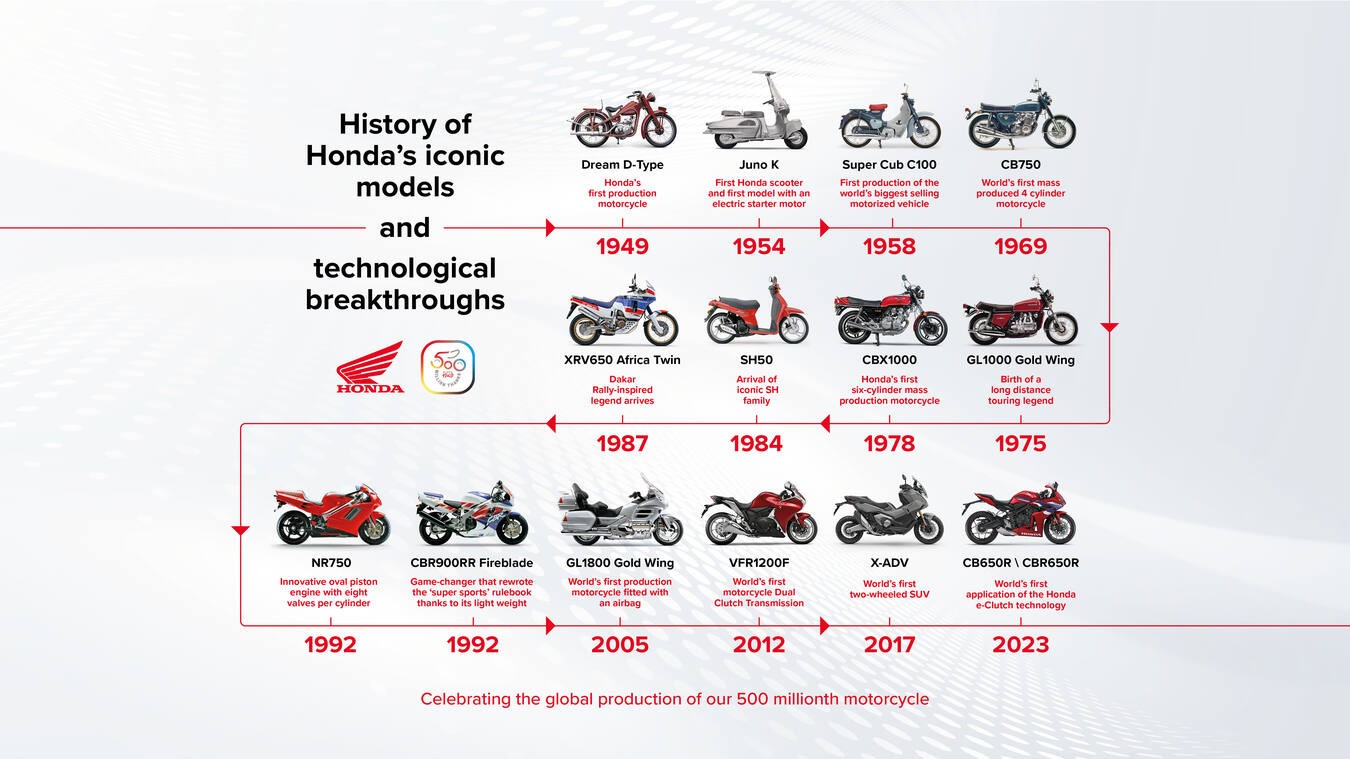
–
- 1948 Honda Motor Co., Ltd. founded
- 1949 First full-fledged motorcycle model, the Dream D-type, launched
- 1958 First Super Cub model, the Super Cub C100, launched
- 1959 Honda becomes world’s largest motorcycle manufacturer
- 1963 Motorcycle production begins in Belgium (first finished motorcycle plant outside Japan)
- 1967 Motorcycle production begins in Thailand
- 1968 Cumulative global production reaches 10 million units
- 1969 The CB750 goes on sale
- 1971 Motorcycle production begins in Indonesia
- 1971 Motorcycle production begins in Italy
- 1975 The GL1000 Gold Wing goes on sale
- 1976 Motorcycle production begins in Brazil
- 1979 Motorcycle production begins in the USA
- 1980 Motorcycle production begins in Nigeria
- 1984 Cumulative global production reaches 50 million units
- 1986 The XRV650 Africa Twin joins the range
- 1992 Begins motorcycle production in China
- 1992 The CBR900RR FireBlade goes on sale
- 1997 Begins motorcycle production in Vietnam
- 1997 Cumulative global production reaches 100 million units (achieved in 48 years)
- 2001 Begins motorcycle production in India
- 2001 Hornet 600 becomes the first large capacity Honda produced outside of Japan
- 2004 Annual production exceeds 10 million units for the first time
- 2005 Honda introduces the world’s first airbag application for production motorcycles on the GL1800 Gold Wing
- 2008 Cumulative global production reaches 200 million units (achieved in 2008 Cumulative global production reaches 200 million units (achieved in 11 years from 100 million units)
- 2009 The VFR1200F is unveiled at the Tokyo Motor Show – the world’s first dual clutch motorcycle
- 2013 Start of motorcycle production in Bangladesh
- 2014 Cumulative global production reaches 300 million units (achieved in 6 years from 200 million units)
- 2014 The Honda Super Cub becomes the most produced motorcycle in history (87 million units sold in 160 countries
- 2018 Cumulative annual production exceeds 20 million units for the first time
- 2019 Cumulative global production reaches 400 million units (achieved in 5 years from 300 million units)
- 2022 Honda’s electrification journey begins in Europe, with the introduction of the EM1e: scooter that utilises Honda’s Mobile Power Pack e: (MPP) technology
- 2022 Fireblade celebrates its 25th Anniversary
- 2023 Honda introduces its Honda E-Clutch technology
- 2024 Honda introduces concept version of its first full sized EV FUN model and new V3 concept engine with unique electrical compressor
- 2025 Cumulative global production reaches 500 million units 2025 Cumulative global production reaches 500 million units (within six years from 400 million units)
- 2025 The Gold Wing celebrates its 50th Anniversary
Founding of Honda’s Global Motorcycle production sites:
- 1963 Belgium
- 1967 Thailand
- 1971 Indonesia
- 1976 Brazil
- 1976 Italy
- 1979 North America
- 1980 Nigeria
- 1986 Spain
- 1992 China
- 1997 Vietnam
- 2001 India
- 2007 Peru
- 2013 Bangladesh
- 2013 Kenya
New partnerships set to enhance Honda Adventure Roads 2025
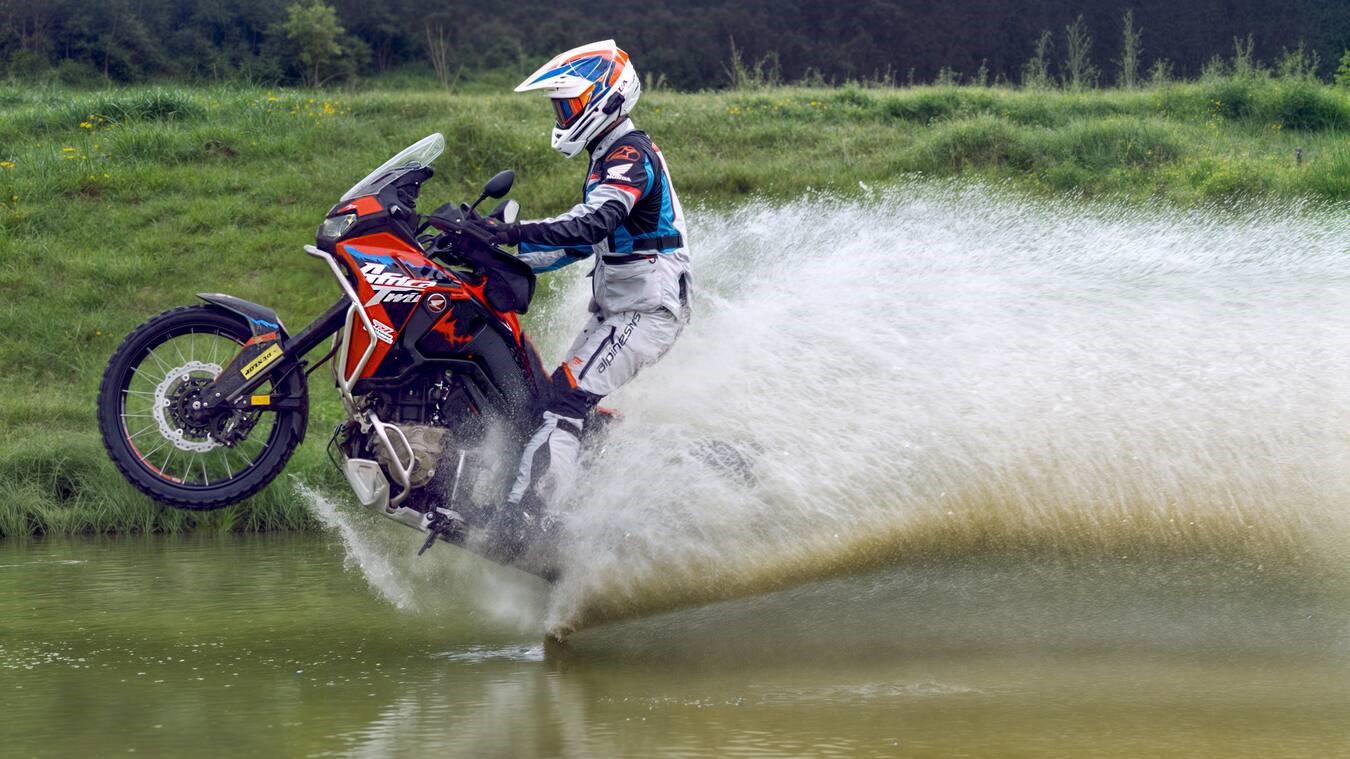
- Fifth edition of the Honda Adventure Roads series is a nine-day grand tour set to begin June 8th 2025
- Dunlop joins the 2025 adventure equipping each bike with its Dunlop Trailmax Raid 50/50 on/off road tyres
- Pro Honda Oils to exclusively supply lubricants for 2025 tour to cope with heightened demands of route
The fifth edition of the Honda Adventure Roads series is set to begin next month, 8th June 2025 in Rome, capital of Italy. Ahead of the riders is an imposing 2,500km challenge of tarmac, gravel and off-road riding that eventually concludes in Istanbul, Turkey, nine days later.
Tackling that challenge head on will be Honda’s flagship adventure machine, the CRF1100L Africa Twin, whose reputation for durability, balance and sheer toughness makes it the ideal partner to tackle this epic adventure.
For 2025, Dunlop will also join as a selected partner to the event, supplying each bike with its Trailmax Raid tyres. Dunlop’s first 50/50 on/off road offering is the ideal tyre of choice for this year’s edition of Honda Adventure Roads, offering the versatility needed for a variety of terrain and riders of differing experience levels. The tour will present riders with winding mountain roads, off-road trails, and dense forests across its eight countries.
Roberto Finetti, Marketing Manager, Dunlop Motorcycle Europe: “We’re delighted to have been chosen as a partner for Honda Adventure Roads 2025. It is a very clear endorsement of Dunlop’s newest adventure product. We introduced Trailmax Raid to our range as Dunlop’s first 50/50 on/off-road tire, and it has quickly established itself as the go-to choice for riders, enthusiasts, riding schools, and journalists across Europe. It delivers impressive off-road capability while maintaining excellent grip on wet and dry roads, making it the perfect choice for this challenging multi-terrain, cross-border adventure. Honda Adventure Roads will be a true test of both rider and machine, but Dunlop Trailmax Raid is more than up to the challenge!”
To cope with the unique demands of this exclusive route, Pro Honda Oils will also join the adventure, as exclusive supplier of lubricants to ensure optimum performance both on and off road.
Dunlop and Pro Honda Oils join established suppliers such as Enduristan, Barkbusters and Alpinestars, in heightening the overall riding experience and adding value to an unforgettable experience.
You can follow the progress of Honda Adventure Roads on a dedicated Instagram channel, with regular updates bringing the adventure right to your fingertips.
CB125F brings range of big bike-inspired updates and a Honda ‘first’ for its 26 year model iteration
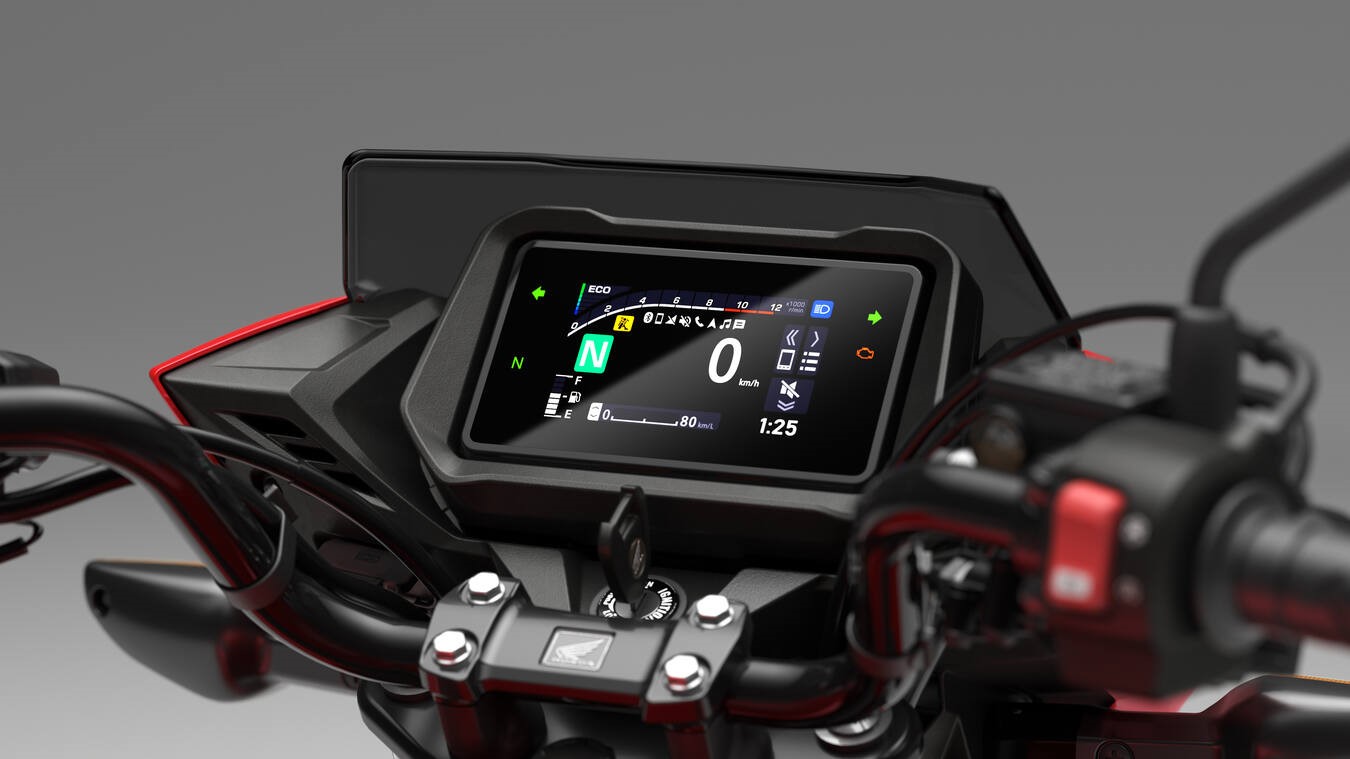
- Idling Stop technology appears on a manual Honda motorcycle for the first time
- All-new 4.2” TFT monitor, Honda RoadSync and USB-C port bring useful, premium technology
- Revised bodywork and lighting introduce a more premium silhouette
- Euro5+ compliant ‘enhanced Smart Power’ (eSP) engine brings efficient, strong 125cc performance
Honda’s perennially popular A1 licence-compatible CB125F has been thoroughly updated for 26YM with a range of big bike inspired additions, to ensure it remains a compelling proposition for riders of any age looking for stylish, cost-efficient mobility with a wide range of the latest technology.
In the decade since its introduction to the European market in 2015, the CB125F has garnered a loyal following from over 82,000 customers, with the UK leading the way in sales, closely followed by France and Germany.
A revised enhanced Smart Power (eSP) engine is at the heart of the 26YM CB125F, which delivers outstanding fuel economy while maintaining strong 125cc performance. A new 02 sensor and updated ECU settings ensure both EURO5+ compliance and outstanding fuel efficiency of 66.7km/l, giving the CB125F a potential range of over 700km from the 11L fuel tank.
The biggest revision to the proven engine formula is the addition of Idling Stop, making the CB125F the first manual transmission Honda motorcycle to feature the technology, following successful applications on the Vision 110, SH125i and PCX125 scooters and the DCT-equipped Gold Wing Tour. The advanced technology switches off the engine at standstill, reducing both fuel consumption and emissions, and operates (in any gear) to seamlessly restart the engine as the clutch is let out,
Complementing the revised powertrain is updated, sophisticated styling that conveys even more ‘big bike’ style, with a new broad-shouldered fuel tank that takes its cue from other, larger models in the CB family. This is backed up by a refreshed nose fairing and more compact, blacked-out fly screen up front, whilst at the rear a revised ‘large mass’ rear cowling adds to the dynamic look. Crowning the revised look are all-new LED light units front and rear, both with a unique, distinct and highly visible vertical light signature for increased visibility.
Rounding out the 26YM revisions is a brand new, full colour 4.2-inch TFT display that relays key information clearly and, for the first time on the CB125F, incorporates smartphone connectivity via Honda RoadSync for seamless calls and music streaming. For convenient smartphone charging, a USB-C socket is included near to the handlebars.
The 26YM CB125F will be available in the following bold colour options:
- Imperial Red Metallic
- Matt Marvel Blue Metallic
- *NEW* Matt Axis Gray Metallic
26YM HONDA CB125F
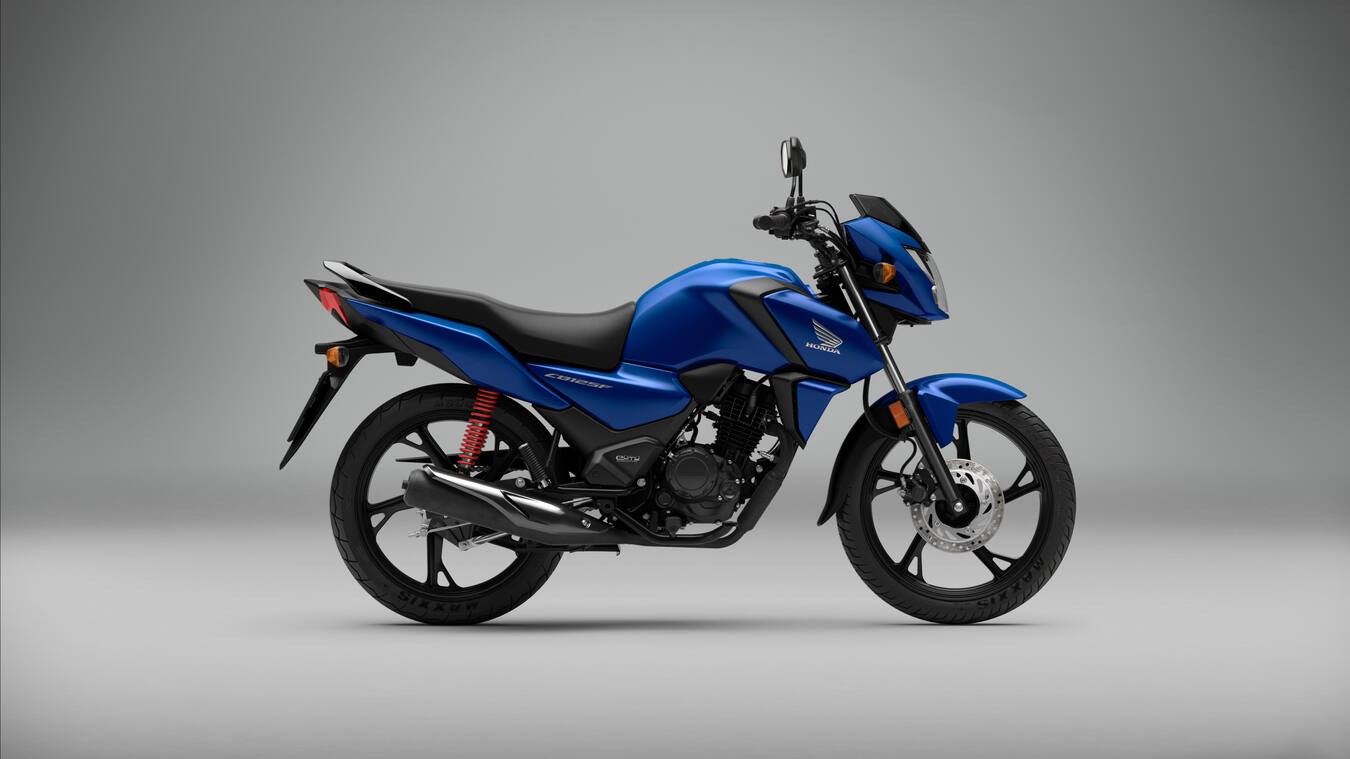
Model updates: Honda’s perennially popular entry-level CB125F’s standard specification revolves around its low friction enhanced Smart Power (eSP) engine that delivers outstanding fuel economy while maintaining strong 125cc performance. Equipped with Idling Stop for 26YM (the first time on a Honda manual transmission), EURO5+ compliance has also been achieved. Refreshed bodywork takes styling cues from a range of much bigger stablemates and equipment includes a new LED headlight and taillight, plus 4.2-inch TFT LCD display with Honda RoadSync smartphone connectivity and USB-C port. A centre stand and passenger grab rail are standard fit.
- Introduction
- Model overview
- Key features
- Technical specifications
–
1. Introduction
An entry-level 125cc motorcycle needs to be a multi-faceted machine. To some it represents the most economical way of getting from A to B, both in terms of initial affordability and running costs. To these riders it must be durable, easy to live with and economical: simple, trouble-free transport at its most fundamental.
But to many new riders a 125 is the start of their motorcycling adventure, their first ‘real’ bike. So, it must deliver all the above, plus everything else that a motorcycle should – the excitement, freedom and instinctive pleasure that two wheels bring to everyday life. Yet it also must be easy for a novice to manage as they learn, with a build quality and styling that instil tangible pride of ownership.
For any manufacturer, welcoming and introducing fresh entrants to their brand is important. The right initial experience can lead to a lifelong association, and the CB125F has long served this function for Honda – a tough, user-friendly entry-level motorcycle that offers the perfect first rung on the ladder. The CB125F was a new model name for Honda in 2015; it maintained the previous CBF125’s core strength of robust simplicity but built strongly on that strong foundation in terms of quality, ease of use and style.
In 2021 the CB125F was renewed once more, with a complete (lighter weight) refresh that made it even more desirable and cost effective. In 24YM it received a light update through a new muffler and pillion grab handle and now, for 26YM, it moves on again with updated styling, revised details and additional tech that owners will appreciate.
As ever, the CB125F remains a great bike to simply get you where you need to be, or from where to begin the ride – and journey – of a lifetime.
–
2. Model Overview
The CB125F is a serious small machine, whose original development involved the filing of no fewer than 19 patent applications. Completely updated in 21YM, it lost 11kg thanks to a new engine, redesigned frame and revised bodywork. For 26YM – and expanding on its success – the CB125F receives refreshed, sharper styling with a new, premium, headlight signature, plus enhanced specification and everyday usefulness in the form of a full-colour 4.2” TFT display, complete with RoadSync smartphone connectivity and USB-C port conveniently located near the handlebars.
Idling Stop technology has been applied and, as before, the air-cooled enhanced Smart Power (eSP) engine offers a user-friendly experience, EURO5+ compliance, and outstanding fuel economy, all while maintaining excellent 125cc performance
The 26YM CB125F will be available in the following bold colour options:
- Imperial Red Metallic
- Matt Marvel Blue Metallic
- Matt Axis Gray Metallic
–
3. Key Features
3.1 Engine
- Enhanced Smart Power (eSP) engine with ACG starter – now includes Idling Stop technology for even greater fuel economy, plus EURO5+ compliance
- Low friction technologies include offset cylinder, needle bearings for the roller/rocker arms and piston oil jet
- Five-speed gearbox and sealed final drive chain
- Uprated 5Ah battery
The CB125F’s air-cooled, 124cc 2-valve SOHC single-cylinder eSP engine has been engineered from its inception to maintain optimum performance for busy urban streets but with extra, serious frugality and supreme reliability.
Peak power of 8kW is delivered @ 7,500rpm, with peak torque of 10.9Nm @ 6,000rpm. Bore and stroke is set at 50 x 63.1mm, with a compression ratio of 10.0:1. This results in standing start acceleration over 200m of 12.4s, but more importantly, the fuel efficiency is 66.7km/l, giving a potential range of over 730km from the 11L fuel tank.
Honda has developed its eSP engines – and the engineering that goes into them – on a growing range of 125cc scooters over the last 8 years. The focus is around building in, from a clean sheet, low-friction technology to every facet of the engine. And it starts with weight; the 2021 upgrade reduced the weight of the eSP engine by 7kg. Its cylinder is offset, reducing friction between the piston skirt and bore, while the piston itself is cooled by an oil jet from underneath, again reducing friction. Valve operation is via rocker-roller arms equipped with needle bearings.
An Alternating Current Generator (ACG) is also part of the eSP formula and combines electricity generation with starting duties, saving weight while simplifying layout. The effort needed to start the engine is reduced thanks to a swing-back system that returns the crank to its position before air intake – giving the engine a ‘running’ start – and a decompression mechanism that negates cranking resistance due to compression. In use the ACG starter is extremely quiet.
Idling Stop technology – as found on the Vision 110, SH125i and PCX125 scooters – is a benefit of the ACG system and a 26YM addition; it’s also the first on a Honda with a standard manual transmission. The system switches off the engine at standstill, operates (in any gear) to seamlessly restart it as the clutch is let out, and can be turned off if desired. A new 02 sensor plus updated ECU settings ensures EURO5+ compliance while an uprated battery, from 4Ah to 5Ah, ensures durable cranking power.
The gearbox is 5-speed and final drive is via a 428 sealed chain.
–
3.2 Styling & Equipment
- Comprehensive styling refresh builds big bike appeal
- New 4.2-inch colour TFT screen features Honda RoadSync connectivity
- USB-C charging socket
- New LED front and rear lights
- Passenger grab rail and centre stand standard fit
The 26YM CB125F wears updated, sophisticated styling to deliver the owner even more of that big bike style. Building on what went before, the broad-shouldered fuel tank takes its cue from other models in the CB family with added dynamicism in its taut lines – backed up by a revised ‘large mass’ rear seat cowl – while the refreshed nose fairing and blacked-out fly screen are more compact and stylish yet still provide ample wind deflection, alongside the tank side shrouds. The all-new headlight unit is an LED item with a unique, distinct and highly visible vertical light signature; the re-shaped taillight is also new LED. The start/stop button is an integrated switch as is the high beam/passing switch.
The centrepiece of the new riding experience is a brand new, full colour 4.2-inch TFT display that includes gear position indicator, fuel gauge and clock. It also incorporates Bluetooth, while the smartphone connectivity of Honda RoadSync is also an upgrade. This feature allows straightforward, on-screen turn-by-turn navigation as well as the option (via a Bluetooth helmet headset) for the rider to make calls or listen to music. Owners just need to download the Honda RoadSync app, connect to the CB125F, and they're ready to go. For convenient smartphone charging, a USB-C socket is included.
The engine, exhaust downpipe, fork lowers and wheels are blacked out, underlining the strong, defined lines and bold paintwork options. The muffler too, is blacked out and finished in a near full length chrome heat shield. Other quality finishing touches include 3D Honda Wings on the shrouds and mirror/indicator shaping that emulates the design language of the whole machine.
With its intended use as an everyday commuter, gateway machine to the world of motorcycling – and riding school stalwart – the CB125F’s riding position is upright and relaxed, with forward-set footpegs and wide tubular handlebars giving optimum control, rider confidence and all-round visibility. Seat height is set at a manageable 790mm and offers room for two adults comfortably; an aluminium passenger grab rail is also standard, as is a centre stand.
–
3.3 Chassis
- Lightweight tubular steel frame
- Preload adjustable twin rear shocks
- 117kg wet weight
- Confidence-inspiring Combined Braking System (CBS)
The CB125F’s tubular frame uses high-tensile steel in its construction. It suspends the engine from a sturdy central spine and features geometry that provides the best balance between ride comfort and straight-line stability, with a focus toward light steering input and sporty feel at all lean angles. Rake and trail are set at 26° and 92mm, with wheelbase of 1,285mm and wet weight is only 117kg.
Dual rear shocks offer five-stage spring preload adjustment and complement the 30mm diameter telescopic fork’s compliance and ride quality; stylish 18-inch die-cast aluminium split-five-spoke front and rear wheels increase stability and ride quality over rough city streets.
Tyres are sized 80/100 front and 100/80 rear. A 240mm front disc is worked by a single piston caliper, with back up from the 130mm rear drum. Aiding new and less experienced riders is the confidence-inspiring Combined Braking System (CBS), which applies some braking force to the front disc when using the rear brake, for more balanced and stable low-speed control.
–
4. Technical Specifications
|
ENGINE |
|
|
Type |
Air cooled 4 stroke OHC single cylinder |
|
Displacement |
124cc |
|
No of Valves per Cylinder |
2 |
|
Bore & Stroke |
50 x 63.1mm |
|
Compression Ratio |
10.0:1 |
|
Max. Power Output |
8kW @7,500rpm |
|
Max. Torque |
10.9Nm @ 6,000rpm |
|
Noise level (dB) |
Lurban – 67dB, Lwot – 68.2dB |
|
Oil Capacity |
1L |
|
FUEL SYSTEM |
|
|
Carburation |
PGM-FI electronic fuel injection |
|
Fuel Tank Capacity |
11L |
|
Fuel Consumption (WMTC) |
66.7 km/L (1.4 l/100km) |
|
CO2 Emissions WMTC |
32g/km |
|
ELECTRICAL SYSTEM |
|
|
Battery Capacity |
12V 6A-h(10h) |
|
DRIVETRAIN |
|
|
Clutch Type |
Wet, multiplate with coil springs |
|
Transmission Type |
Manual 5 speed |
|
Final Drive |
Chain (428 sealed) |
|
FRAME |
|
|
Type |
Steel diamond |
|
CHASSIS |
|
|
Dimensions (L'W'H) |
2,027mm x 751mm x 1,091mm |
|
Wheelbase |
1,285mm |
|
Caster Angle |
26° |
|
Trail |
92mm |
|
Seat Height |
790mm |
|
Ground Clearance |
160mm |
|
Kerb Weight |
117kg |
|
Turning radius |
2.04m |
|
SUSPENSION |
|
|
Type Front |
30mm telescopic |
|
Type Rear |
Dual shocks – five stage preload |
|
WHEELS |
|
|
Type Front |
18in five spoke aluminium 18M/C x MT1.85 |
|
Type Rear |
18in five spoke aluminium 18M/C x MT2.15 |
|
Tyres Front |
80/100 18M/C 47P |
|
Tyres Rear |
100/80 18M/C 53P |
|
BRAKES |
|
|
System Type |
CBS |
|
Type Front |
240mm single disc with single piston caliper |
|
Type Rear |
130mm drum |
|
INSTRUMENTS & ELECTRICS |
|
|
Instruments |
4.2″ Full-colour TFT |
|
Headlight |
LED |
|
Taillight |
LED |
|
Connectivity |
Roadsync |
|
USB |
USB-C |
|
Additional Features |
Idling Stop |
NC750X and EM1 e: pick up prestigious design awards
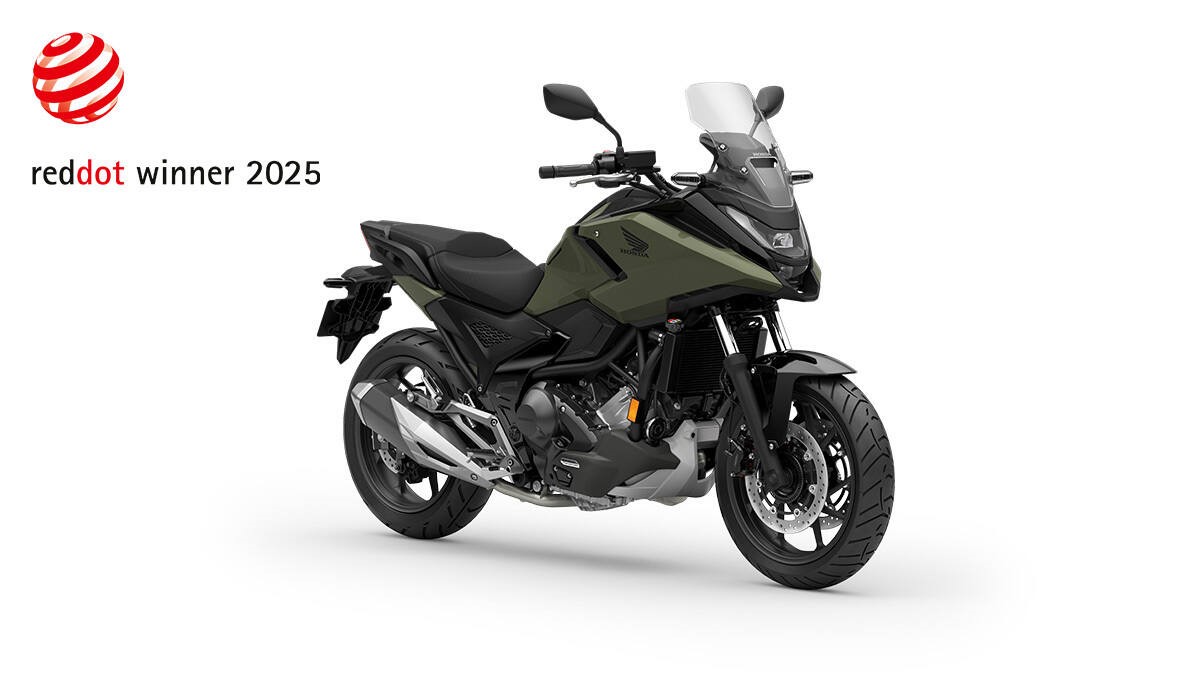
- Popular ‘urban adventurer’ NC750X scoops Red Dot design award
- 6th consecutive year that a Honda powered two-wheeler has picked up a Red Dot accolade
- EM1 e: wins iF award, following its Red Dot recognition in 2024
Honda is pleased to announce that two of its powered two-wheelers – the EM1 e: electric moped and versatile ‘urban adventurer’ NC750X – have garnered prestigious design awards.
The EM1 e: receives an iF award, having already been the recipient of a Red Dot Product Design award in 2024. Developed under the concept of creating an “electric scooter ‘just right’ for people,” the EM1 e: became the first electric personal-use Honda two-wheeler to go on sale in Europe on its arrival in 2023. Powered by the Honda Mobile Power Pack e: swappable battery, it features simple and slim packaging realized by the optimization of the layout of key components. High-brightness LEDs are adopted for the lights, contributing to greater peace of mind while riding at night. The headlight features a simple, flush-surface design, highlighting the ultra-modern look of the EM1 e:.
Honda’s streak of success in the Red Dot awards continues into a sixth consecutive year with the NC750X, which follows the CBR1000RR-R Fireblade SP (2020), Forza 750 (2021), ADV350 and NT1100 (2022), CB750 Hornet and XL750 Transalp (2023) and EM1 e: (2024) as previous Honda winners of a Red Dot Product Design award.
Since its introduction in 2012, the NC750X has gained a reputation as the ultimate in motorcycling versatility, thanks to its upright riding position, easy manoeuvrability, outstanding fuel consumption, unique internal storage compartment and mix of comfortable and enjoyable performance. For its 2025 iteration, the NC750X became the first motorcycle to incorporate the bio-based polycarbonate resin DurabioTM in its main coloured fairing part – in its Earth Khaki colour.
The NC750X’s 2025 re-styling was led by the team at Honda’s R&D centre in Rome, whose Project Leader, Valerio Aiello, commented:
“We’re delighted to receive the Red Dot design award for the NC750X. For the 2025 version, we concentrated on making it much more robust, clean and dynamic, while keeping in line with its basic concept. What I particularly like about the NC750X is its hybrid nature, in the sense that it passes through different categories of motorcycles taking inspiration from all of them: a bit adventure, a bit road and with the practicality of a scooter.”
Toshinobu Minami, Managing Director, Chief Operating Officer, Design Center, Honda R&D Co., Ltd. commented:
“We are very honoured to receive the Red Dot Design Award for the sixth consecutive year, and this year, we also received the iF Design Award. We believe that this is the result of people resonating with Honda Design’s passion of “designs that enrich the lives of our customers through experiences and products resulting from a human-centric approach”. Honda will continue to create new values that surprise and inspire people, and provide the joy of expanding their life’s potential.
DR-Z4S set for ABR Festival debut
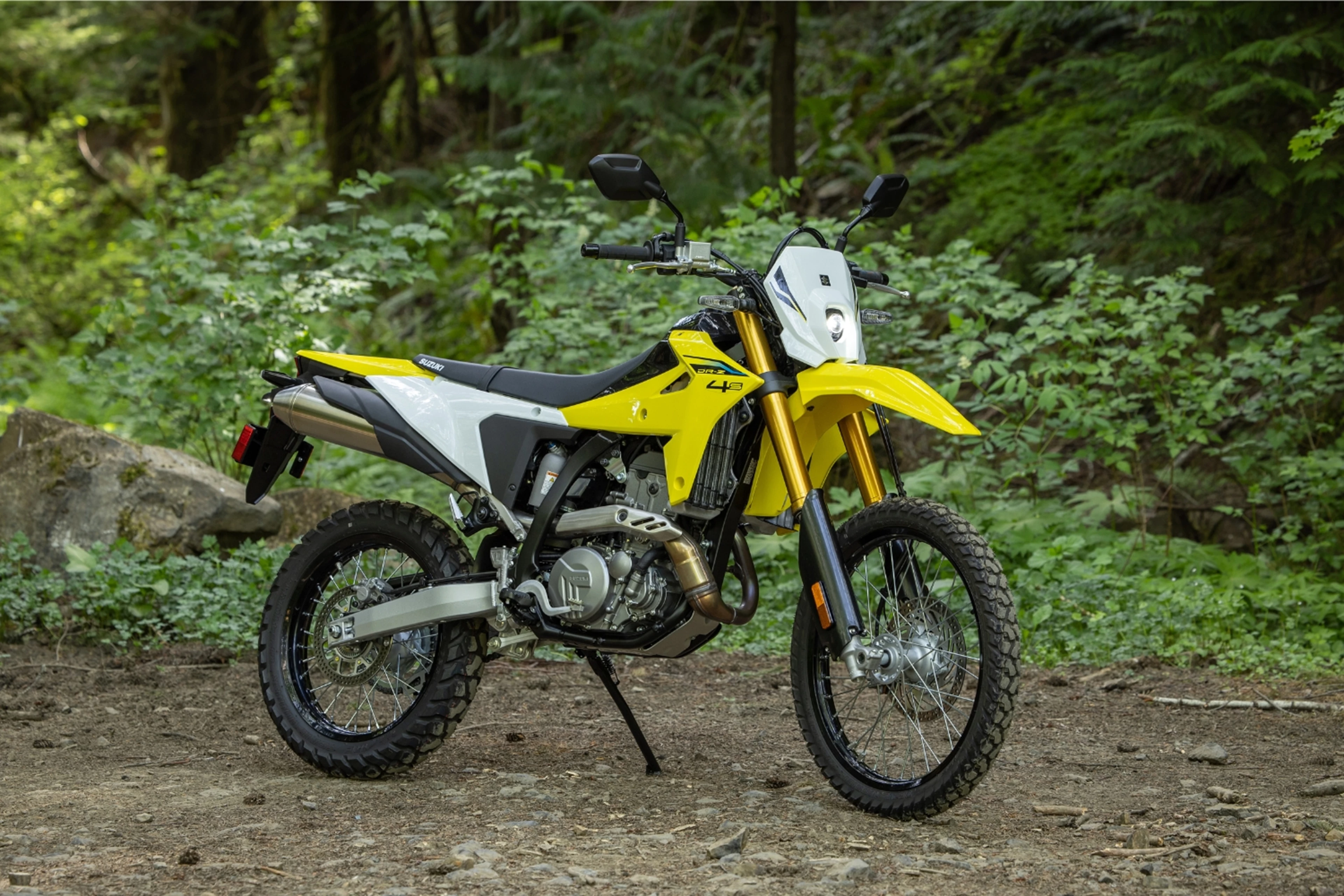
Suzuki’s hotly-anticipated DR-Z4S will make its show debut at the 2025 ABR Festival later this month, where it will be displayed for the first time ahead of its arrival late this summer.
With a brand-new version of Suzuki’s 398cc single-cylinder engine at its heart, the DR-Z is wrapped in an all-new chassis and comes equipped with selectable engine maps, traction control modes – including an off-road-focussed gravel mode – and switchable ABS.
It will be displayed alongside its supermoto stablemate, the DR-Z4SM, and Suzuki’s V-Strom range, which includes the widely-lauded V-Strom 800DE and RE, and the adventure flagship V-Strom 1050DE and V-Strom 1050RE.
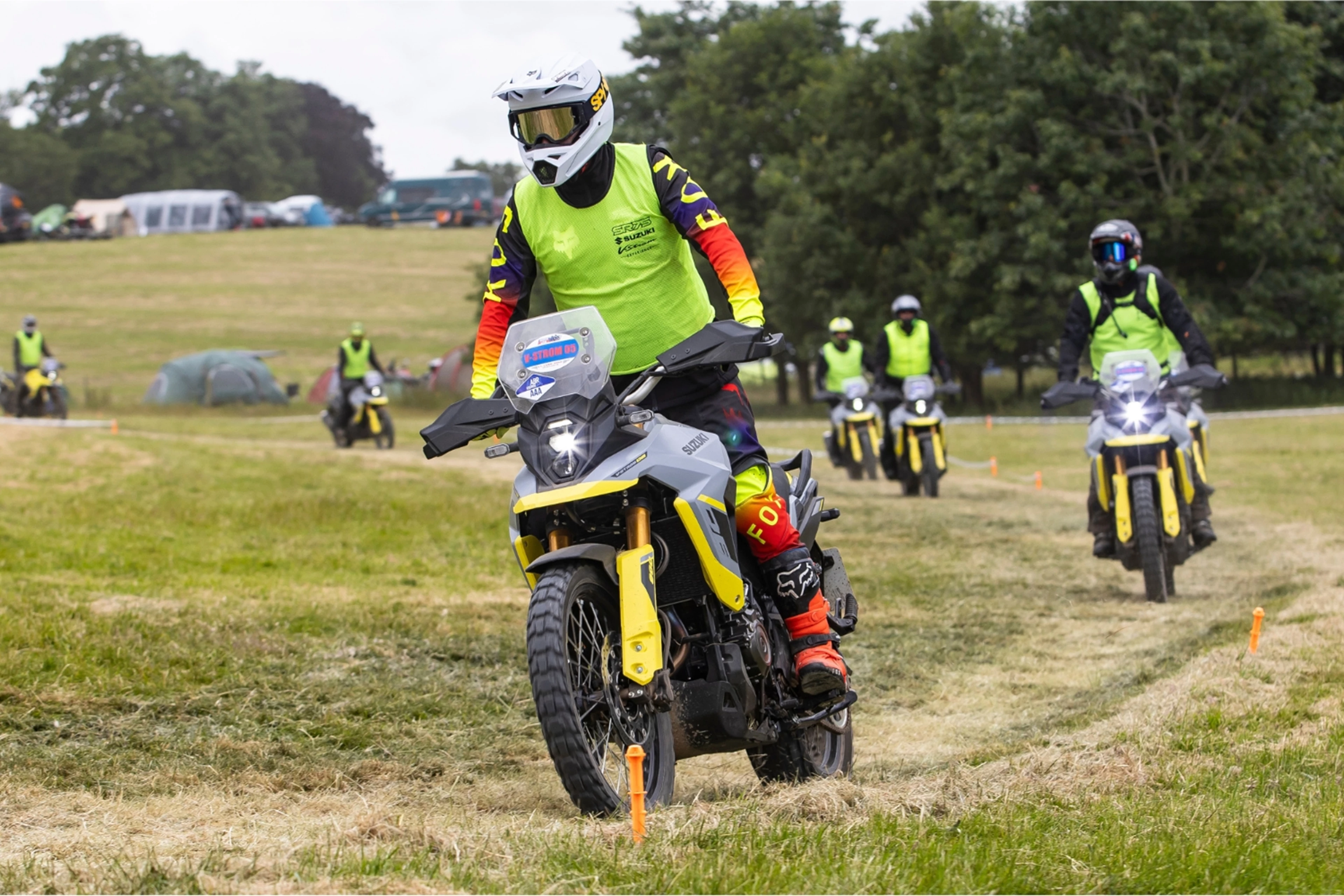
Representing the firm’s off-road heritage will be the iconic DR800S, while those looking for more traditional touring adventure can poke around the GSX-S1000GX – with an electronics package topped by Showa electronic suspension – and the GSX-S1000GT.
The award-winning GSX-8R and GSX-8S will also feature.
For those keen to explore further on and off-road test rides are available on the entire V-Strom stable. Show-goers can also take the GX, GT, 8S, and 8R out on the road.
Courtesy of Suzuki Insurance those taking a demo ride that then go on to buy can get up to £200 towards their insurance*. Suzuki staff on the stand during the course of the event will provide more details.
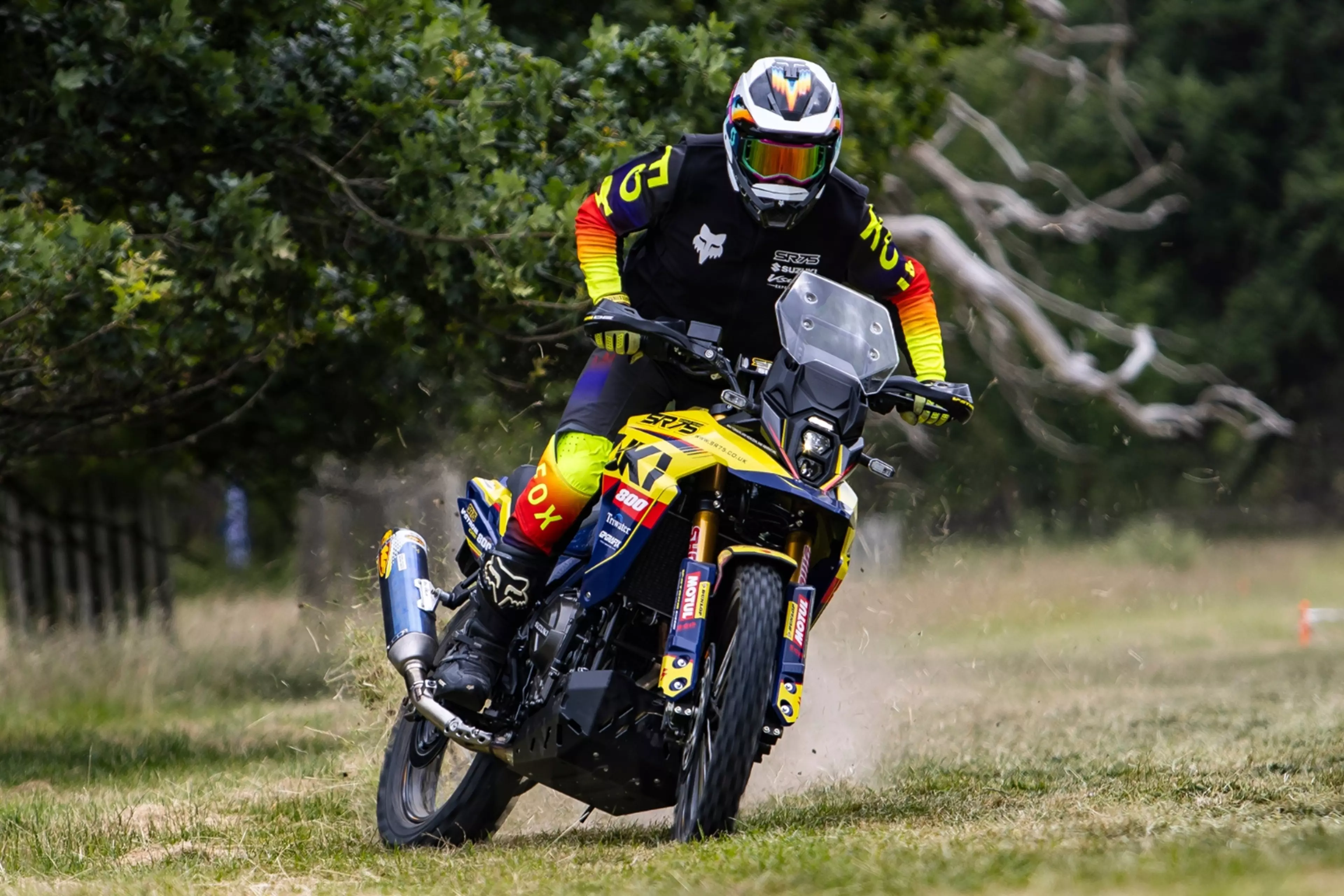
Suzuki’s multi-championship-winning supercross team, SR75 Suzuki, will be displaying one of its RM-Z450 race bikes, plus its V-Strom 800DE project build, which adds a supercross twist to the already-off-road ready V-Strom.
The ABR Festival takes place at Ragley Hall, Alcester B49 5NJ, on 27-29 June.
Terms and Conditions
*Offer valid when you purchase a Suzuki motorcycle within 6 months of completing a Suzuki test ride at the ABR Festival (31st December), taking place June 27–29, 2025.
• “Customer” is defined as the name of the registered keeper of the model year 2025 Suzuki two-wheel motorcycle.
• “Suzuki Insurance Policy” is defined as the Adrian Flux Insurance policy eligible for premium saving when used in conjunction with the up to £200 e-voucher.
• “Voucher” is an e-voucher issued by Suzuki GB PLC and has a value towards a Suzuki Insurance Policy of up to a maximum of £200.
• The Suzuki Insurance policy must be in the name of the Customer.
• The Customer must email Suzuki Insurance at dealers@suzukibikeinsurance.co.uk to activate the voucher. Contact by any other means will void the voucher.
• Only model year 2025 Suzuki motorcycles purchased by the customer following a test ride at Adventure Bike Rider festival 2025 between 26th June 2025 and 29th June 2025 are eligible to receive an e-voucher for this promotion.
• The Suzuki Insurance e-voucher must be used between 26th June 2025 and 31st December 2025. Outside of these dates, the voucher is void.
• Before accepting the e-voucher towards the policy, Suzuki Insurance may need to validate the e-voucher by contacting Suzuki GB PLC.
• No cash alternative is available for the voucher.
• This e-voucher is nontransferable.
• The e-voucher can only be used once against one Suzuki Insurance policy via Adrian Flux Insurance.
• The e-voucher can be used against any live Suzuki Insurance policy in the name of the Customer.
• For customers who aren’t currently insured with Suzuki Insurance, the voucher can only be used against Suzuki Insurance quotations obtained during 26th June 2025 and 31st December 2025 and via 0344 728 0499.
• Insurance is subject to meeting Suzuki Insurance underwriting criteria.
• If the Suzuki Insurance premium (of the Customer) is less than £200, the value of the voucher will equal the lesser value and there is no refund for any outstanding voucher value.
• If the Suzuki Insurance premium (of the Customer) is more than £200, the Customer will be liable for any outstanding premium.
• If the e-voucher is used against a mid-term change to an existing Suzuki Insurance policy, for instance a change of vehicle, the voucher will contribute up to £200 towards the additional premium. If the additional amount payable is under £200 then no refund of the remaining amount on the voucher shall be given. Any amount above £200 will be payable by the Customer.
• The Suzuki Insurance Policy is premium and policy arrangement fee only and excludes the cost of additional benefits like, for example breakdown, helmet and leather etc.
• The promotion is for UK residents only.
• If the Suzuki Insurance policy utilises an instalment plan, the Voucher will be used as a deposit only with the customer liable for any finance charges applicable for paying the premium by instalments.
• Suzuki Insurance reserve the right to end this promotion at their discretion
• Suzuki GB PLC. is an Introducer Appointed Representative of Adrian Flux Insurance.
Suzuki Insurance is a trading name of Adrian Flux Insurance Services Group who are authorised and regulated by the Financial Conduct Authority under firm reference number 307071.
Colour updates for Suzuki’s Burgman 400

Suzuki has released a trio of colour updates for the Burgman 400, the original maxi-scooter.
An effortlessly classy pearl matt shadow green is enhanced by gold wheels and black trim. The same gold wheels also standout on an otherwise-understated all-black version. The third paint scheme added to the Burgman 400 lineup is a metallic reflective blue, also equipped with the gold wheels.
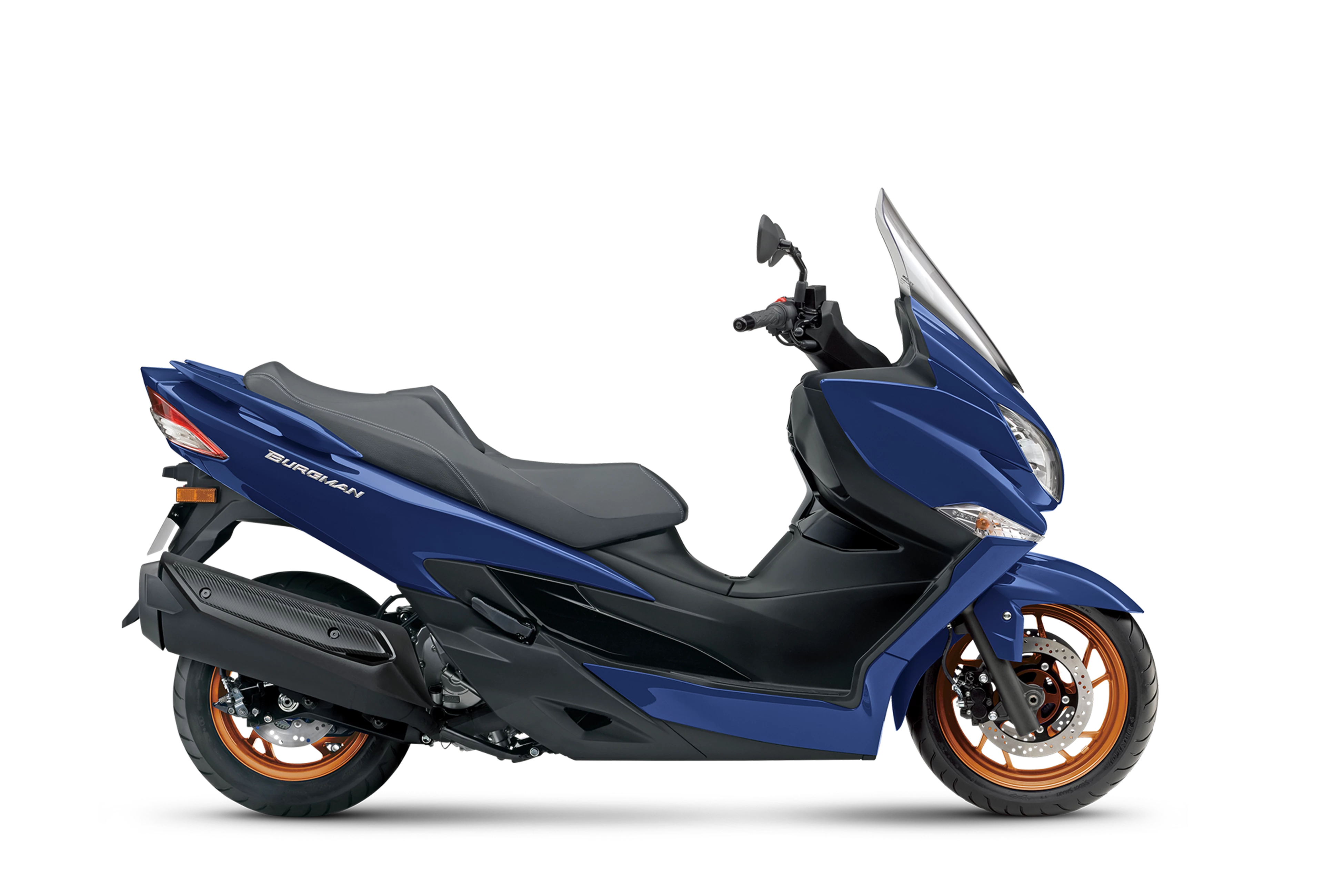
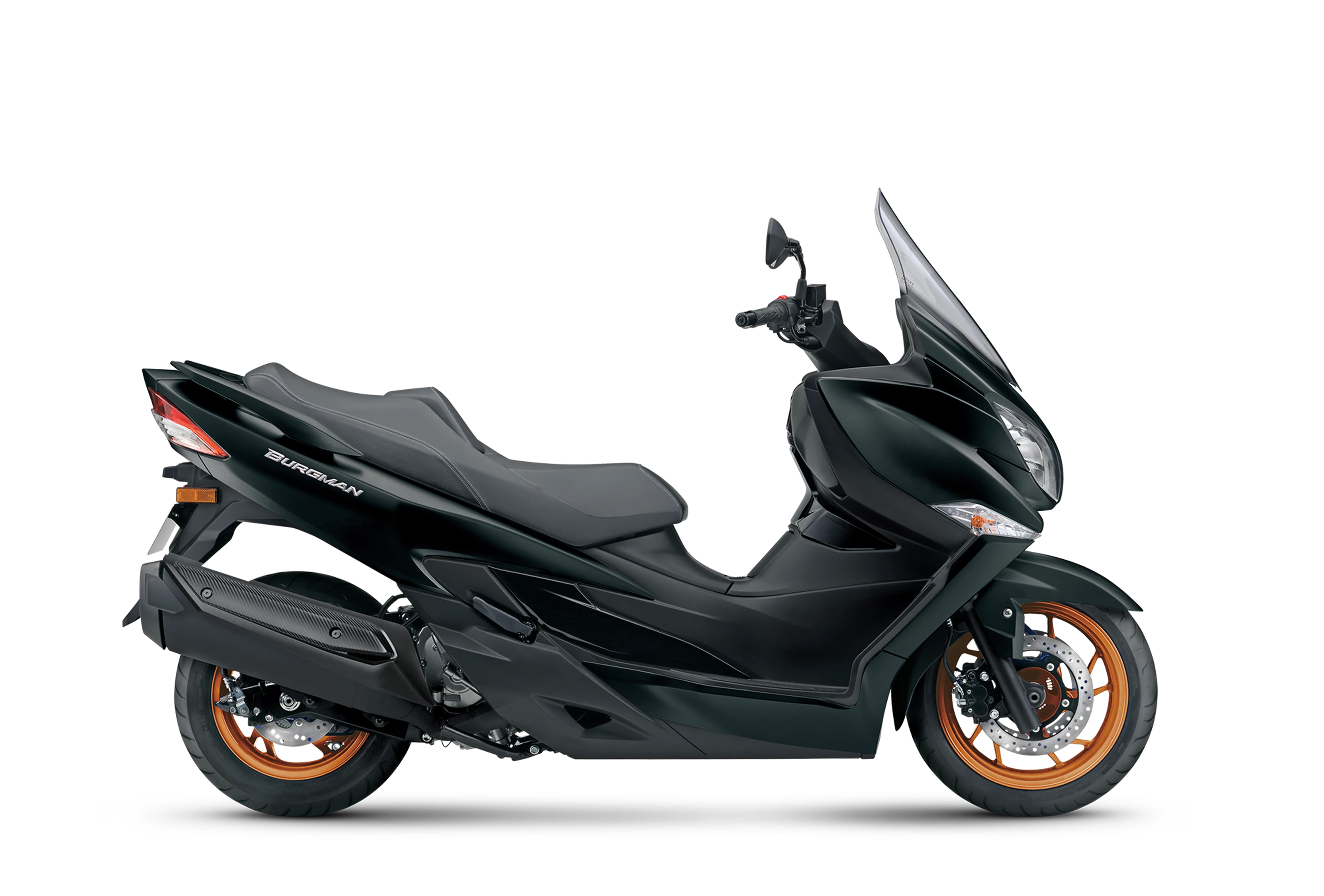
First launched in 1998 and in production ever since, the current Burgman 400 is equipped with a punchy single-cylinder engine capable of returning over 70mpg.
Convenience comes from 42-litres of under-seat storage and a combined 6.3-litres of storage space with two additional compartments at the front. A traction control system keeps things in check on slippery or wet surfaces.
The Burgman 400 comes with an OTR price of £7,199.
New colours available on Hayabusa and Katana
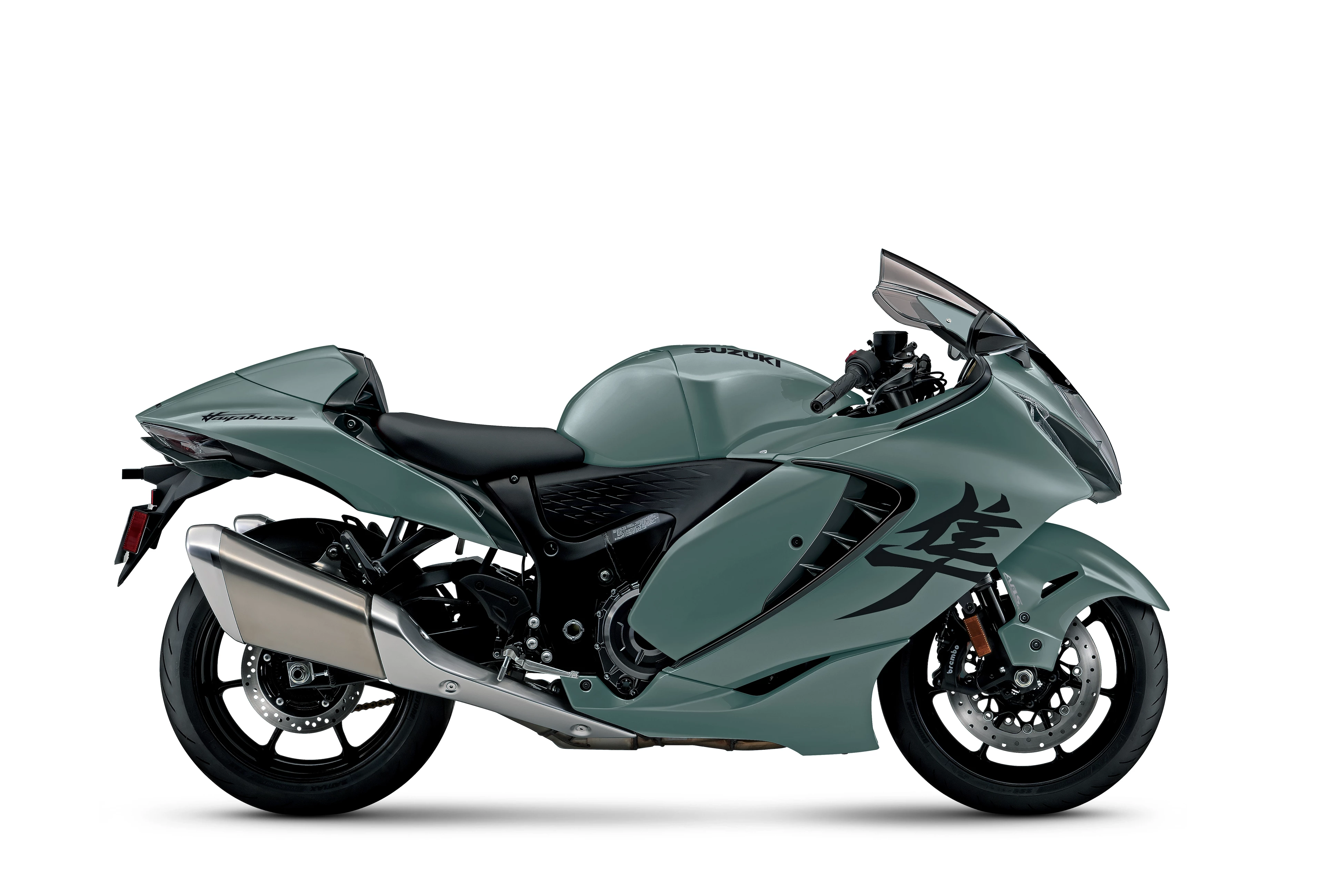
Suzuki has unveiled a trio of new colour options for its famed Hayabusa, and two new versions of its retro Katana
Available in dealerships now, the legendary hyperbike comes in a new Metallic Matt Steel Green with black trim and a fresh silver option with standout blue details. For those seeking a more understated look, a revised black paint scheme is complemented with silver trim.
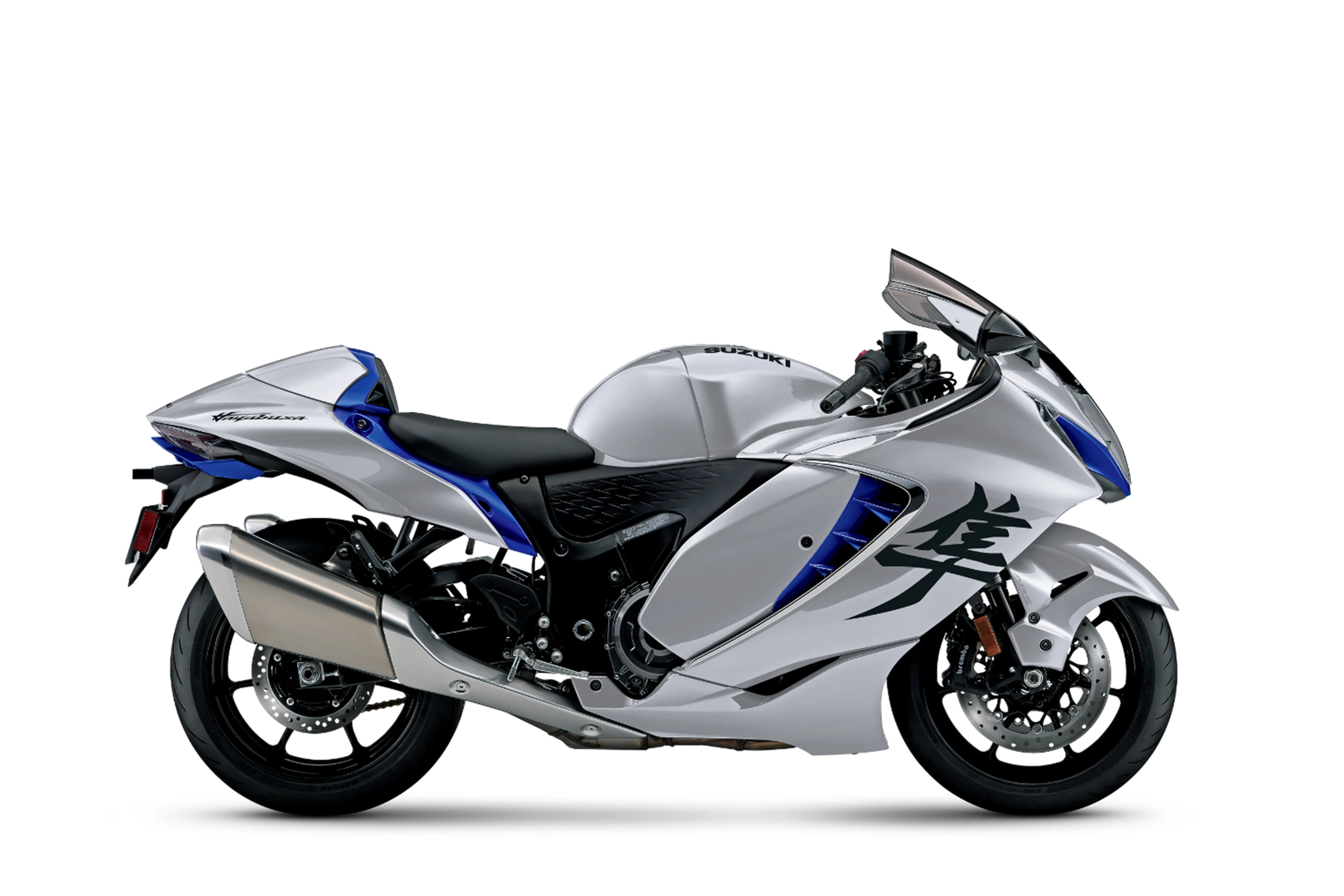
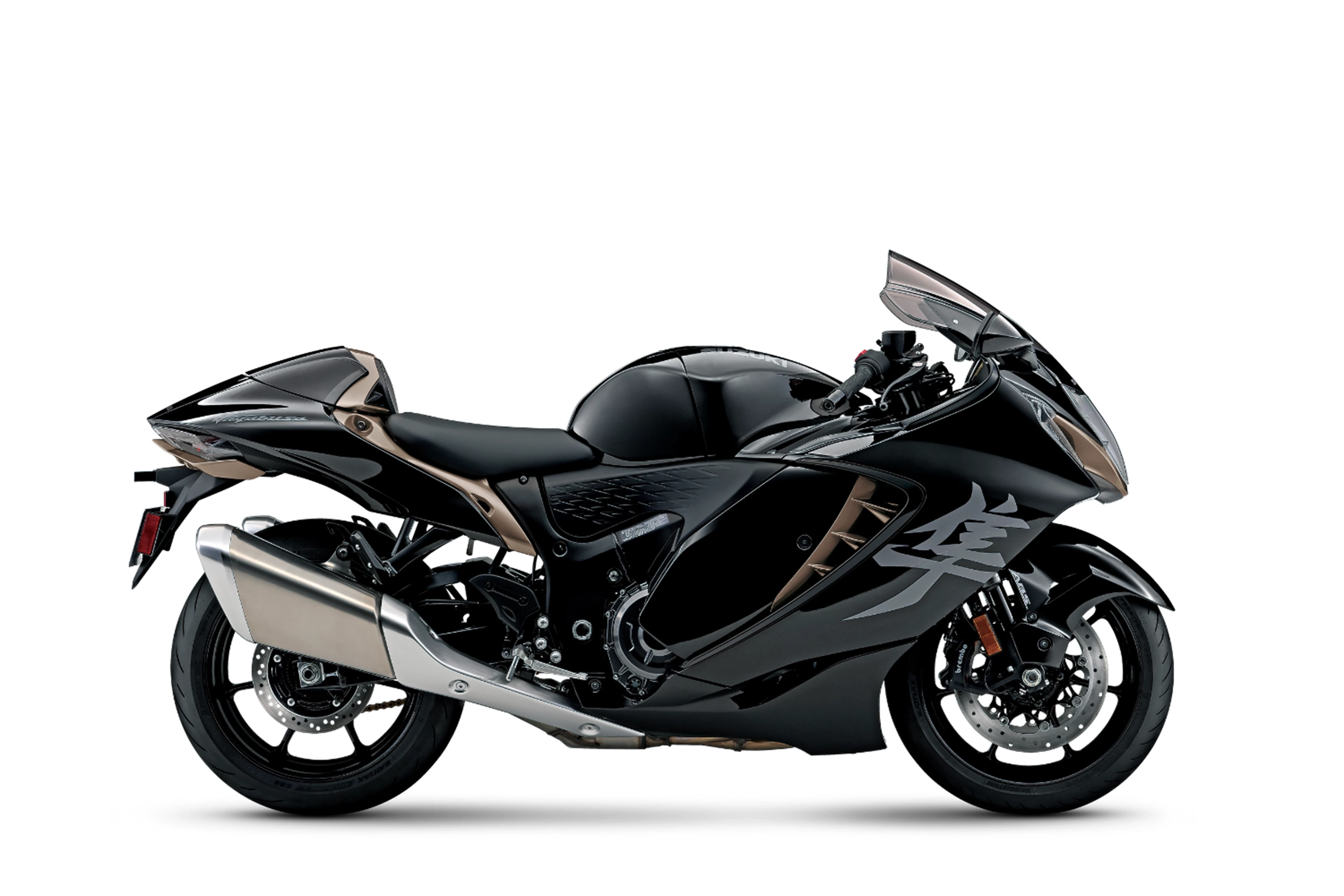
The third generation of Hayabusa provides more cumulative torque than any generation previously, with its silky smooth 1340cc, inline four-cylinder engine providing relentless torque from the bottom of its rev range.
Lean angle-sensitive electronics comprise selectable power and traction control modes, varying levels of anti-wheelie and engine braking settings, plus cruise and launch control and a bi-directional quickshifter.
All rider information is displayed via a neat colour TFT screen, nestled between two large, sweeping dials paying homage to the original, genre-defining machine from 1999.
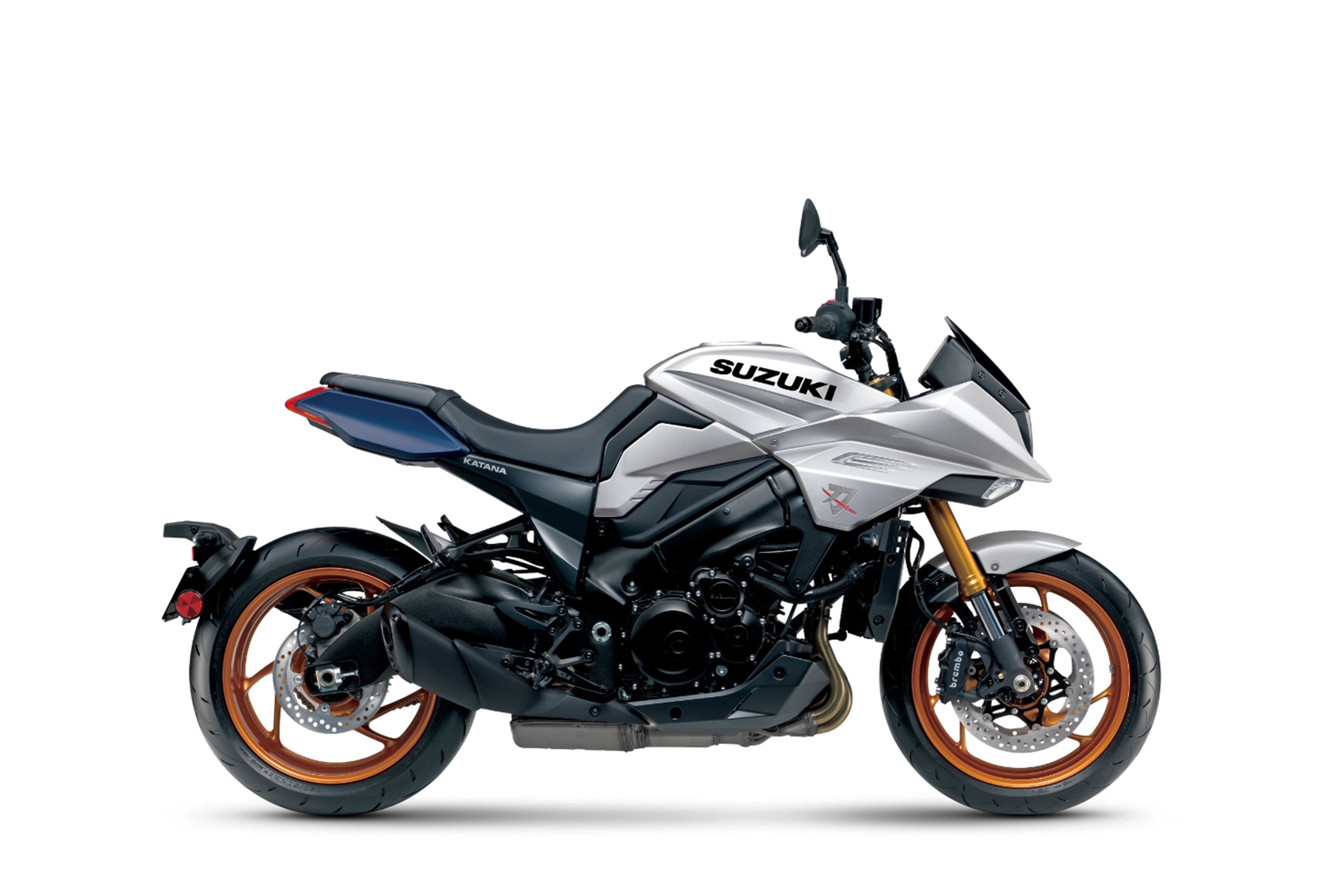
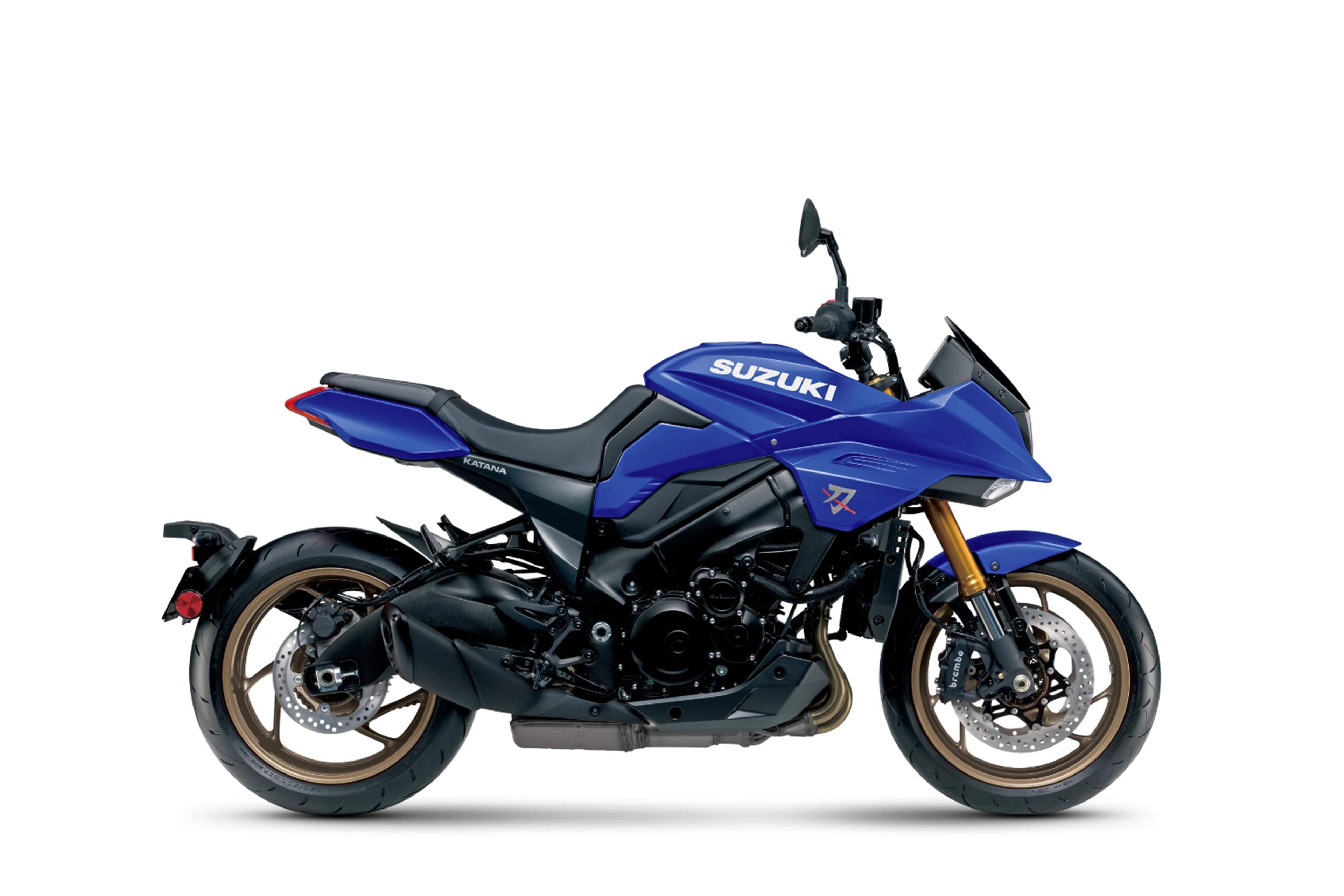
For 2025 the Katana comes in a revised version of its iconic silver paint scheme, with a contrasting dark blue seat unit, offset with gold wheels. It is joined by a new Pearl Vigor Blue with bronze wheels.
Both models are available on Suzuki’s current 0% finance offer.
For more information on Suzuki’s 2025 model range, click here.
Terms and Conditions
PCP Finance offer applies to the purchase of a new GSX-S1000, Hayabusa, Hayabusa 25th Anniversary, Katana, GSX-S1000GT, GSX-S1000GT+, GSX-S1000GX or GSX-S1000GX+ only from a participating Suzuki Dealership. The motorcycle must be purchased and registered between 01/04/2025 and 30/06/2025 to qualify for the offer. £500 minimum deposit required. Credit is subject to status and is only available to UK residents aged 18 and over. Suzuki Personal Contract Purchase (PCP) is only available through Suzuki Finance, a trading style of Suzuki Financial Services Limited, St William House, Tresillian Terrace, Cardiff, CF10 5BH. This Representative Example is based on an annual mileage of 4,000. Finance figures are correct at time of print – March 2025 but may be subject to change. With Personal Contract Purchase (PCP) you have the option after you have paid all of the regular monthly repayments to: (1) Return the vehicle and not pay the Optional Final Repayment. In this example if the vehicle has exceeded 12,333 miles, a charge of 7.2p (including VAT at 20%) will apply per excess mile. If the vehicle is in good condition (fair wear and tear accepted) and has not exceeded 12,333 miles you will have nothing further to pay. (2) Pay the Optional Final Repayment to own the vehicle or (3) Part exchange the vehicle subject to settlement of your existing finance agreement; new finance agreements are subject to status.
£1,000 Dealer Contribution applies to the purchase of a new 2025 GSX-S1000 only from a participating Suzuki Dealership. The purchase and registration of the motorcycle must take place between 01/04/2025 and 30/06/2025. This offer includes a £1,000 saving off the OTR price. Offer is valid in the UK only and may be extended or withdrawn at any time. There is no cash offer, credit or other alternative offered. Promoter: Suzuki GB Plc, Steinbeck Crescent, Snelshall West, Milton Keynes, MK4 4AE.
Specifications, appearance, colours (including body colour), equipment, materials and other aspects of the “SUZUKI” products shown on this advert differ by market and are subject to change by Suzuki at any time without notice. Image shown may include optional accessories.
Suzuki launches GSX-8R Kiiro Limited Edition
Suzuki has launched a GSX-8R Kiiro limited edition, with just 60 available from UK dealerships. With an OTR price of £9,599, the Kiiro edition GSX-8R comes with bright yellow bodywork with black logos, grey wheels and grey aluminium subframe, and a smattering of extras from the Suzuki accessories catalogue.
In addition to the yellow bodywork – from which the Kiiro edition derives its name – the limited GSX-8Rs will come with a single seat cowl, smoked screen, Gilles billet aluminium brake and clutch levers, a tank pad, and a two-tone seat adorned with a GSX logo.
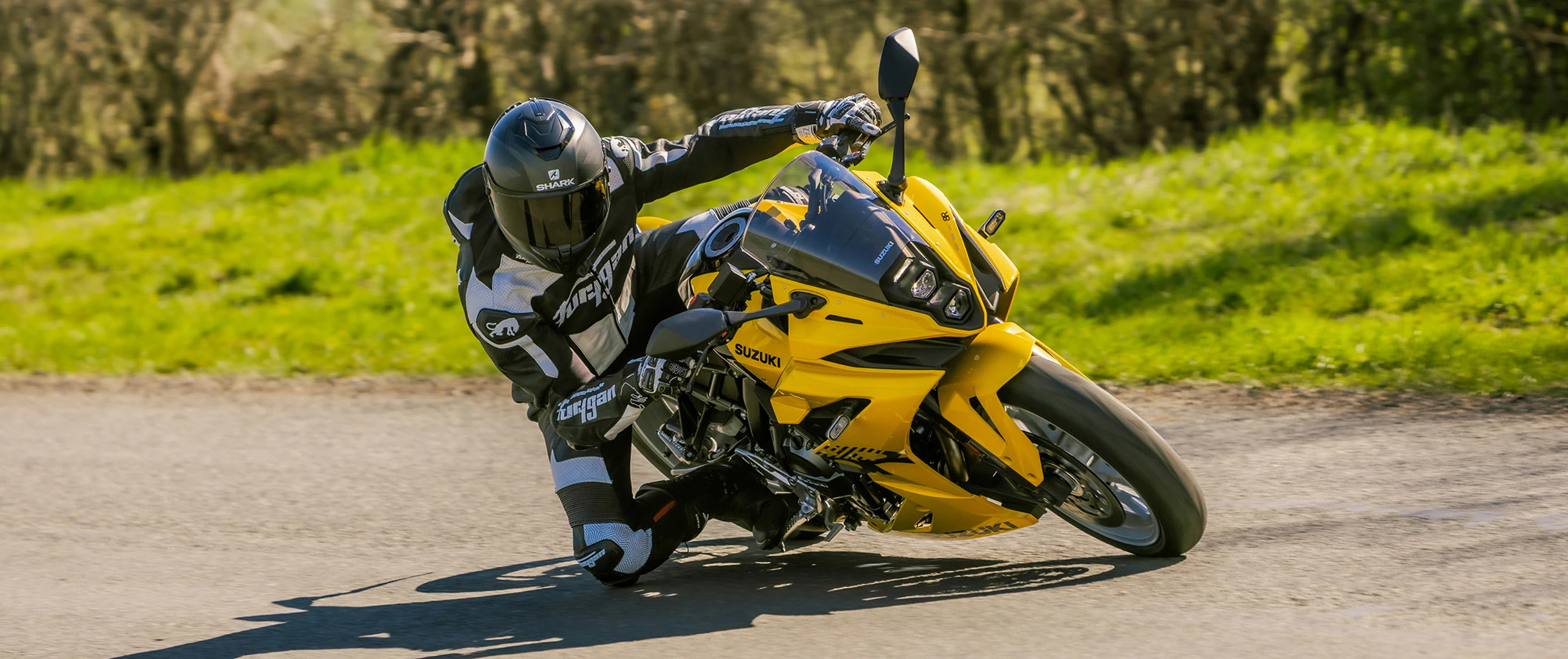
The award-winning GSX-8R has received widespread recognition for its punchy, torque-laden 776cc motor, following its launch last year. It’s housed in a chassis that features a steel mainframe and separate aluminium subframe, with suspension front and rear from Showa.
An electronics package includes a bi-directional quickshifter as standard and selectable power and traction control modes, with all information displayed via a colour TFT screen.
Suzuki releases new colours for GSX-8S and GSX-S1000GT
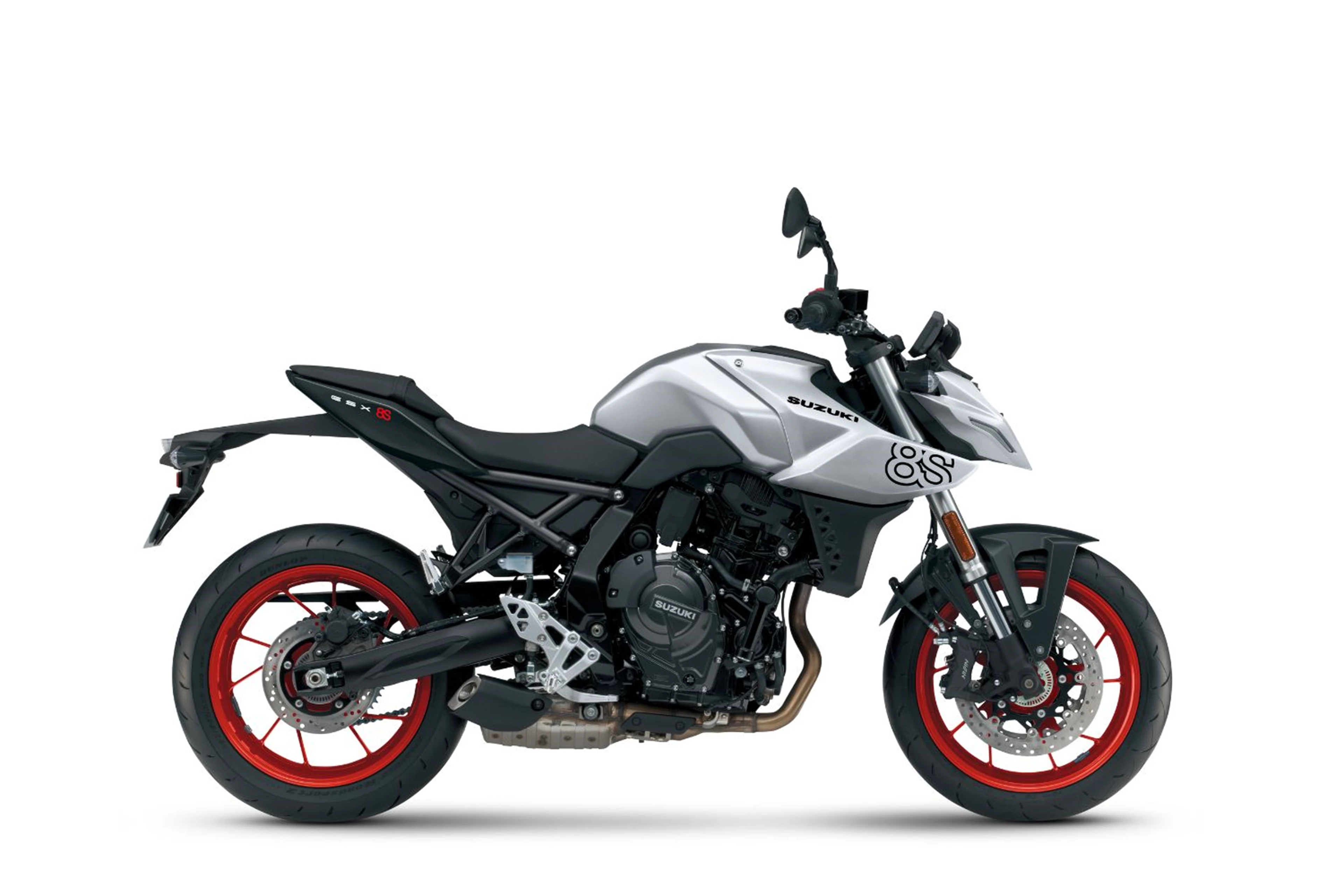
Suzuki has released a selection of new colour schemes for its award-winning GSX-8S and the GSX-S1000GT.
The GSX-8S – the first of Suzuki’s new models launched on its new 776cc parallel twin engine platform that has gone on to win awards and widespread acclaim – is now available in a new silver and black with red wheels, while the red wheels also complement the red subframe on a version with all-black body work. There’s also an updated Cosmic Blue edition, which comes with a black seat unit and black wheels.
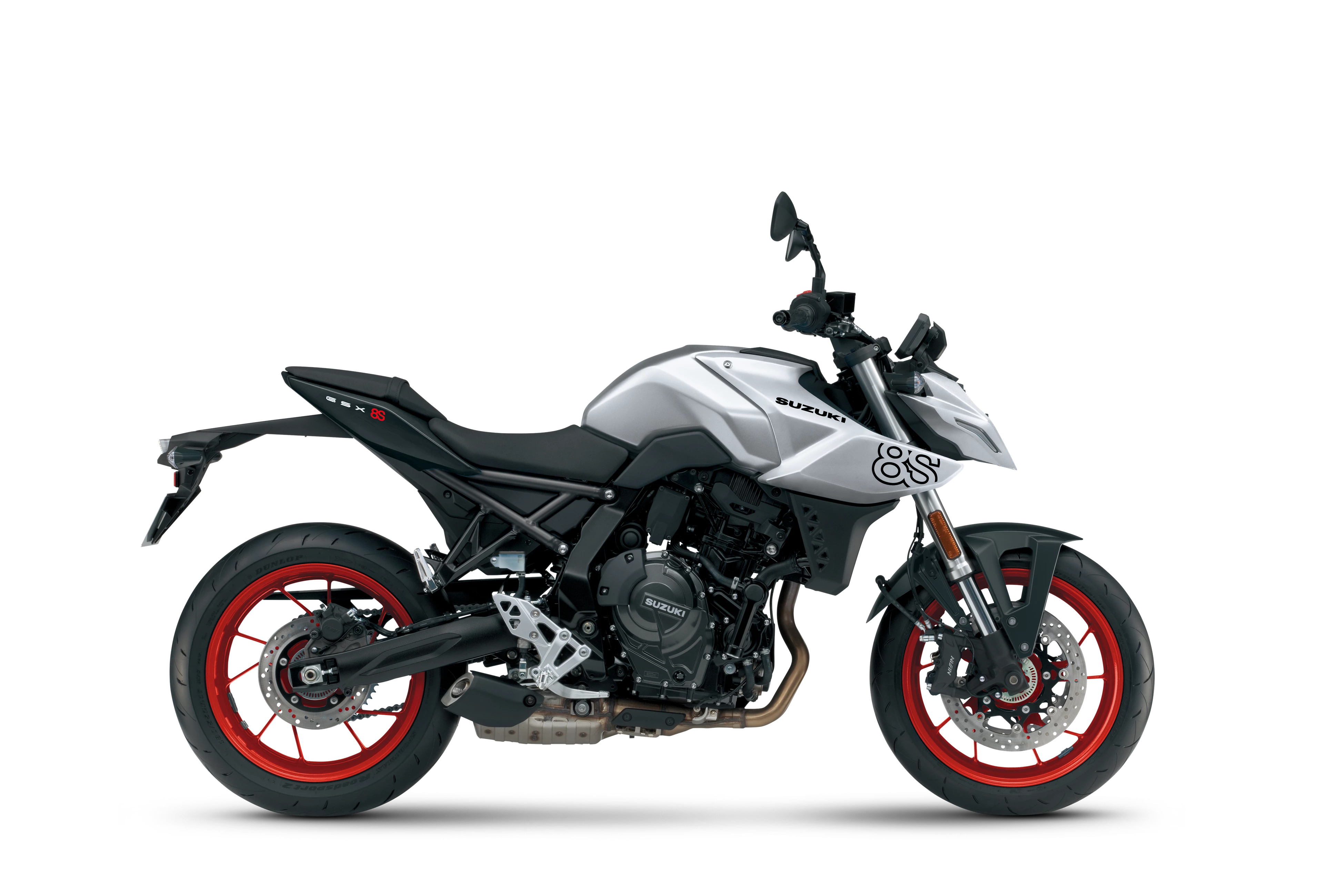
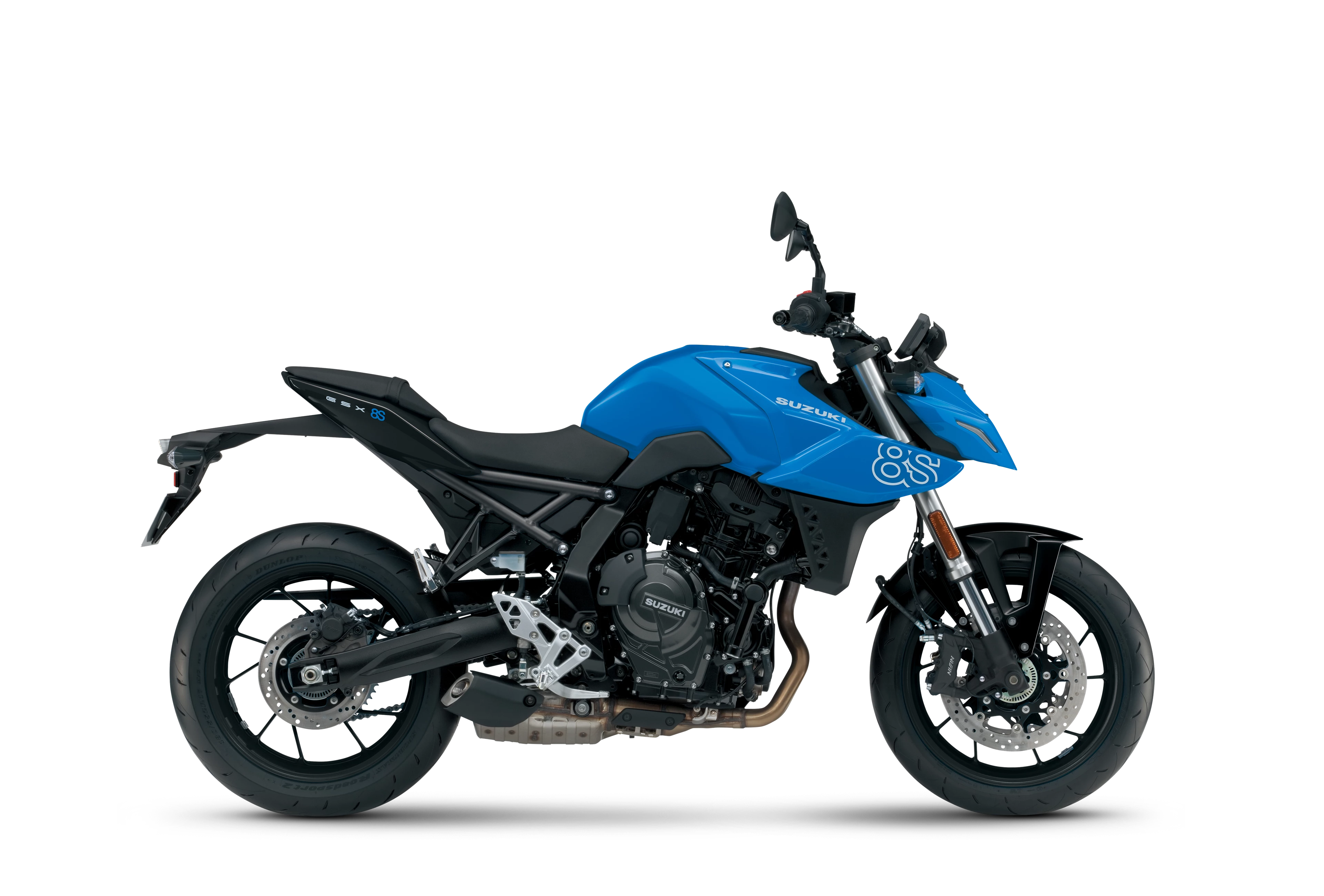
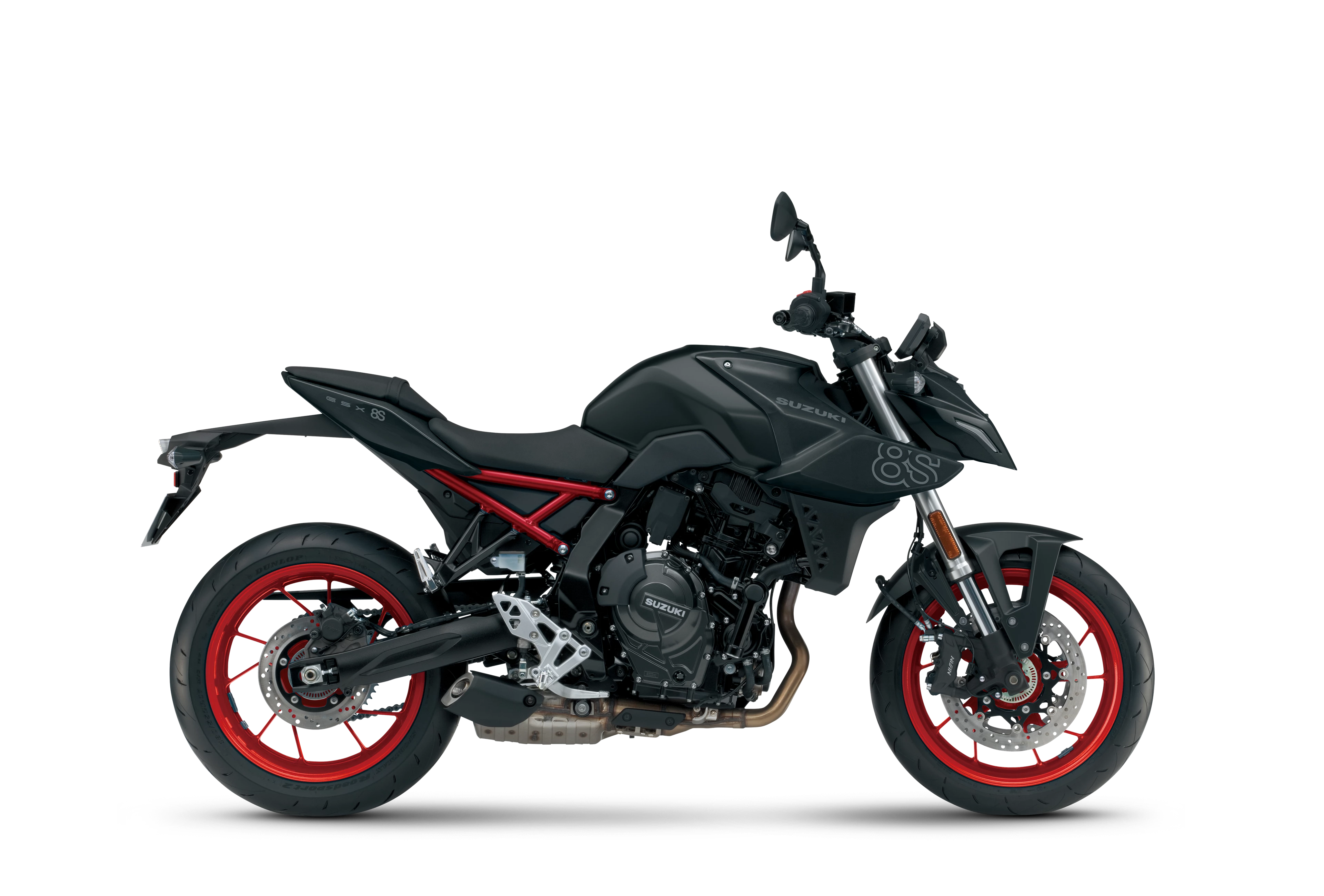
The 8S comes with a bi-directional quickshifter as standard, selectable power and traction control modes, and a colour TFT screen, while the frame is a new steel unit with a separate aluminium subframe.
The GSX-S1000GT sports tourer will continue to be available in the bold, all-red livery it came in in 2024. That colour scheme will be joined by a classy Metallic Oort Grey model with bronze wheels and bronze subframe, and a new Pearl Vigor Blue.
In addition, the GSX-8S is available with an £800 test ride incentive until the end of March, while the GSX-S1000GT can be had on 0% finance until the end of the month.
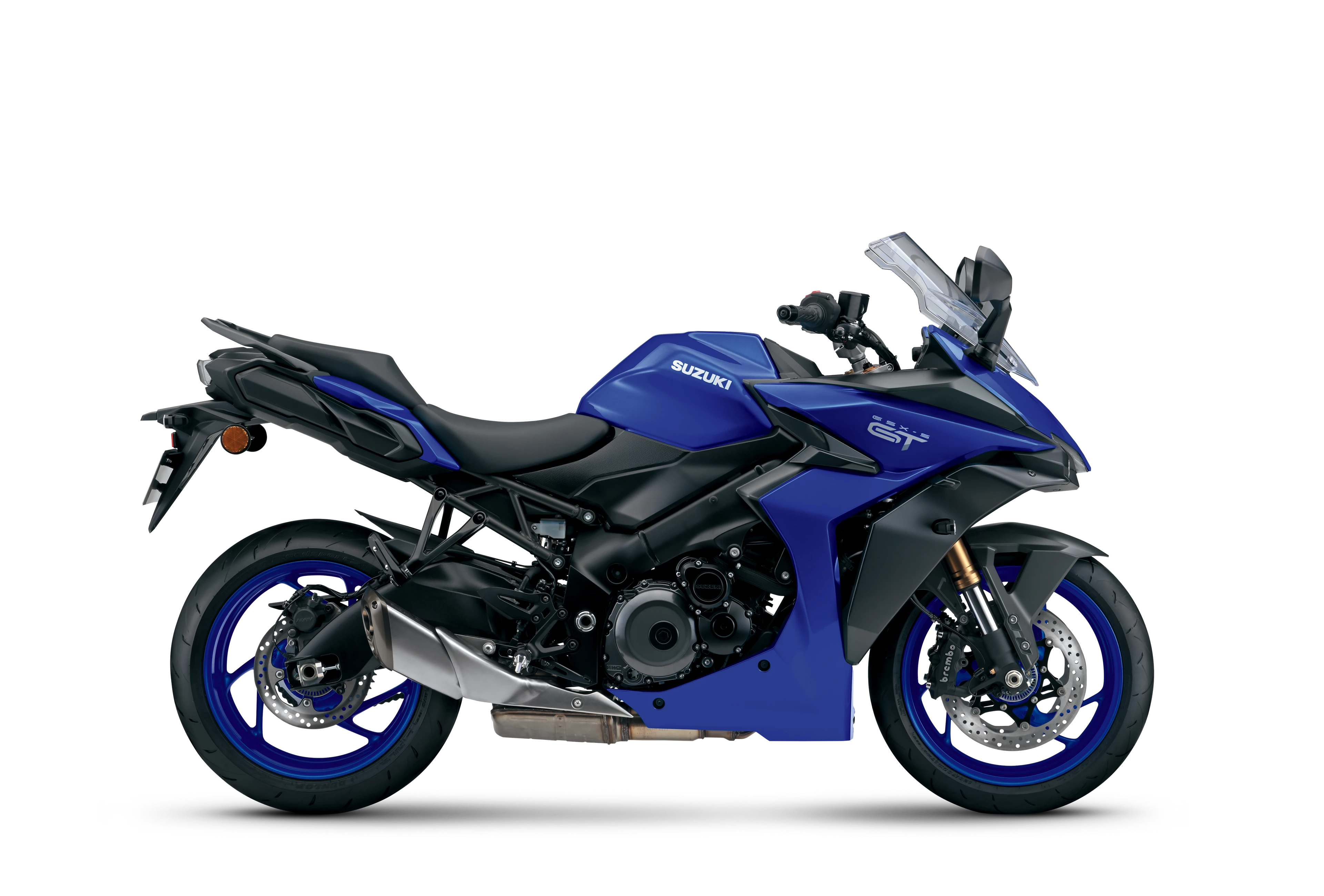
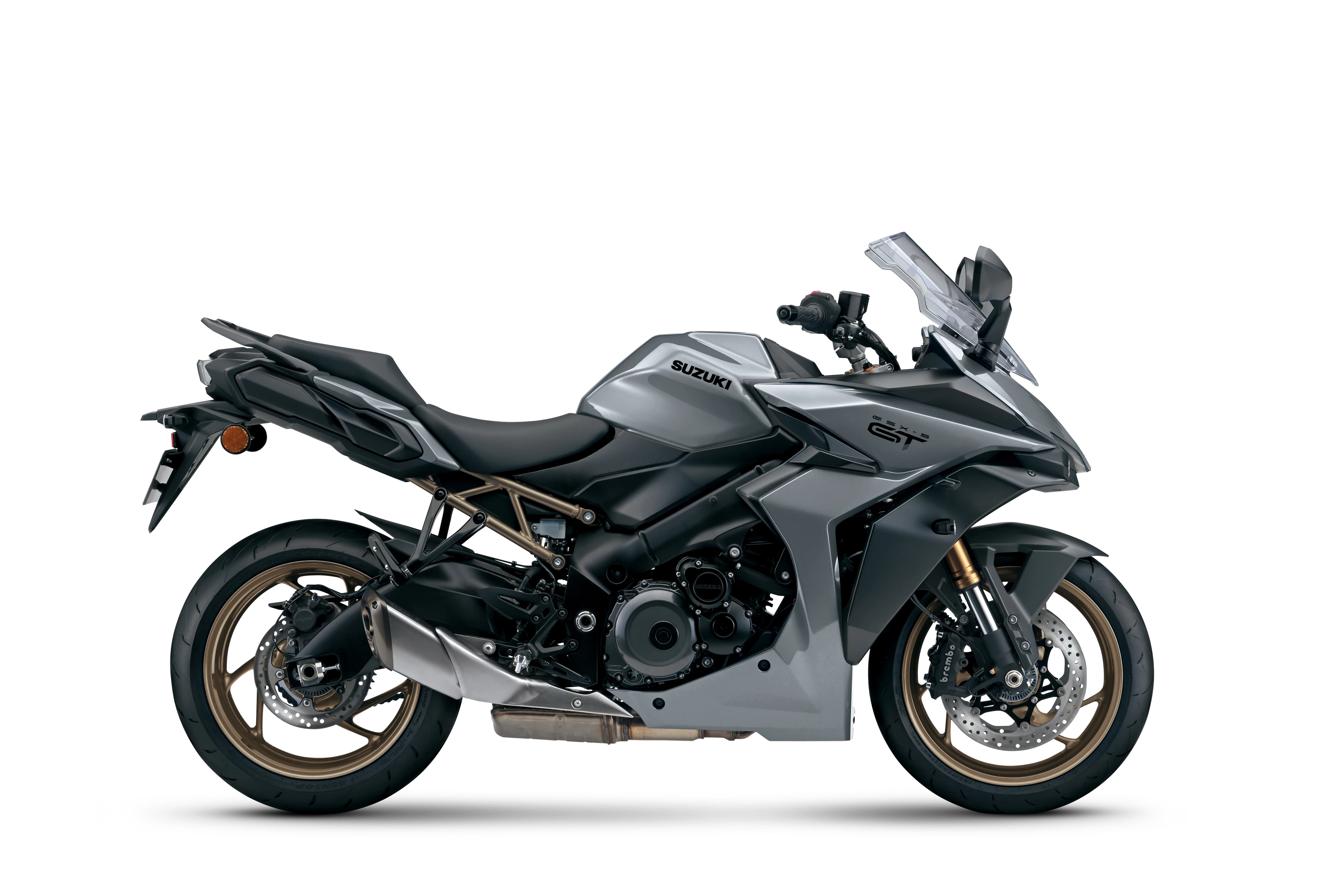
Terms and Conditions GSX-S1000GT – From £89 a month, 0% APR, 49-month PCP agreement, £2,965 customer deposit & £5,662 optional final payment, 4,000 miles per annum, Credit subject to status, UK residents aged 18+, £1,000 minimum deposit required. Suzuki Financial Services Limited, 33 Old Broad Street, Broad Street, Liverpool Street, London EC2N 1HZ. With Personal Contract Purchase (PCP) you have the option after you have paid all of the regular monthly repayments to: (1) return the vehicle and not pay the Optional Final repayment. In this example if the vehicle has exceeded 16,333 miles, a charge of 6p (inc. VAT @ 20%) will apply per excess mile. If the vehicle is in good condition (fair wear and tear accepted) and has not exceeded 16,333 miles you will have nothing further to pay. (2) Pay the optional Final Repayment to own the vehicle or (3) Part exchange the vehicle subject to settlement of your existing finance agreement; new finance agreements are subject to status. 0% finance offer is available on Hayabusa, Hayabusa 25th Anniversary, GSX-S1000GX, GSX-S1000GX+, GSX-S1000GT, GSX-S1000GT+, Katana, GSX-S1000, V-Strom 1050DE, V-Strom 1050DE Tour, V-Strom 1050 and V-Strom 1050 Tour only from participating Suzuki Dealerships. The purchase and registration of the motorcycle must take place between 31/01/2025 and 31/03/2025.
Terms and Conditions GSX-8R – £800 test ride offer applies to the purchase of a new GSX-8S, GSX-8R, V-Strom 800DE, V-Strom 800DE Tour, V-Strom 800RE and V-Strom 800RE Tour from a participating Suzuki Dealership. The test ride, purchase and registration of the motorcycle must take place between 31/01/2025 and 31/03/2025. This offer includes a £800 saving off the OTR price. Offer is valid in the UK only and may be extended or withdrawn at any time. There is no cash offer, credit or other alternative offered. Promoter: Suzuki GB PLC, Steinbeck Crescent, Snelshall West, Milton Keynes, MK4 4AE.
Updated Suzuki GSX-S1000 available for £69 per month
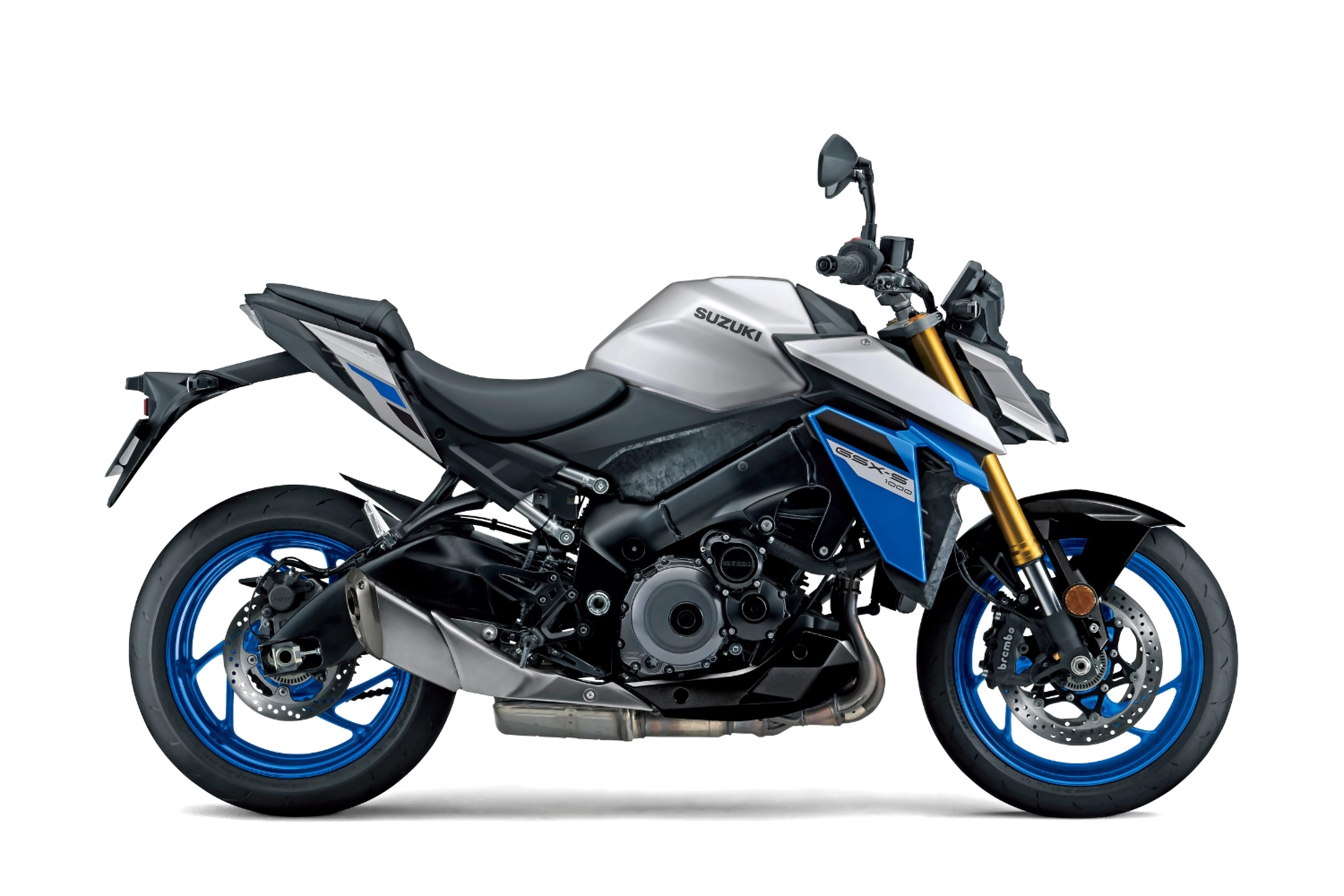
Suzuki has released a refreshed Suzuki GSX-S1000, which comes with a new colour TFT screen and is available for just £69 per month thanks to 0% finance and a £1,000 dealer contribution.
Powered by an engine that can trace its roots back to one of the most iconic superbikes engines of all time – the K5 GSX-R1000 – the GSX-S1000 naked is now equipped with a 5-inch colour TFT screen, that displays a wealth of information, including the selected settings from the electronics package.
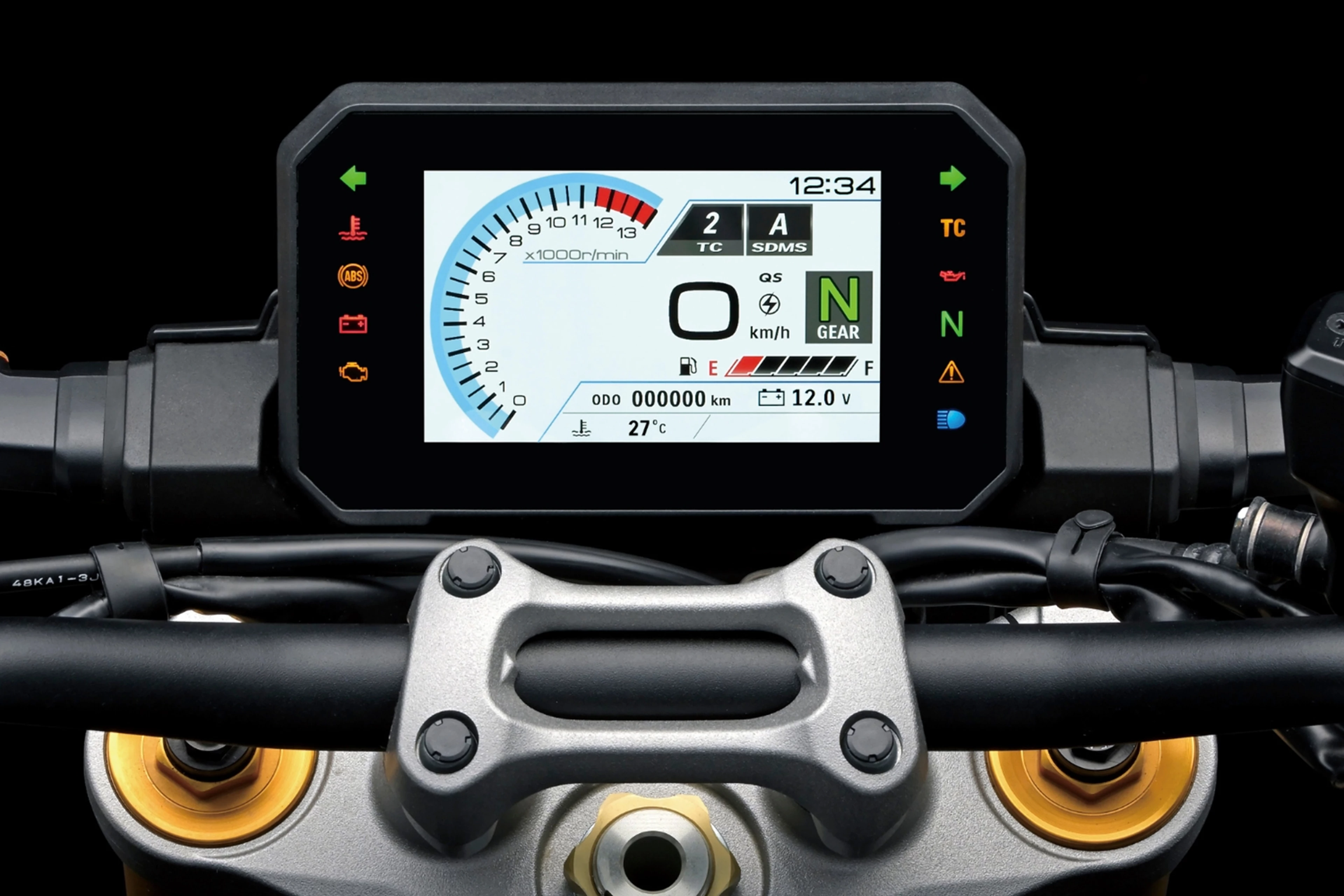
That electronics package includes a choice of three power modes, while an integrated traction control and anti-wheelie system comprises five modes, plus the ability to switch it off altogether. There’s also a bi-directional quickshifter as standard.
The superbike-derived engine puts out 152PS at 11,000rpm and 106Nm of torque at 9,250rpm, and is housed in a twin-spar aluminium frame, suspended by fully-adjustable KYB forks and a preload and rebound damping adjustable rear shock.
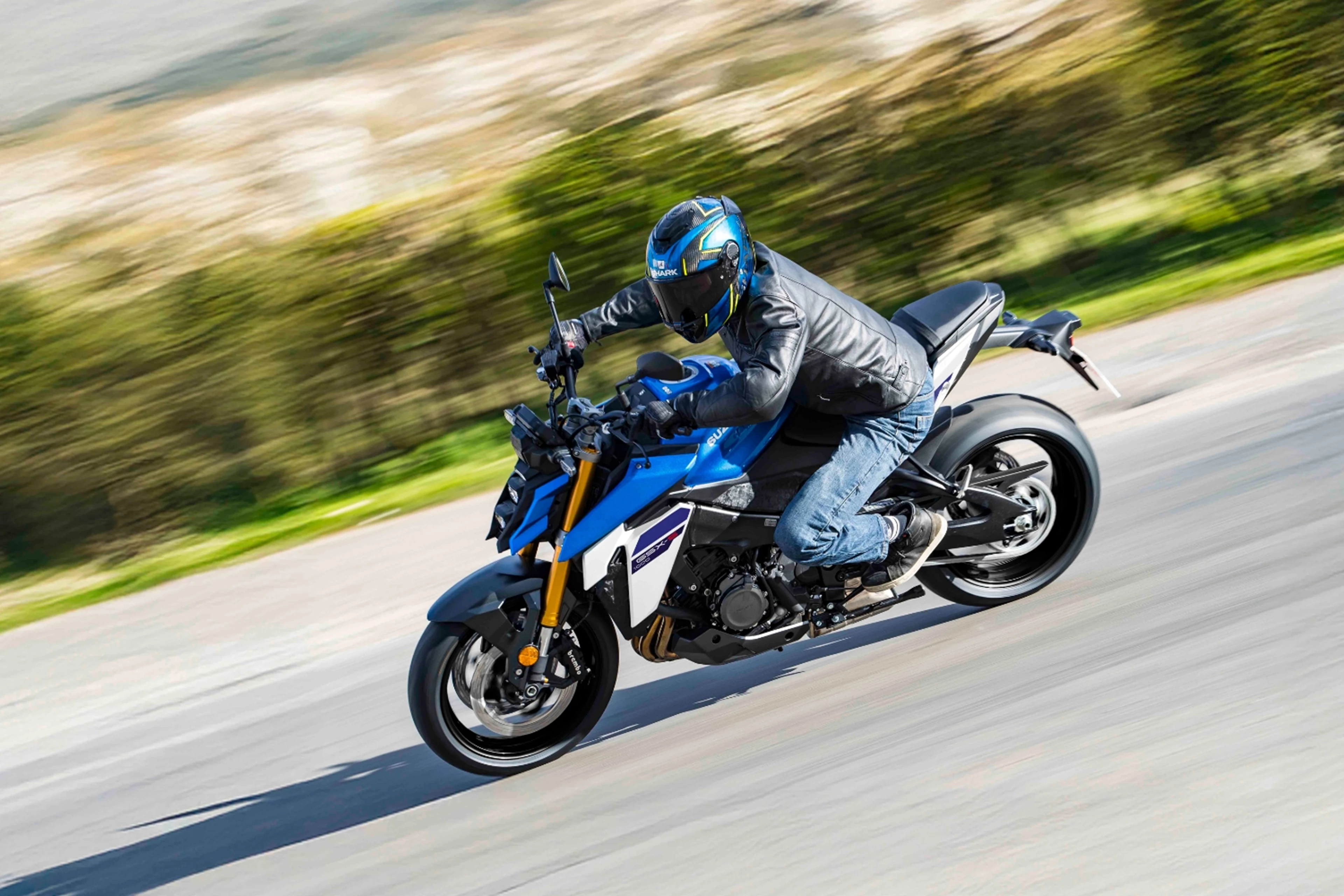
The updated GSX-S1000 comes in Suzuki’s trademark blue and white, with black wheels. There’s also an understated all-black version, and new silver option, with blue accents and blue wheels.
On a four-year PCP deal, with a £2,337 deposit, it can be ridden for just £69 per month.
Terms and Conditions
GSX-S1000 – From £69 a month, 0% APR, 49-month PCP agreement, £2,337 customer deposit & £5,350 optional final payment, 4,000 miles per annum, Credit subject to status, UK residents aged 18+, £1,000 minimum deposit required. Suzuki Financial Services Limited, 33 Old Broad Street, Broad Street, Liverpool Street, London EC2N 1HZ. With Personal Contract Purchase (PCP) you have the option after you have paid all of the regular monthly repayments to: (1) return the vehicle and not pay the Optional Final repayment. In this example if the vehicle has exceeded 16,333 miles, a charge of 6p (inc. VAT @ 20%) will apply per excess mile. If the vehicle is in good condition (fair wear and tear accepted) and has not exceeded 16,333 miles you will have nothing further to pay. (2) Pay the optional Final Repayment to own the vehicle or (3) Part exchange the vehicle subject to settlement of your existing finance agreement; new finance agreements are subject to status. 0% finance offer is available on Hayabusa, Hayabusa 25th Anniversary, GSX-S1000GX, GSX-S1000GX+, GSX-S1000GT, GSX-S1000GT+, Katana, GSX-S1000, V-Strom 1050DE, V-Strom 1050DE Tour, V-Strom 1050 and V-Strom 1050 Tour only from participating Suzuki Dealerships. The purchase and registration of the motorcycle must take place between 05/03/2025 and 31/03/2025.
£1,000 Dealer Contribution applies to the purchase of a new 2025 GSX-S1000 only from a participating Suzuki Dealership. The purchase and registration of the motorcycle must take place between 05/03/2025 and 31/03/2025. This offer includes a £1,000 saving off the OTR price. Offer is valid in the UK only and may be extended or withdrawn at any time. There is no cash offer, credit or other alternative offered. Promoter: Suzuki GB Plc, Steinbeck Crescent, Snelshall West, Milton Keynes, MK4 4AE.
Honda completes 25YM range updates with new colours and Euro5+ compliance for Vision 110
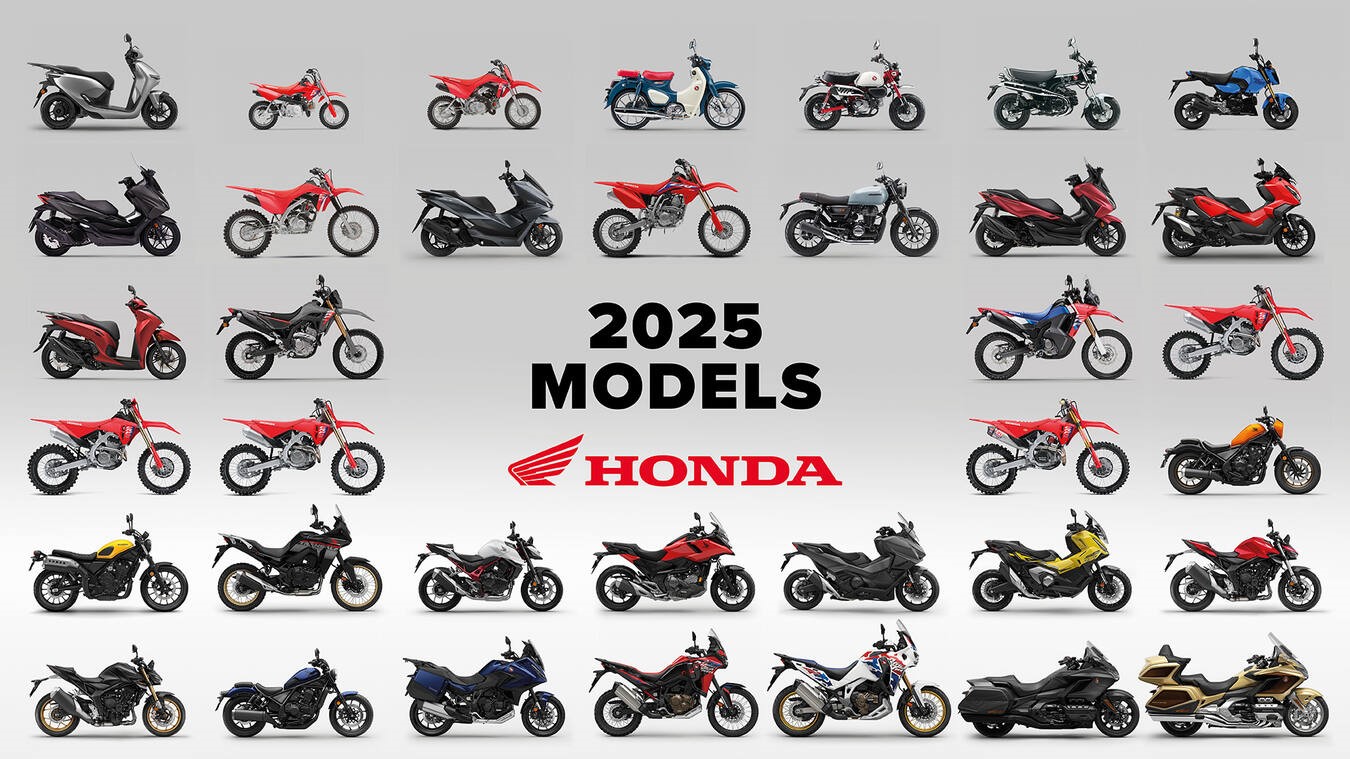
- Revised ECU and additional O2 sensor ensure EURO5+ compliance
- Two new colour options refresh the look for Honda’s user-friendly scooter
Rounding out a bumper year of announcements and model upgrades for Honda is the 25YM Vision 110. The diminutive step-through scooter is the final step of the 25YM update journey that began back in May 2024 with the extensive CRF family of off-road competition bikes, encompassed the all-new naked flagship CB1000 Hornet, as well as Europe’s most popular tourer in the NT1100, the ever-popular Transalp, Africa Twin and X-ADV adventure models, and iconic names like the Dax, Monkey, Super Cub and Gold Wing.
Since its introduction to Europe in 2011, the Vision 110 has garnered a strong reputation for its classically-Honda high build quality, value for money, durability and dependability. Across Europe, the bike has accumulated over 105,000 sales with Spain, the United Kingdom, and Italy the top three nations for the scooter.
The recipe for this success is straightforward: designed from the outset to be simple, easy transport that embodies Honda quality and presence, wrapped in a clean, elegant design that shares common design DNA with the rest of Honda’s scooter range.
Those core attributes remain for 25YM, bolstered through a number of minor revisions to ensure the city ready Vision 110 continues to serve a wide range of customers across Europe. Revisions to the 109cc enhanced Smart Power (eSP), two-valve air-cooled, fuel-injected SOHC powerplant’s ECU and catalytic converter, as well as the introduction of a new O2 sensor, ensure Euro5+ compliance.
Urban practicality comes in the form of the Vision 110’s useful flat floor and plentiful 17.7 litre under-seat storage volume, as well as Smart Key operation. For 25YM, this is bolstered further through the addition of a USB-C socket, which enables smartphone charging on the move.

The 25YM Vision 110 will be available in the following colour options:
- **NEW** Pearl Snowflake White
- **NEW** Candy Luster Red
- Pearl Jupiter Gray
- Matt Galaxy Black Metallic
25YM Honda Vision 110
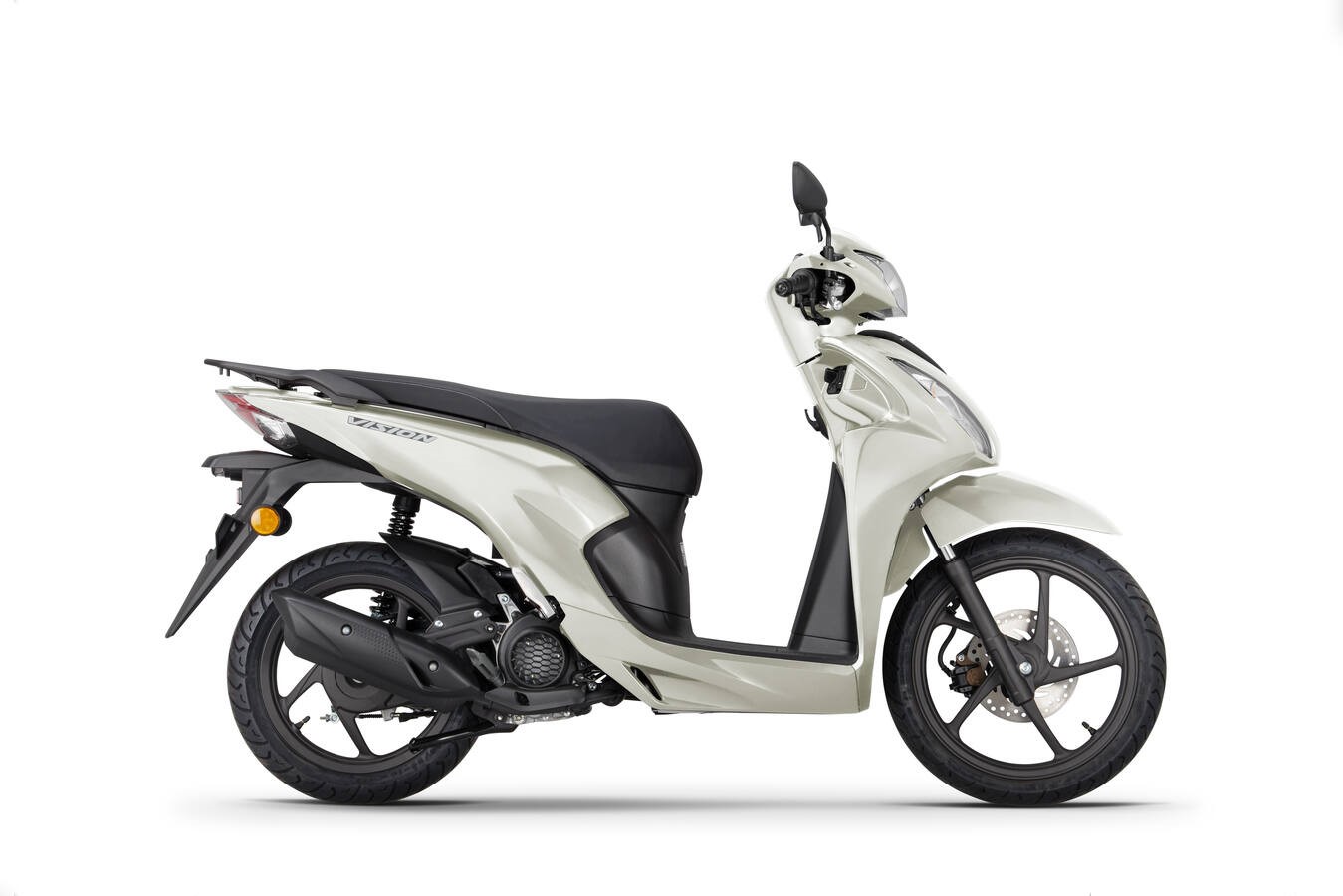
Model updates: Honda’s everyday scooter continues to offer high build quality and fantastic value for money – as it has for over 14 years; updates for 25YM include a USB-C socket and EURO5+ compliance. The Vision 110’s lightweight ‘enhanced Smart Architecture Frame (eSAF)’ is matched to a fuel-efficient ‘enhanced Smart Power’ (eSP) engine, with Idling Stop technology and, as before, specification includes flat floor design, LCD instrument panel and Smart Key operation. Two contemporary new colour options will also be available in 25YM.
–
Contents:
- Introduction
- Model overview
- Key features
- Accessories
- Technical specifications
–
1. Introduction
The Vision 110, introduced to Europe in 2011, was created to offer reliable, fun mobility at an attractively low price. And, as a machine intended for daily use by a huge range of customers, qualities such as durability, dependability, safety and convenient usability were considered key priorities.
Thanks to its simple, reliable and efficient air-cooled, fuel-injected enhanced Smart Power (eSP) engine, stable chassis, the safety of Honda’s Combined Braking System (CBS) and extensive storage space, the Vision 110 has proved to be a smart and reassuring choice in the crowded entry-level scooter market.
And it builds on a proud heritage. The first Honda scooter, the 1954 Juno K, featured a range of new technology and materials, and was followed four years later by the revolutionary four-stroke Super Cub. With more than 100 million manufactured worldwide, the Super Cub is the best-selling motor vehicle in history – and still going strong today.
In 21YM – and set against ever-increasing customer expectations – a brand-new Vision 110 rolled out, using the same base formula set by the outgoing design but smarter, lighter and ever more useful. Now, for 25YM two extra colour choices, alongside detailed updates and EURO5+ compliance inject additional appeal, desirability and value to Honda’s everyday scooter.
–
2. Model Overview
The Vision 110’s contemporary styling, which includes the convenience of a flat floor, is wrapped around a lightweight enhanced Smart Architecture Frame (eSAF). Producing 6.4kW 9.0Nm @ the enhanced Smart Power eSP) air-cooled engine returns impressive fuel efficiency of 52.6km/l (WMTC mode). EURO5+ compliance has been achieved through adding an O2 sensor, as well as catalyser and ECU updates.
Smart Key operation of ignition and seat is a premium feature, as is the LCD instrument panel. A USB-C charging socket is a useful new feature for smartphone charging.
The 25YM Vision 110 will be available in the following colour options:
- **NEW** Pearl Snowflake White
- **NEW** Candy Luster Red
- Pearl Jupiter Gray
- Matt Galaxy Black Metallic
–
3.Key Features
3.1 Styling & Equipment
- Smart body style with flat floored practicality
- Smart Key operation of ignition and seat
- Analogue/ LCD instrumentation
- New USB-C socket
While it’s designed to be simple, easy transport that does not mean the Vision 110 lacks a feeling of Honda quality and presence and its clean, elegant styling shares common DNA with the rest of Honda’s scooter range.
Like the iconic SH series, the Vision 110 has an upright posture and useful flat floor; it also has plentiful under-seat storage volume, at 17.7L.
Smart Key operation is a premium, and useful, feature. Kept in a pocket, the key controls both ignition and seat locking, adding genuine convenience in support of busy urban life. The instruments comprise analogue speedometer with an LCD information panel. The addition of a USB-C socket enables device charging on the move.
–
3.2 Engine
- Fuel efficient two-valve, air-cooled SOHC eSP engine
- Idling Stop technology
- EURO5+ compliance
The 109cc enhanced Smart Power (eSP), two-valve air-cooled, fuel-injected SOHC powerplant weighs just 22kg and is both durable and efficient. It delivers a healthy 6.4kW@ 7,500rpm, with peak torque of 9.0Nm @ 5,750rpm. Bore and stroke is set at 47 x 63.1mm, with compression ratio of 10.0:1.
It’s very easy to use, with crisp throttle response perfect for the urban rider. And it sips fuel, with a range of over 255km possible thanks to the ability to return approximately 52.6km/l (WMTC mode) and a 4.9L under-seat fuel tank. For 25YM, an additional O2 sensor and revisions to the ECU have ensured Euro5+ compliance.
Low friction technologies, like the use of double-cog belts, are found throughout and incorporated into the engine’s architecture. The electronically controlled, brushless ACG starter is an integrated component mounted directly on the end of the crankshaft, serving as starter motor and alternator. It spins the engine directly, eliminating any noise from gear engagement or meshing.
Idling Stop automatically stops the engine running after three seconds at idle when the scooter is stationary, and the brakes applied and re-starts it instantly the throttle grip is twisted. It’s seamless in use thanks to ACG and the swing-back system that returns the crank to its position before air intake, and a decompression mechanism that negates cranking resistance from compression.
–
3.3 Chassis
- Enhanced Smart Architecture Frame (eSAF)
- Stability of 16-inch front and 14-inch rear wheel, with added security of Combined Braking System (CBS)
- 100kg kerb weight
The advanced, lightweight enhanced Smart Architecture Frame (eSAF) is constructed from laser-welded pressed steel, with a carefully engineered rigidity balance. It offers good handling feel, with enhanced stability, ride comfort and durability – perfect for the variety of daily rigours the Vision 110 is designed to endure.
Rake is set at 26.5°, with 71mm trail and wheelbase of 1,280mm. Kerb weight is just 100kg and the overall result is an outstandingly agile and user-friendly scooter for riders of varying experience and abilities.
Sturdy telescopic forks are matched with a compliant rear shock absorber. The cast-aluminium wheels mount 80/90-16 M/C 43P and 90/90-14 M/C 46P front and rear tyres.
Up front the 220mm hydraulic disc brake links to a rear 130mm drum via CBS, always ensuring smooth and evenly distributed braking force, including hard and emergency stops.
–
4. Accessories
To boost the Vision 110's practicality even further, a Genuine Honda Accessories 35L top box is also available.
–
5. Technical Specifications
|
ENGINE |
|
|
Engine Type |
Air-cooled 2-valve OHC single cylinder |
|
Engine Displacement |
109 cc |
|
Bore x Stroke (mm) |
47.0 mm x 63.1 mm |
|
Compression Ratio |
10.0:1 |
|
Max. Power Output |
6.4 kW at 7,500 rpm |
|
Max. Torque |
9.0 Nm at 5,750 rpm |
|
Stationary Noise Level (dB) |
79 dB |
|
Max Speed |
89 km/h |
|
Oil Capacity |
0.8 L |
|
Starter |
E-Starter |
|
FUEL SYSTEM |
|
|
Carburation |
PGM-FI Fuel Injection |
|
Fuel Tank Capacity |
4.9 L |
|
CO2 Emissions WMTC |
44 g/km |
|
Fuel Consumption |
1.8 L/100km |
|
ELECTRICAL SYSTEM |
|
|
Battery Type |
GTZ6V |
|
Battery Capacity |
12V 5.0 Ah (10HR)/12V 5.3 Ah (20HR) |
|
DRIVETRAIN |
|
|
Clutch Type |
Automatic Centrifugal Clutch Dry Type |
|
Transmission Type |
CVT |
|
Final Drive |
V-Belt |
|
FRAME |
|
|
Frame Type |
Pressed steel underbone |
|
CHASSIS |
|
|
Dimensions (L'W'H) |
1,925 mm x 686 mm x 1,125 mm |
|
Wheelbase |
1,280 mm |
|
Caster Angle |
26.5° |
|
Trail |
71 mm |
|
Seat Height |
785 mm |
|
Ground Clearance |
175 mm |
|
Kerb Weight |
100 kg |
|
SUSPENSION |
|
|
Suspension Front |
31 mm telescopic fork 90mm Travel |
|
Suspension Rear |
Unit swing arm 85 mm travel |
|
WHEELS |
|
|
Wheels Front |
16M/C x MT1.85 |
|
Wheels Rear |
14M/C x MT1.85 |
|
Tyres Front |
80/90-16 M/C 43P |
|
Tyres Rear |
90/90-14 M/C 46P |
|
BRAKES |
|
|
Brake System |
CBS |
|
Brakes Front |
Single-piston caliper. Single 220mm disc |
|
Brakes Rear |
130mm drum brake |
|
INSTRUMENTS & ELECTRICS |
|
|
Instruments |
LCD with Speedometer |
|
Headlight |
Bulb |
|
Taillight |
Bulb |
|
USB |
USB-C |
–
All specifications are provisional and subject to change without notice.
** Please note that the figures provided are results obtained by Honda under standardised testing conditions prescribed by WMTC. Tests are conducted on a rolling road using a standard version of the vehicle with only one rider and no additional optional equipment. Actual fuel consumption may vary depending on how you ride, how you maintain your vehicle, weather, road conditions, tire pressure, installation of accessories, cargo, rider and passenger weight, and other factors.
25YM Honda GL1800 Gold Wing and Gold Wing Tour models celebrate half a century of touring in style
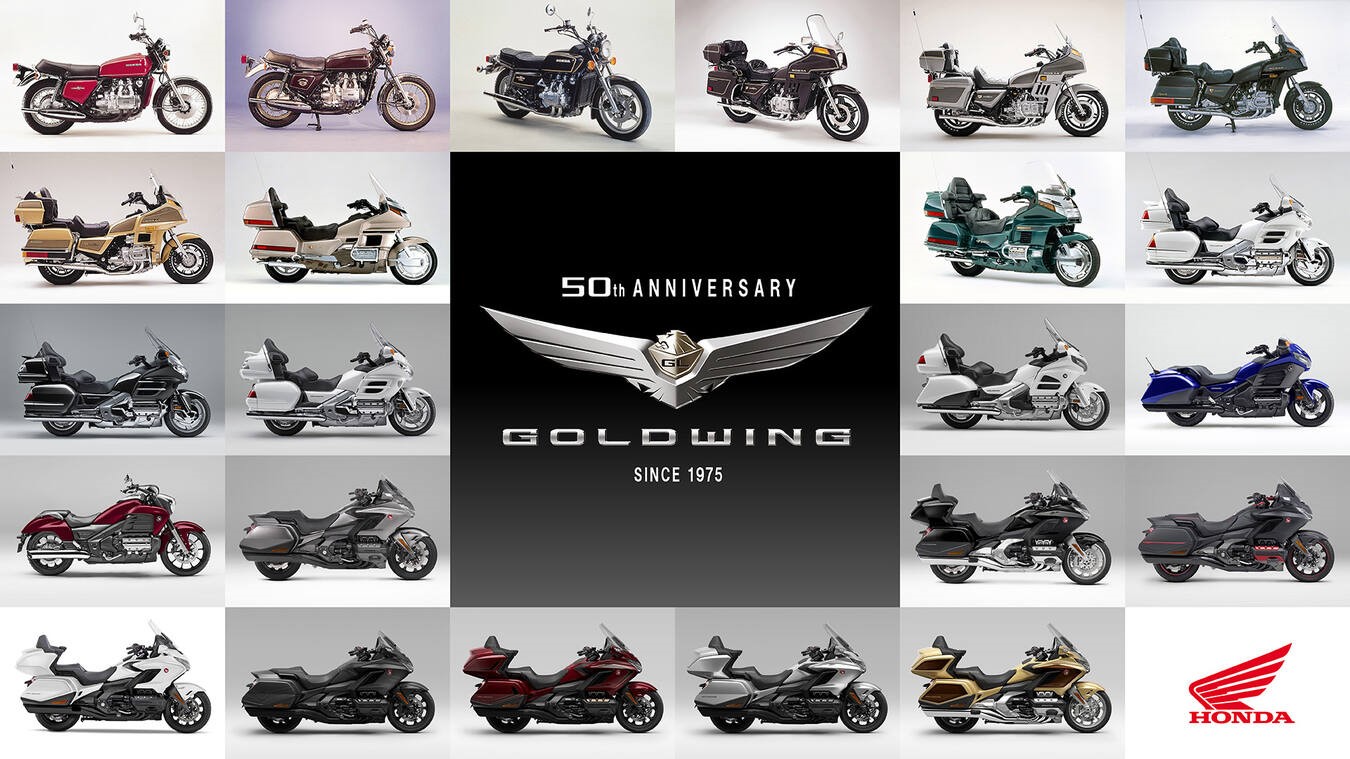
- Unique colourways and badging for the Gold Wing 50th Anniversary models
- Special limited edition desktop scale model showcases both first and latest generation Gold Wings
- Improved connectivity and infotainment functionality
- Euro5+ compliance also achieved
Celebrating 50 years of touring in 2025, the Honda Gold Wing has always represented the ultimate in two-wheeled travel since its introduction as a naked 1000cc machine half a century ago.
Over those five decades, Honda’s seminal touring flagship has grown in physical size and displacement and has introduced new levels of comfort, luxury and technology to motorcycling. For 25YM, the Gold Wing and Gold Wing Tour gain several detail changes to keep them as the benchmark long distance tourers.
The 25YM GL1800 Gold Wing Tour 50th Anniversary edition homages iconic Gold Wing models of the past, with two new evocative paint finishes and unique badging. Channelling the 1988 GL1500 is the bold Eternal Gold and Mahogany Brown Metallic combination, subtly updated for 2025. Alongside this is a refined Bordeaux Red Metallic finish, which is finished with black and gold graphics and discreet gold lettering and detailing.
Pride of place on the centre console and Smart Key is the Gold Wing emblem, with 50th Anniversary and ‘since 1975’ detailing. Its crisp 3D, two-tone chrome design merges the strength and dignity of a lion’s head with the majestic wings of an eagle ready to pounce with open talons. The comprehensive digital dash has also been updated to display a unique start-up animation.
To also mark this important birthday, the first 1,833 Gold Wing 50th Anniversary models sold in Europe will include an exclusive, limited-edition half-and-half scale replica. This premium collectible, measuring 11 inches wide by 6 inches high, beautifully highlights the evolution of the Gold Wing, featuring the original design on one side and the current model on the other
Keeping up the Gold Wing’s reputation as a platform for not only comfort but also technological innovation, for 25YM all GL1800 Gold Wings receive upgrades to both audio and rider/pillion connectivity, with wireless Apple CarPlay and Android Auto functionality enabled and new, improved audio system speakers to deliver a high-quality, rich sound at all speeds.
The 25YM final revisions are based around the addition of an O2 sensor and updates to the ECU’s settings, ensuring Euro 5+ compliance for both the Gold Wing and Gold Wing Tour.
The 25YM GL1800 Gold Wing Tour 50th Anniversary DCT and airbag will be available in the following colour options:
- **NEW** Eternal Gold and Mahogany Brown Metallic
- **NEW** Bordeaux Red Metallic
The 25YM GL1800 Gold Wing Tour DCT and airbag will be available in the following colour options:
- **NEW** Digital Silver Metallic
The GL1800 Gold Wing is available exclusively in a beautiful, brand-new Mat Ballistic Black 50th Anniversary edition paint scheme completed with full size, subtly softened Gold Wing logos on the rear panniers.
–
Gold Wing timeline:
1972: The beginning
A new design team is assembled under Soichiro Irimajiri, who headed up the design of Honda’s five-cylinder and six-cylinder road racing engines in the 1960s. Their brief is to explore the outer limits of the Grand Touring concept. How refined and luxurious can a motorcycle be when it is designed from the outset as a machine for covering big distances? The team creates the top-secret M1 prototype. Powered by a liquid-cooled, horizontally opposed six-cylinder engine with shaft final drive – features that will subsequently find their way onto the production Gold Wing as it evolves – the M1 blends superb performance with unrivalled refinement.
1975: GL1000 Gold Wing
The first production Gold Wing is a revolution, opening up new possibilities for long-distance motorcycle travel. With world-class power from its unique 999cm3 liquid-cooled horizontally opposed four-cylinder engine, the GL1000 Gold Wing combines peerless cross-country speed with a level of refinement never before experienced on two wheels. Gold Wing customers redefine touring, riding further and faster than had been possible before, confident in a machine that from the very beginning enjoyed a legendary reputation for complete reliability. In 1976 Honda celebrates the Gold Wing’s success with the stunning Gold Wing Limited Edition model, and in 1979 the first Honda of America manufacturing plant opens, reflecting the fact that 80 percent of Gold Wing production is being exported to the United States.
1980: GL1100 Gold Wing & GL1100 Gold Wing Interstate
Where the GL1000 defied categorisation with its blend of superbike power and touring comfort, the GL1100 – released after five years of intensive consumer-led development – firmly establishes the Gold Wing as a Grand Tourer par excellence. The larger 1085cm3 engine is developed for torque rather than power, while a longer wheelbase offers increased stability and more room for the rider and passenger. The air-assisted suspension sets new standards for motorcycle ride quality. At the same time the GL1100 Interstate introduces the idea of turn-key touring, with its factory-fitted fairing, panniers and top box.
1982: GL1100 Gold Wing Aspencade
The most luxurious Gold Wing to date offers an unparalleled range of standard features, from LCD instrumentation and a CB radio to an onboard air compressor.
1985: GL1200 Limited Edition
The Gold Wing’s market position is underlined by the discontinuation of the standard, unfaired GL1200 and the introduction of the GL1200 Limited Edition, complete with computerised fuel injection, a four-speaker sound system, cruise control, auto-levelling rear suspension, a travel computer and metallic gold paint.
1988: GL1500 Gold Wing
The brief is exacting in the extreme: the new Gold Wing has to be quieter, smoother, faster, more comfortable and even better in the corners. The GL1500 development team evaluates 15 different machines in 60 prototype stages. The result is a six-cylinder luxury tourer so accomplished that it establishes a benchmark that goes on to dominate motorcycling for more than a decade.
2001: GL1800 Gold Wing
A full eight years in development, the GL1800 model takes the Gold Wing to previously unimaginable heights. Steered by Masanori Aoki, whose CV includes the CBR250RR, the CBR400RR and the much-lauded CBR600F3, the Gold Wing becomes a dynamic sensation. In Aoki-san’s words: “My job is to add more fun factor, to build a Gold Wing with the kind of acceleration and handling people normally associate with sporting machines.” Alternative engines are tested but ultimately rejected and in 2001 the GL1800 is launched. The bike’s horizontally opposed six-cylinder engine is mounted in a box-section aluminium frame for superb road holding, handling and stability. In the course of the bike’s development no less than 20 technological innovations are patented.
2006: Industry-first airbag
The 2006 model introduced initially in the USA featured and the world’s first airbag on a production motorcycle, as well as revised taillights and instrument panel.
2011: New styling
The Gold Wing receives a new look under the styling concept of “majestic aggression”. The vitality and excitement of the bike’s handling and performance are reflected in looks that are at once elegant, imposing and dynamic. Luggage capacity is increased to 150 litres and a new six speaker audio system offers multiple connectivity options.
2013: Gold Wing F6B
The custom-styled Valkyrie (1996-2003) and unique, limited edition Rune (2003) – both sold in the USA – had used the Gold Wing engine. In 2013, the Gold Wing family gains a true second member with the stripped out, long and low Gold Wing F6B: a unique custom-touring motorcycle with Bagger styling, big on excitement and flair.
2014: Gold Wing F6C
A third machine takes the Gold Wing name. Low, mean and muscular, the Gold Wing F6C injected a jolt of adrenaline into the power cruiser arena.
2018: GL1800 Gold Wing
Brand new from the wheels-up, the 2018YM Gold Wing featured an all-new engine and frame, designed in unison to optimise packaging and maximise rider enjoyment.
Depending on the variant, up to 48kg was saved compared to the previous generation. An all-new link fork front suspension arrangement allowed the engine to be moved further forward and provide high-quality suspension control and front-end stability. The redesigned flat six-cylinder engine was optimised for size, but still delivered an avalanche of torque and power, and featured throttle by wire control, transferred to the road by a new six-speed manual, or seven-speed Dual Clutch Transmission (DCT). New features like the Smart Key system, Apple CarPlay and Bluetooth connectivity brought even more convenience.
25YM HONDA GL1800 GOLD WING
Model updates: Since 1975 the Gold Wing has toured the world. Now, for 25YM – and five decades on – the 50th Anniversary Gold Wing is here, complete with stunning Mat Black paint, 50th anniversary commemorative detailing and a limited run ‘half and half’ scale model of the first and latest Wing paired together. Specification includes double wishbone front suspension and the monumental flat six-cylinder engine; its status as a flagbearer for new technology is well-founded and features such as seven-speed Dual Clutch Transmission (DCT), seven-inch TFT screen, gyrocompass navigation, electric screen, Smart Key operation, four riding modes and Hill Start Assist keep it at the cutting-edge of motorcycling. 25YM updates for rider/pillion convenience include Apple CarPlay™ and Android Auto™ connection now via Wi-Fi, improved Bluetooth intercom functionality and upgraded speaker output. EURO5+ compliance has also been achieved.
Contents:
- Introduction
- Model overview
- Key features
- Accessories
- Technical specifications
–
1. Introduction
Celebrating 50 years of touring in 2025, the Honda Gold Wing, since its introduction as a naked 1000cc machine in 1975, has always represented the ultimate in two-wheeled travel. And it’s a motorcycle that’s been very much on its own journey, growing in physical size and displacement over the decades, all the while creating an enduring and unrivalled reputation for luxury, quality and comfort.
The most recent comprehensive upgrade came for 18YM, when, in response to the evolution of demographics and the motorcycle market, it made a radical departure from what would have been a traditional update trajectory. The GL1800 Gold Wing and Gold Wing Tour* took a new direction and, brand new from the wheels-up, became sleeker, lighter and more agile – very much a rider’s motorcycle – while adding a host of new features to cement its reputation as a technological flagship.
And, as a result, the Gold Wing’s appeal became instantly broader, reaching out to a younger generation of motorcyclists that may have overlooked – or simply not been aware of – the previous incarnation.
For 20YM, improvements to suspension and slow speed manoeuvrability further complemented the evocative, flat six-cylinder engine beating at the heart of Honda’s premium tourer. In 21YM, the Gold Wing gained an audio upgrade and 22YM saw it become available in Dual Clutch Transmission (DCT) form only while the 23YM model received a Tyre Pressure Monitoring System (TPMS).
Now, in 25YM, the 50th Anniversary GL1800 Gold Wing is set to mark the millions of kilometres this incredible machine has covered – alongside its legion of riding devotees – since 1975. The legend continues.
*See separate Gold Wing Tour press kit.
–
2. Model Overview
The Gold Wing’s engine and chassis were designed in unison for the 18YM rebirth, to move the riding position forward and create a much more compact motorcycle. The aluminium beam frame is constructed around a double wishbone front fork, which allows the engine to sit forward in the machine – as the front wheel moves up and down in a more vertical plane – while providing high quality suspension control and front-end stability thanks to its stiffness and reduced friction.
Optimised for size, the 24V flat six-cylinder engine lost none of its power, avalanche of torque or addictive power delivery. The addition of Throttle By Wire (TBW) control brought with it four rider modes: TOUR, SPORT, ECON and RAIN; the operation of the Dual Combined Brake System (D-CBS) alters depending on the mode selected. Hill Start Assist (HSA) and Idling Stop offer ease of use and improved fuel efficiency.
The DCT features seven-speeds, with clutch feel, shift speed and rpm range of up/downshifts tailored specifically to each riding mode. It also features a ‘creep’ forward and back function.
The Gold Wing offers a total sense of freedom, with sheer riding enjoyment and performance matched by stylish design. An aerodynamically efficient fairing channels air around the rider, while the electric screen adjusts for preference; the luxurious seats offer all-day comfort. The lightweight audio system and (newly upgraded) speakers show off incredible sound quality. And features like Smart Key operation, Apple CarPlay™, Android Auto™ and Bluetooth™ provide modern-day convenience and connectivity.
For 25YM the GL1800 Gold Wing receives upgrades to both audio and rider/pillion connectivity, with updates to ECU settings, and is available exclusively in a beautiful, brand-new Mat Ballistic Black 50th Anniversary edition paint scheme. Other detailing to mark 50 years will be found on the Smart Key, centre console and start-up animation. Also, the first 1,833 GL1800 Gold Wing 50th Anniversary models sold in Europe will come complete with a (limited) premium half and half model. 11-inches wide by 6-inches high, it features the original on one side and the current model on the other.
–
3. Key Features
3.1 Styling & Equipment
- Taut lines with a contemporary edge show off the motorcycle underneath
- Electric windscreen adjustable for angle and height
- Seven-inch TFT display provides riding, navigation, audio information – with new ‘Home Bar’ – while the Tyre Pressure Monitoring System (TPMS) warns of sub optimal pressures
- Upgraded audio quality at higher speeds
- Cruise control operates smoothly via Throttle By Wire (TBW),
- Ample luggage capacity for weekend touring
- Apple CarPlay™ and Android Auto™ allow smartphone use, now connected via Wi-Fi
- Rider/passenger Bluetooth intercom functionality simplified and improved
- Full LED lighting and auto-cancelling indicators
- Smart Key control adds convenience for ignition and luggage
- Two USB Type-C sockets
The Gold Wing’s lines exude a honed, athletic ethos. The styling presents a unique silhouette and counterpoints comfort with the dynamic abilities of chassis and engine, with the traditional Gold Wing premium level of fit, finish and materials. Its ‘face’ is daringly forward-slanting; combined with the compact fairing proportions, it presents an energetic frontal signature.
The key line of the body, stretching front to back, highlights the differing upper and lower bodywork functions. A central element is the fairing, with its sharp and solid flat surfaces, and nuanced aerodynamic detailing. It adds a tension that hints at the performance potential on offer.
Also on display is the motorcycle itself – the double wishbone front suspension, flat six-cylinder engine, exhausts – in all their functional beauty. Drawn together, the design elements create cutting edge style, underpinned by incredible levels of engineering and electronics.
Comfort, heat management and, most importantly, air management are also high on the Gold Wing’s agenda. The fairing channels airflow around the rider and pillion, effectively providing a pleasant cooling breeze.
A small electric screen operated from the left handlebar provides excellent wind protection yet, at the same time, a sense of space and freedom when required. Screen angle and height adjustment is step-less. Available as options are a larger screen, a fully adjustable deflector for the arms and upper body, and fixed deflectors for the lower legs and feet.
From a seating perspective, rider and pillion are separated. The rider can enjoy a total focus on riding the bike. The rider’s seat shape is comfortable and supportive while allowing movement and easy ground reach.
All lighting is LED. The lower portion of the headlights use five polished optical lenses on both sides to create a Jewel-Eye low beam light signature. Using high beam (in the upper portion) creates a stereoscopic impression. The front indicators are housed in the mirrors and the indicators also auto-cancel; the system compares front and rear wheel speed difference and calculates when to cancel the indication relative to the riding situation.
When riding, the speed that’s been set with the cruise control switch (located on the right handlebar) is shown in the bottom left area of the speedometer. Through TBW the system achieves a smooth transition to the specified speed and an ultra-smooth operation, especially when going uphill. And, after completing a deceleration with the cruise control system in operation, the Gold Wing returns to the pre-set speed with an appropriate shifting schedule.
Luxurious instrumentation creates a unique cockpit. Different low-contrast colours with dark tones are applied to the dials, of which the peripheral areas form cone-shaped slopes to create a feeling of depth. A ring with a metal texture surrounds each dial, and the graduations glow in LED, giving concrete depth and a calm, cool image.
The seven-inch full-colour TFT liquid crystal display screen provides all the information for the audio and navigation systems, as well as the riding modes and suspension adjustment. Information is displayed in differentiated segments in a very functional order, so the rider can get all the relevant data with the minimum of eye movement.
Brightness adjusts automatically (with the maximum luminous intensity of the screen being 1000 cd) and the rider can also choose from eight brightness levels. Tyre pressure is displayed as a numerical figure in the bottom left area of the instruments and warns the rider quickly and clearly if tyre pressures become sub-optimal.
Pride of place on the centre console and Smart Key is the Gold Wing emblem, with 50th Anniversary and ‘since 1975’ detailing. Its crisp 3D, two-tone chrome design merges the strength and dignity of a lion’s head with the majestic wings of an eagle ready to pounce with open talons. The Smart Key – similarly adorned with 50th logos – activates all the motorcycle’s systems and also incorporates the emergency key. The ignition and handlebar lock can be turned on or off while carrying the Smart Key.
Many Gold Wing owners ride short, two or three day tours, for which the total volume of 60L between both panniers is ample. Exclusively designed, inner bags are available as an option. With the Smart Key present, a simple push of a button opens the panniers. It’s also possible to temporarily unlock via remote control; the unlock button on the Smart Key enables the passenger instant access. Hydraulic dampers smooth the opening and closing. Pushing and holding the call button results in the indicators flashing.
The Gold Wing is compatible with Apple CarPlay™ and Android Auto™ – now via Wi-Fi with no need to plug in – so the rider can utilise the personalised information and content inside their smartphone, such as telephone numbers and music playlists. A new ‘Home Bar’ appears on top of the Apple CarPlay™ and Android Auto™ screen; it is a layered design that overlaps the playing display, allowing for easy and quick control of main functions without the need to go deep into a menu.
Intercom connectivity through Bluetooth™ has been improved. Before, both rider and passenger had to connect independently. Now, for 25YM, the bike acts as the intermediary and even single Bluetooth headsets can maintain audio while enabling passenger/rider calls. A ‘Ducking’ feature automatically lowers the background music level during conversations, for clearer and more comfortable talk. There are two USB Type-C sockets for smartphone charging.
High quality, lightweight speakers – with increased speaker pressure for 25YM – achieve superb sound quality with vivid presence, and even more so now at high speed. A passenger audio control switch is available to ensure an even more pleasant riding experience; the switches are located on the upper part of the right pannier and adjusting the volume, switching the source and fast forwarding is possible.
The navigation system is displayed on the seven-inch, full-colour TFT liquid crystal display screen in the central area of the instruments and includes a gyrocompass – which means guidance is continued even inside a tunnel. Cancellation of any waypoint or ‘go home’ instruction operation while riding is also possible. Maps are updated and also offer the possibility of entering up to 99 different waypoints for detailed journey planning.
The capacity of the fuel tank is 21L with fuel economy of 5.4 litres/100km.
–
3.2 Chassis
- Diecast, aluminium twin-beam frame
- Double wishbone front suspension and Pro-Arm rear
- ABS and Dual-Combined Braking System (D-CBS)
The Gold Wing’s diecast, aluminium twin-beam frame is designed to package the engine in a tight space; its structural thickness is optimised in each area to deliver a smooth and stable ride, from walking speed upwards, whether on tight city streets or out on the open road.
Aside from moving the front wheel forward under full suspension compression, another benefit of the double wishbone front suspension is the reduction in sliding friction (from bump deflection and steering input) that a standard telescopic fork creates, as the stanchions travel up and down in the fork leg. Bearings are used in all shaft bush areas for steering and suspension stroke, further reducing friction.
The steering input – via the dual fork holders – is also separated from the suspension provided by the single shock absorber, and the Gold Wing’s yaw moment make it nimble and easier to steer. In addition, patented steering cross tie-rods connect the handlebars to the front axle and the handlebar pivot, delivering an entirely natural feel to the rider.
Rake and trail are set at 30.5°/109mm, with wheelbase of 1695mm. The Gold Wing’s kerb weight is 373kg.
The Dual Combined Brake System (D-CBS) optimally distributes braking forces to the front and rear wheels. The use of a single, light circulation type ABS modulator – integrated with the brake ECU – keeps weight down within the braking system. It also operates in linkage with the current riding mode of choice, automatically adjusting the braking characteristics to the riding situation. Dual 320mm front discs are gripped by 6-piston calipers, the rear 316mm disc by a 3-piston caliper.
The Gold Wing also benefits from a Pro-Arm swingarm, which attaches to the frame on its left side. The right side serves as a maintenance access. This allows much greater freedom of design and makes the machine easier to manage; it also contributes to stability. Pro-Link provides progressive suspension action and comfort while spherical joints are used throughout, cancelling out torsion. The rear preload is manually adjustable.
–
3.3 Engine
- Horizontally opposed, flat six-cylinder SOHC 24-valve engine
- Throttle By Wire (TBW) with 4 rider modes to tailor power output
- Riding modes also manage suspension damping and brake force
- Idling Stop, Integrated Starter Generator (ISG) and Hill Start Assist (HSA)
- Addition of O2 plus new ECU settings ensure EURO5+ compliance
To realise the handling potential of the chassis – and maintain the addictive power delivery and feel that’s so much part of this icon’s appeal – the Gold Wing’s 1,833cc, horizontally-opposed flat six-cylinder engine uses four valves per cylinder.
Peak power of 93kW arrives @ 5,500rpm, with peak torque of 170Nm delivered @ 4,500rpm. The bore size of 73mm matches the stroke of 73mm; the left and right cylinders are offset 4mm and the cylinder sleeves are aluminium. Compression ratio is set at 10.5:1. New ECU settings plus adoption of an O2 sensor ensure EURO5+ compliance.
The Unicam cylinder heads – the inlet valves are operated by finger-follower rocker arm, the exhaust valves by roller rocker arms – also employ a co-axial rocker-arm shaft for both inlet and exhaust. The combustion chambers are a four-valve ‘pentroof’ design with the inlet ports designed to promote ‘tumble’ flows inside the cylinders thus improving efficiency. The piston skirts wear a molybdenum coating to reduce friction.
Throttle By Wire (TBW) engine management adds four rider modes to alter character and power delivery, linked to suspension damping and the Dual Combined Brake System (D-CBS):
- TOUR mode is the base setting for comfort and power. It gives a direct 100% opening ratio between throttle grip and throttle body butterfly, with ‘default’ damping and front/rear brake force distribution.
- SPORT serves up the highest throttle to butterfly ratio and delivers strong acceleration, with firmer damping and rear brake lever pressure.
- ECON mode offers maximum fuel economy and easy cruising, with lower throttle to butterfly ratio and default damping and brake force.
- RAIN turns the dial down to suit wet and slippery conditions, with lowest throttle to butterfly ratio, default braking force distribution and soft suspension damping.
There are two air intake ducts sited front left and right rear. This structure generates swirling as the air is drawn in – the result is more effective use of the air filter’s entire surface area and reduction in resistance. The internal shaping of both ducts is optimised to align with the intake pulses of the engine’s low-rpm range, improving response and torque from smaller throttle openings. A single throttle body speeds up airflow and improves response.
To complement the engine’s deep bass signature the mufflers emit a powerful throb, without excessive noise. The cross-sectional areas of the exhaust pipes for two out of the six cylinders are reduced 20%, bringing the sound volume and depth.
The ISG (Integrated Starter Generator) combines the generator and starter motor into one component, with the generator effectively becoming the starter motor when supplied with reverse power. It’s 2.4 kg lighter than a standard system. Helical gears are employed for the ISG driving gears, reducing mechanical noise.
Key characteristics of Idling Stop are the ultra-quiet start-up of the engine thanks to the use of ISG, and the smooth starting feeling achieved through a combination of DCT and TBW control. When stopping at a traffic light with Idling Stop on, the engine automatically stops after three seconds and, when restarting, the rider only needs to turn the throttle, which immediately starts the engine.
The system is controlled so that hydraulic oil pressure is applied in advance to the DCT line that activates the clutch when the engine starts, so the time lag from when the rider opens the throttle to movement is reduced. To curb any abruptness the TBW makes the throttle butterfly open gradually following the throttle opening – thus the smooth acceleration befitting of a Gold Wing. Idling Stop can be turned ON or OFF from the right handlebar switch.
Hill starts on a conventional motorcycle involve simultaneously releasing the brakes, opening the throttle and engaging the clutch according to the grade of the slope. To ease this effort, the Gold Wing has Hill Start Assist (HSA). After stopping on a slope, further squeezing the brake lever quickly results in the ABS modulator generating hydraulic pressure for the rear brake caliper. When setting off – even when the brake lever is released – the hydraulic pressure temporarily retains braking force (for about three seconds) so starting on the uphill slope with the throttle is possible. When in operation, the HSA indicator is switched on to inform the rider.
–
3.4 Dual Clutch Transmission (DCT)
- Seven-speed DCT standard equipment
- Smooth and quiet, with ultra-fast shifting
- Walking mode allows machine to ‘creep’ forward or back
- The four riding modes also manage DCT for optimised response
Honda has sold over 250,000 DCT-equipped motorcycles across Europe since the system first appeared as an option on the VFR1200F in 2009. It delivers consistent, seamless gear changes up or down and very quickly becomes second nature in use. It uses two clutches: one for start-up and 1st, 3rd, 5th & 7th the other for 2nd, 4th and 6th, with the mainshaft for each clutch located inside the other for compact packaging.
Each clutch is independently controlled by its own electro-hydraulic circuit. When a gear change occurs, the system pre-selects the target gear using the clutch not currently in use. The first clutch is then electronically disengaged as, simultaneously, the second clutch engages.
The result is a consistent, fast and seamless gear change. Furthermore, as the twin clutches transfer drive from one gear to the next with minimal interruption of the drive to the rear wheel, any gear change shock and pitching of the machine is minimised, making the change feel direct as well as smooth. Extra benefits include durability (as the gears cannot be damaged by missing a gear) impossibility of stalling, low stress urban riding, reduced rider fatigue and increased ability to focus on riding lines, braking and acceleration points.
The DCT system offers two distinct riding approaches – the Automatic settings, with pre-programmed shift patterns which constantly read vehicle speed, gear selected and engine rpm to decide when a shift should occur, and the Manual Transmission setting for gear changes using the paddle-shift style triggers on the left handlebar.
Employing the third generation – and the only one to have seven-speeds – the Gold Wing’s DCT is specifically designed for long-distance cruising; it’s also extremely smooth and fast shifting.
It is also optimised for low-speed manoeuvrability, with close ratios reducing shift-shock. In the higher speed range, they are set wider apart to reduce engine rpm. In both speed ranges comfort is improved as shifting up or down is of the highest quality.
Shift noise and shock were addressed throughout the development of the third generation, with noise damper rubbers on both ends of the fork guide and the master arm greatly reducing any impact sound during gear changes.
A spring damper is installed between the clutch and the main shaft in order to absorb the torque in the rotational direction, thus reducing the noise and shock of the contact between the clutch and main shaft when shifting gears.
The Gold Wing’s DCT features a 1.8km/h forward Walking Mode with reverse of 1.2km/h, operated instantly from a +/- switch on the left handlebar.
The main shaft has a double tube structure, with the outer main shaft (connected with the even-number gears) linked to the inner shaft with a chain, by way of the gears on the counter shaft. This structure gives the outer main shaft the role of the reverse idle shaft, which has resulted in a lightweight reverse mechanism with a compact structure – with no need for any reverse idle shaft.
When activating Walking Mode, the two clutches of DCT are utilised to enable moving backward with clutch #1 and moving forward with clutch #2. In this way, moving forward or backward at walking speed is now possible with only clutch control, without any need for gear shifting. Furthermore, the throttle-by-wire system controls speed by minutely controlling the clutch capacity, while maintaining a certain engine speed, assuring controllability with a sense of security in wide-ranging situations.
The four riding modes are interleaved with DCT and feature DCT-specific parameters:
- TOUR uses the default setting for smooth clutch engagement and gearshifts in AT mode, with a low-to-high rpm range for gear shifts.
- SPORT deploys a more direct clutch engagement, with gear shifts programmed in a mid-to-high rev range.
- ECON has a soft clutch engagement, with low-to-mid rpm gear hold and default shifting feel.
- RAIN also operates a soft clutch, low-to-high rpm gear hold range and slower shifting in AT mode.
–
4. Accessories
A wide range of genuine Honda accessories have been developed to further enhance The Honda Goldwing ownership experience. These are available either as a pack or individually.
The Full Option Goldwing includes the following:
- Pannier Inner Bags & Floor Mats
- Main Stand
- Passenger Backrest
- High Wind Screen
- Fog Lamps
The following are also available:
- Passenger Audio Switch and attachment: Allows the passenger to adjust the volume, source and track.
- Power Amplifier and attachment: Providing clean and crisp music for the ultimate audio experience on the open road.
- Rear Speakers and attachment: These 55w speakers allow you to expand the audio system to four speakers on your Gold Wing
- Wheel Stripes
- Front Caliper covers (Available in Chrome / Black)
- Chrome Side Stand
- Half Motorcycle Cover
- Tall Passenger Grips
- Custom Seat
- Upper & Lower Air Deflectors
- Wider Rider Footpegs
- Rider Backrest: Custom-styled, high-quality backrest with embossed Gold Wing logo, provides support for added comfort.
- DCT Foot Shifter: A complete kit enabling you to change gear in the traditional one down – five up format on DCT Models using a left foot shift lever.
- Alarm System: The alarm starts buzzing when an abnormality is detected.
- 12V Socket
–
5. Technical Specifications
|
ENGINE |
|
|
Engine Type |
Liquid-cooled 4-stroke 24 valve SOHC flat-6 |
|
Engine Displacement |
1,833 cc |
|
Bore x Stroke (mm) |
73 mm x 73 mm |
|
Compression Ratio |
10.5:1 |
|
Max. Power Output |
93 kW at 5,500 rpm |
|
Max. Torque |
170 Nm at 4,500 rpm |
|
Stationary Noise Level dB (A) |
89 db (A) |
|
Max Speed |
180 km/h |
|
Oil Capacity |
5.6 L |
|
Starter |
Integrated Starter Generator system |
|
FUEL SYSTEM |
|
|
Carburation |
PGM-FI electronic fuel injection |
|
Fuel Tank Capacity |
21 L |
|
CO2 Emissions WMTC |
124 g/km |
|
Fuel Consumption |
5.4 L |
|
ELECTRICAL SYSTEM |
|
|
Battery Capacity |
12V 21.Ah (20HR) |
|
DRIVETRAIN |
|
|
Clutch Type |
2x Wet Multiplate Clutch |
|
Transmission Type |
7-speed Dual Clutch Transmission with forward and reverse assist |
|
Final Drive |
Enclosed shaft |
|
FRAME |
|
|
Frame Type |
Aluminum die-cast, twin tube |
|
CHASSIS |
|
|
Dimensions (L'W'H) |
2,475 mm x 905 mm x 1,340 mm |
|
Wheelbase |
1,695 mm |
|
Caster Angle |
30.5° |
|
Trail |
109 mm |
|
Seat Height |
745 mm |
|
Ground Clearance |
130 mm |
|
Kerb Weight |
373 kg |
|
Turning radius |
3.4 m |
|
SUSPENSION |
|
|
Suspension Front |
Double Wishbone |
|
Suspension Rear |
Pro Link |
|
WHEELS |
|
|
Wheels Front |
18M/C x MT3.50 |
|
Wheels Rear |
16M/C x MT6.00 |
|
Tyres Front |
130/70R18 M/C 63H |
|
Tyres Rear |
200/55R16 M/C 77H |
|
BRAKES |
|
|
ABS Type |
Electronically-controlled combined ABS system |
|
Brakes Front |
320mm x 4.5mm dual hydraulic disc with 6-piston calliper, floating rotors and sintered metal pads |
|
Brakes Rear |
316mm x 11mm ventilated disc with 3-piston calliper and sintered metal pads |
|
INSTRUMENTS & ELECTRICS |
|
|
Instruments |
7-inch TFT display |
|
Headlight |
LED |
|
Taillight |
LED |
|
Connectivity |
Bluetooth Audio and Apple CarPlay / Android Auto Wireless |
|
USB |
Yes |
|
12V Socket |
Optional |
|
Auto Winker Cancel |
Yes |
|
Security System |
HISS |
|
Cruise Control |
Yes |
|
Riding mode |
Tour, Sport, Econ and Rain |
|
HSTC |
Yes |
|
Additional Features |
Electronically-adjustable screen, Idling Stop, Smart Key, Tyre Pressure Control, heated grips, Hill Start Assist |
All specifications are provisional and subject to change without notice.
** Please note that the figures provided are results obtained by Honda under standardised testing conditions prescribed by WMTC. Tests are conducted on a rolling road using a standard version of the vehicle with only one rider and no additional optional equipment. Actual fuel consumption may vary depending on how you ride, how you maintain your vehicle, weather, road conditions, tire pressure, installation of accessories, cargo, rider and passenger weight, and other factors.
25YM HONDA GL1800 GOLD WING TOUR
Model updates: Since 1975 the Gold Wing has toured the world. Now, for 25YM – and five decades on – the 50th Anniversary Gold Wing Tour is here, available in two beautiful paint options with 50th anniversary commemorative detailing, and complete with a limited run ‘half and half’ model of the original and latest model paired together. Specification includes double wishbone front suspension and the monumental flat six-cylinder engine. The comprehensive equipment includes seven-speed DCT, seven-inch TFT screen, gyrocompass navigation, electric screen, Smart Key operation, four riding modes, HSTC and Hill Start Assist. 25YM updates for rider/pillion convenience include Apple CarPlay™ and Android Auto™ connection now via Wi-Fi, improved Bluetooth™ intercom functionality and upgraded speaker output. EURO5+ compliance has also been achieved.
Contents:
- Introduction
- Model overview
- Key features
- Accessories
- Technical specifications
–
1. Introduction
Celebrating 50 years of touring in 2025, the Honda Gold Wing, since its introduction as a naked 1000cc machine in 1975, has always represented the ultimate in two-wheeled travel. And it’s a motorcycle that’s been very much on its own journey, growing in physical size and displacement over the decades, all the while creating an enduring and unrivalled reputation for luxury, quality and comfort.
The most recent comprehensive upgrade came for 18YM, when, in response to the evolution of demographics and the motorcycle market, it made a radical departure from what would have been a traditional update trajectory. The GL1800 Gold Wing* and Gold Wing ‘Tour’ took a new direction and, brand new from the wheels-up, became sleeker, lighter and more agile – very much a rider’s motorcycle – while adding a host of new features to cement the bike’s reputation as a technological flagship, including the option of seven-speed Dual Clutch Transmission (DCT).
And, as a result, the Gold Wing Tour’s appeal became instantly broader, reaching out to a younger generation of motorcyclists that may have overlooked – or simply not been aware of – the previous incarnation. In 20YM, standard-fit LED fog lights, larger pillion grab handles plus improvements to suspension and slow speed manoeuvrability further complemented the evocative, flat six-cylinder engine beating at the heart of Honda’s premium tourer.
For 21YM, the Gold Wing Tour gained carrying capacity, improved pillion comfort and an audio upgrade. Now, in 25YM, the GL1800 Gold Wing Tour receives a host of detail improvements, alongside a 50th Anniversary edition, and is set to mark the millions of kilometres this incredible machine has covered – with its legion of riding devotees – since 1975. The legend continues.
*See separate Gold Wing press kit.
–
2. Model Overview
The Gold Wing Tour’s engine and chassis were designed in unison for the 18YM rebirth, to move the riding position forward and create a much more compact motorcycle. The aluminium beam frame is constructed around a double wishbone front fork, which allows the engine to sit forward in the machine – as the front wheel moves up and down in a more vertical plane – while providing high quality suspension control and front-end stability thanks to its stiffness and reduced friction. Suspension damping adjusts electrically.
Optimised for size, the 24V flat six-cylinder engine lost none of its power, avalanche of torque or addictive power delivery. The addition of Throttle By Wire (TBW) control brought with it four rider modes: TOUR, SPORT, ECON and RAIN; the operation of the Dual Combined Brake System (D-CBS) alters depending on the mode selected. Hill Start Assist (HSA) and Idling Stop (on the DCT option) offer ease of use and improved fuel efficiency. Honda Selectable Torque Control (HSTC) maintains rear wheel traction. EURO5+ compliance has also been applied for 25YM.
The DCT features seven-speeds, with clutch feel, shift speed and rpm range of up/downshifts tailored specifically to each riding mode. It also features a ‘creep’ forward and back function.
The Gold Wing Tour offers a total sense of freedom, with sheer riding enjoyment and performance matched by stylish design. An aerodynamically efficient fairing channels air around the rider, while the extended electric screen adjusts for preference; the seats, too provide all-day comfort and feature a suede/synthetic leather cover. The angle of the pillion back rest is also relaxed. High quality (newly upgraded) speakers show off vivid sound quality and features like Smart Key operation, Apple CarPlay™, Android Auto™ and Bluetooth™ add modern-day convenience and connectivity.
For 25YM the GL1800 Gold Wing Tour receives upgrades to both audio and connectivity, with updates to ECU settings. The 50th Anniversary edition receives bespoke detailing on the Smart Key, centre console and start-up animation. Also, the first 1,833 GL1800 Gold Wing 50th Anniversary models sold in Europe will come complete with a (limited) premium half and half scale model; 11-inches wide by 6-inches high it features the original on one side and the current model on the other.
The 25YM GL1800 Gold Wing Tour 50th Anniversary DCT and airbag will be available in the following retro-inspired colour options:
- **NEW** Eternal Gold and Mahogany Brown Metallic
- **NEW** Bordeaux Red Metallic
The 25YM GL1800 Gold Wing Tour will be available in the following colour option:
- **NEW** Digital Silver Metallic
–
3. Key Features
3.1 Styling & Equipment
- Taut lines with a contemporary edge show off the motorcycle underneath
- Electric windscreen adjustable for angle and height
- Ample luggage capacity for weekend touring; top box features 61L storage
- Suede/synthetic leather seats, relaxed pillion back rest angle
- Seven-inch TFT display provides riding, navigation, audio information with new ‘Home Bar’
- Upgraded audio quality at higher speeds
- Cruise control operates smoothly via Throttle By Wire (TBW),
- Ample luggage capacity for weekend touring
- Apple CarPlay™ and Android Auto™ allow smartphone use, now connected via Wi-Fi
- Rider/ passenger Bluetooth intercom functionality simplified and improved
- Full LED lighting, LED fog lights and auto-cancelling indicators
- Smart Key control adds convenience for ignition and luggage
- Two USB Type-C sockets
The Gold Wing Tour’s lines exude a honed, athletic ethos. The styling presents a unique silhouette and counterpoints comfort with the dynamic abilities of chassis and engine, with the traditional Gold Wing premium level of fit, finish and materials. Its ‘face’ is daringly forward-slanting; combined with the compact fairing proportions, it presents an energetic frontal signature.
The key line of the body, stretching front to back, highlights the differing upper and lower bodywork functions. A central element is the fairing, with its sharp and solid flat surfaces, and its nuanced aerodynamic detailing. It adds a tension that hints at the performance potential on offer.
Also on display is the motorcycle itself – the double wishbone front suspension, flat six-cylinder engine, exhausts – in all their functional beauty. Drawn together, the design elements create cutting edge style, underpinned by incredible levels of engineering and electronics
Comfort, heat management and, most importantly, air management are also high on the Gold Wing Tour’s agenda. The fairing channels airflow around the rider and pillion, effectively providing a pleasant cooling breeze.
An extended electric screen operated from the left handlebar provides excellent wind protection yet, at the same time, a sense of space and freedom when required. Screen angle and height adjustment is step-less. Available as options are a larger screen, a fully adjustable deflector for the arms and upper body and fixed deflectors for the lower legs and feet.
From a seating perspective, rider and pillion are separated. The rider can enjoy a total focus on riding the bike. The rider’s seat shape is comfortable and supportive while allowing movement and easy ground reach. Both rider and pillion benefit from a luxurious new suede/synthetic leather seat cover; the angle of the pillion back rest is set at a relaxed 23°.
All lighting is LED, and the Gold Wing Tour is equipped with dual LED fog lights. The lower portion of the headlights use 5 polished optical lenses on both sides to create a Jewel-Eye low beam light signature. Using high beam (in the upper portion) creates a stereoscopic impression. The front indicators are housed in the mirrors and the indicators also auto-cancel; the system compares front and rear wheel speed difference and calculates when to cancel the indication relative to the riding situation.
When riding, the speed that’s been set with the cruise control switch (located on the right handlebar) is shown in the bottom left area of the speedometer. Through TBW the system achieves a smooth transition to the specified speed and an ultra-smooth operation, especially when going uphill.
Luxurious instrumentation creates a unique cockpit. Different low-contrast colours with dark tones are applied to the dials, of which the peripheral areas form cone-shaped slopes to create a feeling of depth. A ring with a metal texture surrounds each dial, and the graduations glow in LED, giving concrete depth and a calm, cool image.
The seven-inch full-colour TFT liquid crystal display screen provides all the information for the audio and navigation systems, as well as managing riding modes and suspension adjustment. Information is displayed in differentiated segments in a very functional order, so the rider can get all the relevant data with the minimum of eye movement.
Brightness adjusts automatically (with the maximum luminous intensity of the screen being 1000 cd) and the rider can also choose from eight brightness levels. Tyre pressure is displayed as a numerical figure in the bottom left area of the instruments warns the rider quickly and clearly if tyre pressures become sub-optimal.
Pride of place on the centre console and Smart Key is the Gold Wing emblem, with 50th Anniversary models receiving bespoke ‘since 1975’ detailing. Its crisp 3D, two-tone chrome design merges the strength and dignity of a lion’s head with the majestic wings of an eagle ready to pounce with open talons. The Smart Key – similarly adorned with 50th logos for the Anniversary edition – activates all the motorcycle’s systems and also incorporates the emergency key. The ignition and handlebar lock can be turned on or off while carrying the Smart Key.
Total carrying capacity is 121L. Exclusively designed inner bags are available as an option. Luggage operation is simple. With the Smart Key present, a push button opens all of the boxes. It’s also possible to temporarily unlock via remote control; the unlock button on the Smart Key enables the passenger instant pannier access. Hydraulic dampers smooth the opening and closing. Pushing and holding the call button results in the indicators flashing.
The Gold Wing Tour is compatible with Apple CarPlay™ and Android Auto™ – now via Wi-Fi with no need to plug in – so the rider can utilise the personalised information and content inside their smartphone, such as telephone numbers and music playlists. A new ‘Home Bar’ appears on top of the Apple CarPlay™ and Android Auto™ screen; it is a layered design that overlaps the playing display, allowing for easy and quick control of main functions without the need to go deep into a menu.
Intercom connectivity through Bluetooth™ has been improved. Before, both rider and passenger had to connect independently. Now, for 25YM the bike acts as the intermediary and even single Bluetooth headsets can maintain audio while enabling passenger/rider calls. A ‘Ducking’ feature automatically lowers the background music level during conversations, for clearer and more comfortable talk. There are two USB Type-C sockets for smartphone charging. High quality, lightweight speakers – with increased speaker pressure – achieve superb sound quality with vivid presence, and even more so now at high speed.
The navigation system is displayed on the seven-inch, full-colour TFT liquid crystal display screen in the central area of the instruments and includes a gyrocompass – which means guidance is continued even inside a tunnel. Cancellation of any waypoint or ‘go home’ instruction operation while riding is also possible. Maps are updated and also offer the possibility of entering up to 99 different waypoints for detailed journey planning.
The capacity of the fuel tank is 21 litres with fuel economy of 5.4litres/100km.
–
3.2 Chassis
- Diecast, aluminium twin-beam frame
- Double wishbone front suspension and Pro-Arm rear
- Front and rear damping level adjusts to suit riding mode selected
- Rear spring preload electrically adjustable
- ABS and Dual-Combined Braking System (D-CBS)
The Gold Wing Tour’s diecast, aluminium twin-beam frame is designed to package the engine in a tight space; its structural thickness is optimised in each area to deliver a smooth and stable ride, from walking speed upwards, whether on tight city streets or out on the open road.
Aside from moving the front wheel forward under full suspension compression, another benefit of the double wishbone front suspension is the reduction in sliding friction (from bump deflection and steering input) that a standard telescopic fork creates, as the stanchions travel up and down in the fork leg. Bearings are used in all shaft bush areas for steering and suspension stroke, further reducing friction.
The steering input – via the dual fork holders – is also separated from the suspension provided by the single shock absorber, and the Gold Wing Tour’s yaw moment make it nimble and easier to steer. In addition, patented steering cross tie-rods connect the handlebars to the front axle and the handlebar pivot, delivering an entirely natural feel to the rider.
Rake and trail are set at 30.5°/109mm, with wheelbase of 1695mm. The Gold Wing Tour 50th Anniversary DCT & Airbag weighs 393kg.
The Dual Combined Brake System (D-CBS) optimally distributes braking forces to the front and rear wheels. The use of a single, light circulation type ABS modulator – integrated with the brake ECU – keeps weight down within the braking system. It also operates in linkage with the current riding mode of choice, automatically adjusting the braking characteristics to the riding situation. Dual 320mm front discs are gripped by six-piston calipers, the rear 316mm disc by a three-piston caliper.
The Gold Wing Tour also benefits from a Pro-Arm swingarm, which attaches to the frame on its left side. The right side serves as a maintenance access. This allows much greater freedom of design and makes the machine easier to manage; it also contributes to stability. Pro-Link provides progressive suspension action and comfort while spherical joints are used throughout, cancelling out torsion.
Damping level adjusts electrically relative to riding mode. Stepper motors housed within the front and rear shock absorbers move needles to control oil flow, tailoring damping force for the riding situation. Rear spring preload is also electrically adjusted. Separate from the four riding modes, there are four settings of preload relative to load from soft to hard: single rider; rider with luggage; rider with pillion, and rider with pillion fully loaded with luggage. The setting is displayed on the TFT screen and adjusted via switch.
–
3.3 Engine
- Horizontally opposed, flat six-cylinder SOHC 24-valve engine
- Throttle By Wire (TBW) with four rider modes to tailor power output
- Honda Selectable Torque Control (HSTC)
- Riding modes also manage HSTC, suspension damping and brake force
- Idling Stop and Integrated Starter Generator (ISG) on DCT version
- Hill Start Assist (HSA)
- Addition of O2 Sensor plus new ECU settings ensure EURO5+ compliance
To realise the handling potential of the chassis – and maintain the addictive power delivery and feel that’s so much part of this icon’s appeal – the Gold Wing Tour’s 1,833cc engine was completely redrawn for its rebirth back in 2018. Still as a horizontally opposed flat six, but with four valves per cylinder rather than two, much more compact in size and 6.2kg lighter.
Peak power of 93kW arrives @ 5,500rpm, with peak torque of 170Nm delivered @ 4,500rpm. The bore size of 73mm matches the stroke of 73mm; the left and right cylinders are offset 4mm and the cylinder sleeves are aluminium. Compression ratio is set at 10.5:1. New ECU settings plus adoption of an OBD2-2 sensor ensure EURO5+ compliance.
The Unicam cylinder heads – the inlet valves are operated by finger-follower rocker arm, the exhaust valves by roller rocker arms – also employ a co-axial rocker-arm shaft for both inlet and exhaust.
The combustion chambers are a four-valve ‘pentroof’ design with the inlet ports designed to promote ‘tumble’ flows inside the cylinders thus improving efficiency. The piston skirts wear a molybdenum coating to reduce friction. Throttle By Wire (TBW) engine management adds four rider modes to alter character and power delivery, linked to suspension damping and the Dual Combined Brake System (D-CBS):
- TOUR mode is the base setting for comfort and power. It gives a direct 100% opening ratio between throttle grip and throttle body butterfly, with ‘default’ damping and front/rear brake force distribution.
- SPORT serves up the highest throttle to butterfly ratio and delivers strong acceleration, with firmer damping and rear brake lever pressure.
- ECON mode offers maximum fuel economy and easy cruising, with lower throttle to butterfly ratio and default damping and brake force.
- RAIN turns the dial down to suit wet and slippery conditions, with lowest throttle to butterfly ratio, default braking force distribution and soft suspension damping.
Honda Selectable Torque Control (HSTC) also seamlessly monitors and maintains rear wheel traction, in all riding conditions, for an extra layer of riding confidence. Its level of input too adjusts via TBW relative to riding mode selection.
There are two air intake ducts sited front left and right rear. This structure generates swirling as the air is drawn in – the result is more effective use of the air filter’s entire surface area and reduction in resistance. The internal shaping of both ducts is optimised to align with the intake pulses of the engine’s low-rpm range, improving response and torque from smaller throttle openings. A single throttle body speeds up airflow and improves response.
To complement the engine’s deep bass signature the mufflers emit a powerful throb, without excessive noise. The cross-sectional areas of the exhaust pipes for two out of the six cylinders are reduced 20%, bringing the sound volume and depth.
The ISG (Integrated Starter Generator) combines the generator and starter motor into one component, with the generator effectively becoming the starter motor when supplied with reverse power. Its 2.4 kg lighter than a standard system. Helical gears are employed for the ISG driving gears, reducing mechanical noise.
Key characteristics of Idling Stop are the ultra-quiet start-up of the engine thanks to the use of ISG, and the smooth starting feeling achieved through a combination of DCT and TBW control. When stopping at a traffic light with Idling Stop on, the engine automatically stops after three seconds and, when restarting, the rider only needs to turn the throttle, which immediately starts the engine.
The system is controlled so that hydraulic oil pressure is applied in advance to the DCT line that activates the clutch when the engine starts, so the time lag from when the rider opens the throttle to movement is reduced. To curb any abruptness the TBW makes the throttle butterfly open gradually following the throttle opening – thus the smooth acceleration befitting of a Gold Wing Tour. Idling Stop can be turned ON or OFF from the right handlebar switch.
Hill starts on a conventional motorcycle often involve simultaneously releasing the brakes, opening the throttle and engaging the clutch according to the grade of the slope. To ease this effort, the Gold Wing Tour has Hill Start Assist (HSA).
After stopping on a slope, further squeezing the brake lever quickly results in the ABS modulator generating hydraulic pressure for the rear brake caliper. When setting off – even when the brake lever is released – the hydraulic pressure temporarily retains braking force (for about three seconds) so starting on the uphill slope with the throttle is possible. When in operation, the HSA indicator is switched on to inform the rider.
–
3.4. Dual Clutch Transmission (DCT)
- Seven-speed Dual Clutch Transmission
- Smooth and quiet, with fast upshifts and downshifts
- Walking mode allows machine to ‘creep’ forward or back
- The four riding modes also manage DCT for optimised response
- Optimised low speed manoeuvrability
Honda has sold over 250,000 DCT-equipped motorcycles across Europe since the system first appeared as an option on the VFR1200F in 2009. It delivers consistent, seamless gear changes up or down and very quickly becomes second nature in use. It uses two clutches: one for start-up and 1st, 3rd, 5th & 7th the other for 2nd, 4th and 6th, with the mainshaft for each clutch located inside the other for compact packaging.
Each clutch is independently controlled by its own electro-hydraulic circuit. When a gear change occurs, the system pre-selects the target gear using the clutch not currently in use. The first clutch is then electronically disengaged as, simultaneously, the second clutch engages.
The result is a consistent, fast and seamless gear change. Furthermore, as the twin clutches transfer drive from one gear to the next with minimal interruption of the drive to the rear wheel, any gear change shock and pitching of the machine is minimised, making the change feel direct as well as smooth. Extra benefits include durability (as the gears cannot be damaged by missing a gear) impossibility of stalling, low stress urban riding, reduced rider fatigue and increased ability to focus on riding lines, braking and acceleration points.
The DCT system offers two distinct riding approaches – the Automatic settings, with pre-programmed shift patterns which constantly read vehicle speed, gear selected and engine rpm to decide when a shift should occur, and the Manual Transmission setting for gear changes using the paddle-shift style triggers on the left handlebar.
Employing the third generation – and the only one to have seven-speeds – the Gold Wing’s DCT is specifically designed for long-distance cruising; it’s also extremely smooth and fast shifting.
It is also optimised for low-speed manoeuvrability, with close ratios reducing shift-shock. In the higher speed range, they are set wider apart to reduce engine rpm. In both speed ranges comfort is improved as shifting up or down is of the highest quality.
Shift noise and shock were addressed throughout the development of the third generation, with noise damper rubbers on both ends of the fork guide and the master arm greatly reducing any impact sound during gear changes.
A spring damper is installed between the clutch and the main shaft in order to absorb the torque in the rotational direction, thus reducing the noise and shock of the contact between the clutch and main shaft when shifting gears.
The Gold Wing’s DCT features a 1.8km/h forward Walking Mode with reverse of 1.2km/h, operated instantly from a +/- switch on the left handlebar.
The main shaft has a double tube structure, with the outer main shaft (connected with the even-number gears) linked to the inner shaft with a chain, by way of the gears on the counter shaft. This structure gives the outer main shaft the role of the reverse idle shaft, which has resulted in a lightweight reverse mechanism with a compact structure – with no need for any reverse idle shaft.
When activating Walking Mode, the two clutches of DCT are utilised to enable moving backward with clutch #1 and moving forward with clutch #2. In this way, moving forward or backward at walking speed is now possible with only clutch control, without any need for gear shifting. Furthermore, the throttle-by-wire system controls speed by minutely controlling the clutch capacity, while maintaining a certain engine speed, assuring controllability with a sense of security in wide-ranging situations.
The four riding modes are interleaved with DCT. All share the same engine character, delivery and suspension settings as the MT model but add extra DCT-specific parameters:
- TOUR uses the default setting for smooth clutch engagement and gearshifts in AT mode, with a low-to-high rpm range for gear shifts.
- SPORT deploys a more direct clutch engagement, with gear shifts programmed in a mid-to-high rev range.
- ECON has a soft clutch engagement, with low-to-mid rpm gear hold and default shifting feel.
- RAIN also operates a soft clutch, low-to-high rpm gear hold range and slower shifting in AT mode.
–
4. Accessories
The Honda Goldwing Tour has been complemented with a wide range of premium-feel accessories, available either as a pack or individually.
A Full Option Goldwing Tour pack has been created to further complement the standard equipment and enhance the Gold Wing experience and includes:
- Pannier Inner Bags & Floor Mats
- Trunk Inner Bag, Floor Mat, and Lid Luggage Organiser
- High Screen
- LED Trunk Inner Light
- Full Size Motorcycle Cover
The following accessories are also available individually:
- Passenger Audio Switch and its attachment: Allows the passenger to adjust the volume, source and track.
- Power Amplifier and its attachment: Providing clean and crisp music for the ultimate audio experience on the open road.
- Wheel Stripes
- Front Caliper Covers (Available in Chrome / Black)
- Chrome Side Stand
- Custom Seat: Provides plush seating and a taller rider backrest over the standard option.
- Upper and Lower Air Deflectors
- Wider Rider Footpegs
- Rider Backrest: Custom-styled, high-quality backrest with embossed Gold Wing logo, provides support for added comfort.
- DCT Foot Shifter: A complete kit enabling you to change gear in the traditional 1 down – 5 up format on DCT Models using a left foot shift lever.
- Alarm System: The alarm starts buzzing when an abnormality is detected.
- 12V Socket
–
5. Technical Specification
|
ENGINE |
|
|
Engine Type |
Liquid-cooled 4-stroke 24 valve SOHC flat-6 |
|
Engine Displacement |
1,833 cc |
|
Bore x Stroke (mm) |
73 mm x 73 mm |
|
Compression Ratio |
10.5:1 |
|
Max. Power Output |
93 kW at 5,500 rpm |
|
Max. Torque |
170 Nm at 4,500 rpm |
|
Stationary Noise Level dB (A) |
89 db (A) |
|
Max Speed |
180 km/h |
|
Oil Capacity |
5.6 L |
|
Starter |
Integrated Starter Generator system |
|
FUEL SYSTEM |
|
|
Carburation |
PGM-FI electronic fuel injection |
|
Fuel Tank Capacity |
21 L |
|
CO2 Emissions WMTC |
124 g/km |
|
Fuel Consumption |
5.4 L |
|
ELECTRICAL SYSTEM |
|
|
Battery Capacity |
12V 21.Ah (20HR) |
|
DRIVETRAIN |
|
|
Clutch Type |
2x Wet Multiplate Clutch |
|
Transmission Type |
7-speed Dual Clutch Transmission with forward and reverse assist |
|
Final Drive |
Enclosed shaft |
|
FRAME |
|
|
Frame Type |
Aluminum die-cast, twin tube |
|
CHASSIS |
|
|
Dimensions (L'W'H) |
2,615 mm x 905 mm x 1,430 mm |
|
Wheelbase |
1,695 mm |
|
Caster Angle |
30.5° |
|
Trail |
109 mm |
|
Seat Height |
745 mm |
|
Ground Clearance |
130 mm |
|
Kerb Weight |
393 kg |
|
Turning radius |
3.4 m |
|
SUSPENSION |
|
|
Suspension Front |
Double Wishbone |
|
Suspension Rear |
Pro Link with electronically spring preload adjustment |
|
WHEELS |
|
|
Wheels Front |
18M/C x MT3.50 |
|
Wheels Rear |
16M/C x MT6.00 |
|
Tyres Front |
130/70R18 M/C 63H |
|
Tyres Rear |
200/55R16 M/C 77H |
|
BRAKES |
|
|
ABS Type |
Electronically-controlled combined ABS system |
|
Brakes Front |
320mm x 4.5mm dual hydraulic disc with 6-piston calliper, floating rotors and sintered metal pads |
|
Brakes Rear |
316mm x 11mm ventilated disc with 3-piston calliper and sintered metal pads |
|
INSTRUMENTS & ELECTRICS |
|
|
Instruments |
7-inch TFT display |
|
Headlight |
LED |
|
Taillight |
LED |
|
Connectivity |
Bluetooth Audio and Apple CarPlay / Android Auto Wireless |
|
USB |
Yes |
|
12V Socket |
Optional |
|
Auto Winker Cancel |
Yes |
|
Security System |
HISS |
|
Cruise Control |
Yes |
|
Riding mode |
Tour, Sport, Econ and Rain |
|
HSTC |
Yes |
|
Additional Features |
Heated front and rear seat, heated grips, Electronically-adjustable screen, Idling stop, Smart Key, Tyre Pressure Control, fog lights, airbag, Hill Start Assist |
All specifications are provisional and subject to change without notice.
** Please note that the figures provided are results obtained by Honda under standardised testing conditions prescribed by WMTC. Tests are conducted on a rolling road using a standard version of the vehicle with only one rider and no additional optional equipment. Actual fuel consumption may vary depending on how you ride, how you maintain your vehicle, weather, road conditions, tire pressure, installation of accessories, cargo, rider and passenger weight, and other factors.
New 25YM colours and Euro5+ compliance for iconic Dax, Monkey and Super Cub C125
- New colourways lean into historic roots of all three models
- Engine revisions ensure EURO5+ compliance for continued presence in European market
- New exclusive accessories enable further personalization
Three of Honda’s most visually distinctive and iconic models receive visual and new accessory options for their 2025 year model iterations.
Since its reintroduction in 2023, the ST125 Dax has won over reviewers and customers alike with its sympathetic update of the 60’s original. The preservation of the Dax’s spirit continues into 25YM, with the iconic T-shaped frame, tall handlebars, and the small yet chunky 12-inch wheels retained. Changes are limited to an uprated catalyser, new ECU settings and an additional OBD2-2 sensor to ensure Euro5+ emissions compliance, whilst Pearl Shining Black joins the Dax’s colour palette options alongside the retained Pearl Cadet Grey and Pearl Glittering Blue choices.
Its 125cc pocket-sized sibling, the Z125 Monkey, also sees similar revisions for 25YM. Minor changes to the engine ensure future emissions compliance without impeding performance or efficiency. An all-new colour line-up sees three new colour combinations adorn the iconic pocket bike. Sheen Silver Metallic and Pearl Shining Black, Millenium Red and Pearl Himalayas White, and Turmeric Yellow and Knight Silver Metallic are the 25YM options – each injecting a unique character into the bike.
Ensuring it continues its legacy as the most produced vehicle ever, the same Euro5+ compliance revisions have also been applied to the Super Cub C125. The iconic silhouette is emphasised for 25YM through a revised sole colour option of Pearl Bosphorus Blue over Pearl Sugarcane Beige, complemented by a contrasting red leather seat.
The changes bring Honda’s entire two-wheeled line-up in line with the latest and most stringent European emissions regulations, ensuring the pint-sized icons will continue to bring joy to European riders for years to come.
Additionally, for the first time in their illustrious histories, all three models have fallen under the responsibility of one Large Project Leader (LPL) – Takashi Yagi. Working for Honda for almost three decades, Yagi-san has a wealth of experience and knowledge, and this Q&A gives some insight into his outlook on working on such evocative model names.
Icons series
Q/ The Super Cub is the biggest selling motorised vehicle in history, and was first produced in 1958. The Monkey was first made in 1961; and the Dax has a history going back to 1969. How does it feel to be given the task of updating such famous names?
A/ I was very ‘nervous’ to be in charge of such historic model names in the Honda line-up, but also delighted at the same to be working on these leisure-focussed models.
Q/ This is the first time a single engineer has been in charge of all three of these icons. Why were you chosen to lead all of these projects?
A/ I like the Cub engine! I would like to say it was that, but I think the main reason is that I have worked in Thailand, the country where these models are produced.
Q/ Having spent time in Thailand, which is a huge motorcycling culture and has seen a big interest in customisation – how does that time influence your attitude to these models?
A/ My experience in Thailand was that I was able to see first-hand how closely motorbikes are connected to the lives of many people. They not only transported their families to school and work, but also carried tools of their trade, some even converted their entire motorbikes into mobile food stalls, or converted them into tools for expressing themselves and showing them off to each other.
Q/ What are the main changes on the three 25YM models?
A/ The main developments are to comply with Euro 5+ OBD2-2 regulations, to offer new body colours and, at the same time, to simultaneously develop accessories for the peace of mind that genuine Honda accessories can offer.
Q/ Would you say there is a common element across all three models that makes them attractive?
A/ All of the models are born out of Honda's universal identity of ‘getting close to the customer’, a style that has been passed down through the years, which has been redefined by combining it current technology.
The Monkey features an exclusively designed fuel tank, a comfortable seat, circular headlights, tail lights and blinkers. The traditional Monkey style has been recreated with chrome parts placed in various parts to make it shine.
Dax has also reproduced the press-frame body that combines the styling and frame of the original so that it can use the power and performance of a 125cc engine. It has a simple style with no ‘protruding’ parts like a normal fuel tank.
The Super Cub reproduces the flowing styling of Honda's historic C100 model.
Q/ All three are 125cc A1 licence models, but have a very different – and strong – identities compared to other Honda motorcycles and scooters. What would you say is their strongest appeal point to young riders, or young people getting interested in 2 wheels?
A/ I think the advantages of these models are the pleasure of owning a small but high-quality looking model, their ease of use, peace of mind and sufficient dynamic performance.
Q/ Do you have a personal favourite of the three? And why?
A/ The Dax is my favourite because I was responsible for the project from the development stage to mass production as a new model.
25YM HONDA ST125 DAX
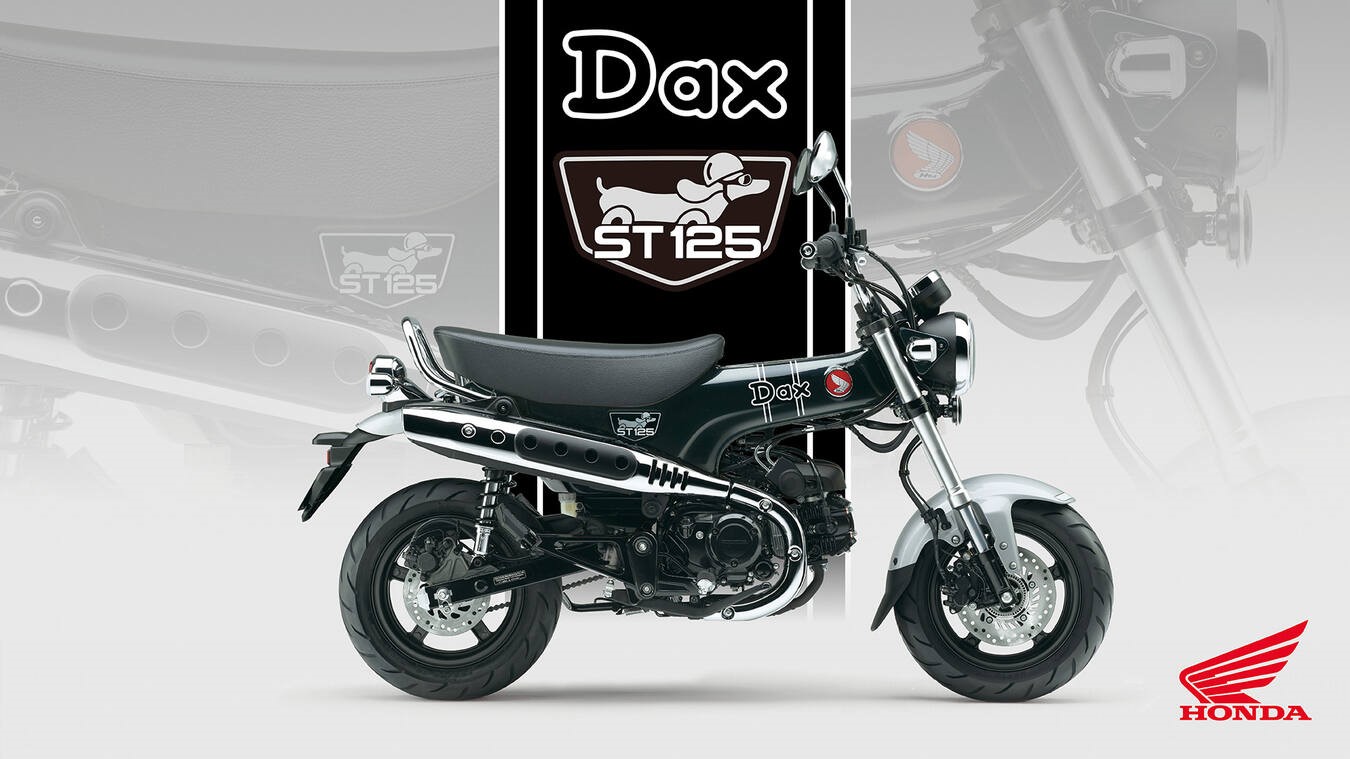
Model updates: Authentic, robust and offering simple riding pleasure, Honda’s Dax features a pressed steel frame, 31mm USD forks, 12-inch wheels and air-cooled SOHC two-valve engine with four-speed gearbox and centrifugal clutch. Full LED lighting, compact negative LCD display and pillion grab rail complete the full specification list, and the intangible and timeless appeal of the unmistakeable Dax styling is something no spec sheet can encapsulate. For 25YM it gains EURO5+ compliance plus funky new paint and looks set to carry on raising smiles across Europe.
- Introduction
- Model overview
- Key features
- Accessories
- Dax origins and milestones
- Technical specifications
1. Introduction
Honda’s pocketful of mini motorcycles strike a chord with young and old riders alike. The re-imagined Monkey 125 tugs at heart strings that remember the golden 1970s while providing thoroughly modern, compact and funky urban transport for riders of any age. The MSX125 Grom serves up left-field, customisable style for ‘Generation Y’ but also as perfect paddock transport in the worlds of car and bike racing.
In 23YM a new bike joined the fold. The ST125 Dax fully owned the genuine authenticity of the 1969 original* but brought thoroughly 21st century performance from chassis, engine and ergonomics. The most recent version of the Dax was produced from 1995 to 2003 for the Japanese market; the more recent European success of its siblings hastened its return, and its mischievous charm and easy-going riding proposition bless the ST125 Dax with an extra layer of desirability.
Of course, nostalgia plays a part in the Dax’s appeal to riders now in middle age – riders who may have owned one in their youth and are pleased to see it again. Equally, ‘retro’ is important to younger owners; that’s real retro, not faux. A certain style sets some machines apart and the Dax has just that in abundance thanks to the form of its iconic T-shaped frame. Which is also how the bike got its name: extending from under the seat to the handlebars, and sitting atop the small 12-inch wheels, the look is reminiscent of the universally adored Dachshund, or Sausage Dog, to give it its everyday English name…
Basically unchanged for 25YM – except for EURO5+ compliance and new paint – this small bike carries on as before, which means it’s unique, easy, usable and great fun. Just as it has always been.
*See Dax Origins and Milestones below.
2. Model Overview
As it should, the Dax keeps it simple. A steel frame provides strength and houses the fuel tank while 31mm USD forks, twin rear shocks and 12-inch wheels with chunky tyres provide light steering and good suspension performance. Braking is via hydraulic discs front and rear with ABS control.
Robust and fuel efficient, the 124cc SOHC two-valve engine’s power is linear in delivery with smooth torque. A centrifugal clutch manages shifting between the four ratios so there’s no need for a handlebar-mounted clutch lever. It offers twist-and-go simplicity with the added entertainment of changes via a traditional left-foot gear lever. EURO5+ compliance has also been built in for 25YM.
All lighting is LED and a circular LCD display shows exactly what the rider needs to know. The pillion gets a chromed grab rail, too. Accessories available include a clock and gear indicator display, rear carrier, side bag support, immobiliser alarm, USB socket and heated grips.
The 25YM Dax will be available in the following colour options:
- **NEW** Pearl Shining Black
- Pearl Cadet Gray
- Pearl Glittering Blue
–
3. Key Features
3.1 Styling & Equipment
- Chrome high-set handlebars and upswept exhaust muffler are Dax signature pieces
- Full LED lighting and LCD instrument display
- Chrome passenger grabrail
While the Dax is small, its proportions provide enough room to be comfortable for two adults to ride.
The styling really is the frame; everything is attached to, or held within it, giving the Dax its unmistakeable retro look. As do all the other parts; the thick dual seat – seat height is just 775mm – chrome high-set handlebars and the 1970’s dirt bike-inspired upswept muffler with drilled, slotted and chromed heat shield.
The frame’s mid-section wears a black stripe with ‘Dax’ picked out in quirky font, right next to the classic Honda Wing logo that marks its special heritage. A unique finishing touch comes in the form of a cartoon image of a Dachshund.
A chromed mudguard leads and sits below the evocative, circular headlight. To add extra charm to the light, signature round LEDs are used and the front indicators/position lights sit snugly in between low and high beams. The compact instrument display is a round, negative LCD while the rear taillight and indicators take their cues from the headlight and are also LED.
There’s a neat chrome grabrail for the passenger to hold while a cover seals the drive chain away from weather and loose clothing.
–
3.2 Chassis
- T-shaped pressed steel frame integral to handling and looks
- 31mm USD forks, twin rear shocks and 12-inch wheels provide a smooth ride
- Hydraulic disc braking front and rear with ABS
The iconic T-shaped frame design houses the fuel tank, is authentic in aesthetic detail and constructed in pressed-steel with modern engineering know-how. Rake and trail are set at 24.9°/84mm with wheelbase of 1200mm. Wet weight is just 107kg.
31mm USD forks provide supple suspension response and, combined with the wide upswept handlebar, easy steering. Twin rear shocks are tuned for smooth compliance, even with a pillion. Blacked-out 12-inch rims (from the super-cool MSX125 Grom) wear fat, balloon-like tyres; a 120mm wide front and 130mm rear. They add sure-footed grip allied to nimble agility.
Single-channel ABS manages braking force. Hydraulic front and rear calipers grip 220/190mm diameter discs respectively.
–
3.3 Engine
- 124cc, air-cooled SOHC two-valve design produces 6.9kW and 10.8Nm
- Stress-free centrifugal clutch and four-speed gearbox
- OBD2-2 sensor added for EURO5+ compliance, alongside updated catalyser and ECU settings
Drawn from the Super Cub C125 – so flexible, efficient and durable – the 124cc air-cooled engine features a SOHC two-valve cylinder head, with relatively long stroke and high compression; bore is set at 50mm, stroke at 63.1mm with compression ratio of 10.0:1. Peak power of 6.9kW arrives @ 7,000rpm, with peak torque of 10.8Nm @ 5,000rpm.
The engine’s strong performance means that even two-up a 90km/h cruising speed is achievable, with smart acceleration from low speed – just what’s needed for lively around-town amusement.
On the left-hand side of the bike the distinctive oval air box, filter and connecting tube ensure smooth, efficient airflow through the clean side, delivering crisp throttle response and driveability. The upswept muffler and heat shield is evocative of that golden motorcycling era of the ‘70s. An uprated catalyser, new ECU settings and addition of an OBD2-2 sensor ensure EURO5+ compliance.
In keeping with the laid-back, easy to ride feel the gearbox is a 4-speed unit (with neutral at the bottom) operated via centrifugal clutch, without the need for a clutch lever. At standstill the rider simply selects the gear required with the left-hand foot lever and, as the throttle is opened, the clutch operates automatically and does so through each ratio change, up or down.
Various low-friction technologies, like an offset cylinder and roller-rocker arms in the head, ensure impressive fuel economy of 66.7km/l (WMTC mode). This gives the Dax a range of approx. 250km from the 3.8L fuel tank.
–
4. Accessories
A comprehensive range of Genuine Honda Accessories is available for the Dax. To boost everyday useability, a rear chrome luggage rack is available alongside a deep, left-hand side canvas pannier completed with an included waterproof black fabric inner bag.
For added peace of mind in all weather, heated grips and a USB socket to keep personal devices charged are available.
–
5. Dax Origins
In 1967, The Monkey Z50M was introduced in response to the demand for a ‘leisure-oriented bike’ for the American and European markets. Although well received, especially in America, by adults and children alike, thanks to its adjustable seat height and foldable features which allowed it to be loaded into a car, for 1969 American Honda requested a larger bike for its customers, but one that was still filled with the spirit of Monkey.
After visiting the US to better understand the requirements, engineers, inspired by the T-shaped frame of the CS90, which was a very popular bike in Japan, developed the Dax to have lower and longer proportions (compared to the Monkey) that allowed adults to have a more relaxed riding position as well as ride two up. The fuel tank, wiring and other components were housed in the T-shaped frame to create a unique, but also simple – and now iconic – design.
–
5.1 Dax Milestones
1969 ST50/70 Dax Honda
Built for the export markets of Europe and the USA the original Dax was nifty, nimble and easy to ride. It appealed to both die-hard motorcyclists and recreational users as it was just plain fun. This is the bike that launched many two-wheeled journeys. The engine was based on the well-established Super Cub engine, but with the addition of modifications to both the intake and exhaust system to provide more torque at low-mid range. Available in both 50cc and 70cc versions, the Dax featured a 3-speed automatic centrifugal clutch, telescopic front suspension, hydraulic rear suspension and wide tyres with a unique tread pattern for stability and handling even when off-road.
1972 ST90 Mighty Dax
The ST90 Mighty Dax featured a more rigid T-shape frame, wider, more upright custom style ‘mini ape’ bars, high level front mudguard and a bigger engine that packed more speed and acceleration. The new larger 14in wheels came fitted with semi-off road pattern tyres to increase handling performance and stability, even when off-road.
1973 CY50 Nauty Dax
Aimed squarely at the RV (Recreational Vehicle) leisure market, the Nauty Dax was developed to offer even better riding performance and stability over rough terrain. Changes to the valve timing and the final drive – now with 4 speeds – increased torque in the low to midrange. With a new exhaust, fuel tank, side covers and unique rectangular shaped headlight, the Nauty Dax also featured a stepped seat and funky paint scheme. The new light and rigid diamond frame and the new fat balloon tyres made for easy rolling over rough campsite terrain.
1995 ST50 Dax
After 14 years, the Dax returned to the Japanese market. All the iconic design cues remained in place – a pressed steel backbone frame, telescopic suspension, wide foldable bars, chrome mudguard, muffler and block tyres – and were joined by the addition of a longer seat. The 50cc engine featured an automatic cam chain tensioner and magneto ignition for easy starting. Enjoying an eight-year production run, the ST50 Dax finally went off sale in 2003.
2022 ST125 Dax
Straight out of the traps with a useful, usable 124cc engine, four speed gearbox and centrifugal clutch the Dax makes a welcome return to the Honda minibike fold, joining the Monkey and MSX125 Grom.
–
6. Technical Specification
|
ENGINE |
|
|
Engine Type |
Air-cooled OHC 4-stroke 2-valve |
|
Engine Displacement |
124cc |
|
Bore x Stroke (mm) |
50.0 x 63.1 mm |
|
Compression Ratio |
10.0:1 |
|
Max. Power Output |
6.9 kW @ 7,000 rpm |
|
Max. Torque |
10.8 Nm @ 5,000 rpm |
|
Noise Level (dB) Stationary sound level |
78 dB |
|
Max Speed |
90 km/h |
|
Oil Capacity |
1.0 L |
|
Starter |
Electric |
|
FUEL SYSTEM |
|
|
Carburation |
PGM-FI electronic fuel injection |
|
Fuel Tank Capacity |
3.8 L |
|
CO2 Emissions WMTC |
35 g/km |
|
Fuel Consumption |
1.5 L/100km |
|
ELECTRICAL SYSTEM |
|
|
Battery Capacity |
12V 3.7Ah |
|
DRIVETRAIN |
|
|
Clutch Type |
Wet multiplate and automatic centrifugal clutch |
|
Transmission Type |
4 speed rotary |
|
FRAME |
|
|
Frame Type |
Press backbone frame |
|
CHASSIS |
|
|
Dimensions (L'W'H) |
1,760 x 760 x 1,020 mm |
|
Wheelbase |
1,200 mm |
|
Caster Angle |
24.9° |
|
Trail |
84 mm |
|
Seat Height |
775 mm |
|
Ground Clearance |
180 mm |
|
Kerb Weight |
107 kg |
|
Turning radius |
2m |
|
SUSPENSION |
|
|
Suspension Front |
Telescopic 31mm USD fork, 100mm axle travel |
|
Suspension Rear |
Twin shock, 120mm axle travel |
|
WHEELS |
|
|
Wheels Front |
5-spoke cast aluminium 12 X MT2.75 |
|
Wheels Rear |
5-spoke cast aluminium 12 X MT3.50 |
|
Tyres Front |
120/70-12M/C 51L |
|
Tyres Rear |
130/70-12M/C 56L |
|
BRAKES |
|
|
ABS Type |
Single Channel ABS |
|
Brakes Front |
Single 220mm hydraulic disc with IMU-based ABS |
|
Brakes Rear |
Single 190mm hydraulic disc |
|
INSTRUMENTS & ELECTRICS |
|
|
Instruments |
LCD |
|
Headlight |
LED |
|
Taillight |
LED |
– ENDS –
**All specifications are provisional and subject to change without notice**
Please note that the figures provided are results obtained by Honda under standardised testing conditions prescribed by WMTC. Tests are conducted on a rolling road using a standard version of the vehicle with only one rider and no additional optional equipment. Actual fuel consumption may vary depending on how you ride, how you maintain your vehicle, weather, road conditions, tire pressure, installation of accessories, cargo, rider and passenger weight, and other factors.
25YM HONDA MONKEY 125
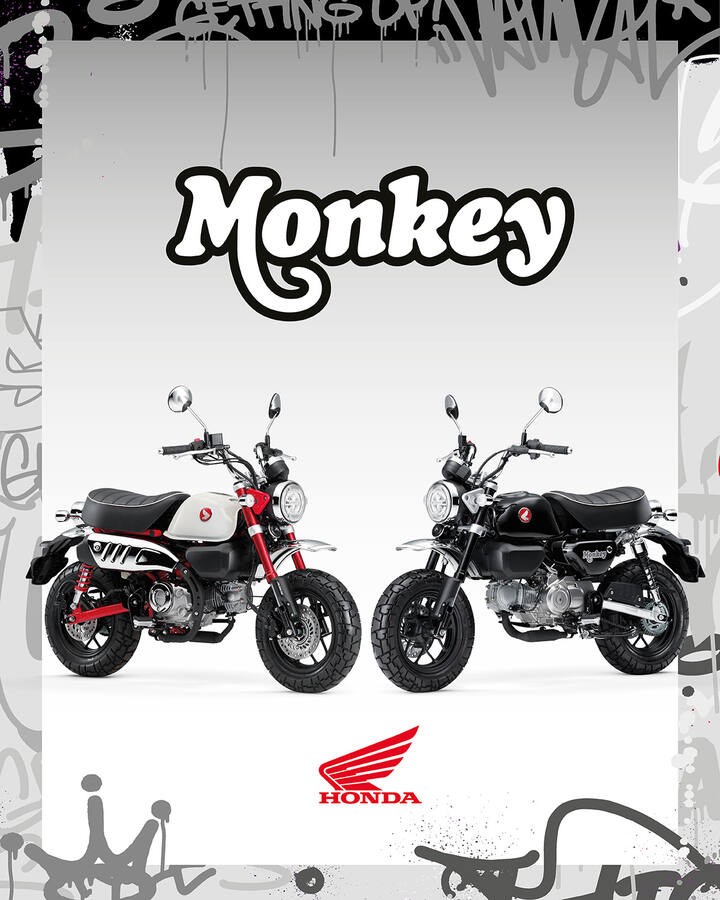
Model updates: Honda’s pocket-sized grin machine is set and ready to cheer up 2025. Specification includes air-cooled 124cc engine, five-speed gearbox, steel frame, USD forks, 12-inch wheels and IMU-controlled ABS braking. Full LED lighting and neat LCD dash are the premium finishing touches topped by a crisp – and suitably retro – new two-tone paint scheme.
Contents
- Introduction
- Model overview
- Key features
- Accessories
- Monkey milestones
- Technical specifications
1. Introduction
The Honda Monkey bike is perhaps most widely known as a groovy icon of the 1970s, but it first saw the light of day in 1961. Originally developed as a 49cc child’s plaything for Tama Tech, an amusement park in Tokyo, it proved so popular that a road-going version was developed, which was initially exported to America and Europe in 1963, with a distinctive chrome tank, folding handlebars and 5-inch diameter rigidly mounted wheels.
Its popularity was based on a cute, instantly-likable design, tiny dimensions and ultra-light weight – which made it a whole load of fun around town. By 1969 its wheels had increased to 8-inch in diameter and from 1970 it gained even greater popularity, when the addition of quick-detach forks meant it would fit into the trunk of a small car.
By 1978 – a point that marked the start of real prime time for the Monkey – the bike had been re-styled with a teardrop style fuel tank and became hugely popular with legions of RV (Recreational Vehicle) drivers in need of convenient transport to use once they were parked up. And this is where and when the cheeky Monkey really cemented its place in millions of hearts; with its 3-speed gearbox and centrifugal clutch (which needed no ‘traditional’ motorcycle skill to operate) it gave thousands of riders their first experience of twisting the throttle on a powered two-wheeler.
Because it was so much fun, and so easy to ride, it did more to sell the concept of motorcycles to a wider public than perhaps any other machine. With its chunky tyres, mini-‘ape’ style handlebars, miniscule fuel tank and big, squashy seat the Monkey look is unmistakably of its time, but – just like the affection in which it is held – also timeless.
And in 2018 the Monkey’s time came around once again. Inspired by the original (but also as a usefully fun 125cc motorcycle fit for the 21st century) a brand-new Monkey cheered up the roads of Europe. For 22YM the Monkey got an engine upgrade, an extra gear for the transmission, suspension refinements and detail improvements, widening its ‘smile’ factor and building-in extra day-to-day usability.
Nothing changes mechanically for 25YM apart from EURO5+ compliance, but brand-new paint options means that the pocket-sized Monkey fun has never looked so good.
–
2. Model Overview
The Monkey’s two-valve air-cooled engine produces 6.9kW power with 11Nm torque. It’s durable and easy to use while a 5-speed gearbox opens up longer rides. EURO5+ compliance has also been built in for 25YM. The steel frame, USD forks, twin rear shocks and 12-inch wheels roll smoothly; for extra safety the ABS braking is Inertial Measurement Unit (IMU) controlled.
Then, of course, there’s the inimitable Monkey look, correct from the mini-ape ’bars to upswept exhaust. It’s infectiously grin inducing – for the rider and everybody it passes. Exclusive accessories include a rear carrier, side bag support, USB socket and heated grips.
For 25YM the Monkey will be available in the following, suitably cool, paint options:
- **NEW** Sheen Silver Metallic and Pearl Shining Black
- **NEW** Millenium Red and Pearl Himalayas White
- **NEW** Turmeric Yellow and Knight Silver Metallic
–
3. Key Features
3.1 Engine
- 124cc air-cooled engine delivers 6.9kW power and 11Nm torque
- 5-speed gearbox for easy cruising speed
- O2 sensor added for EURO5+ compliance, alongside updated catalyser and ECU settings
The Monkey is equipped with an engine designed to ride and have fun on; 124cc, SOHC with 50mm bore, 63.1mm stroke and compression ratio of 10.0:1. It produces peak power of 6.9kW @ 6,750rpm with peak torque of 10.7Nm @ 5,500rpm.
A correcting plate manages the path of fresh air drawn in and feeds an intake duct inlet and connecting tube designed to smooth airflow. The shape of the airbox also promotes smooth airflow, smooth torque output and flexible drivability. EURO5+ compliance has been applied via revised ECU settings, updated catalyser and additional O2 sensor.
The 5-speed gearbox spreads its ratios apart for longer journey ease and provides a more relaxed cruising ability. Top speed is 91km/h. Manual clutch operation imparts a full-sized motorcycle experience while 12-inch wheels deliver agile around-town response. Naturally, the Monkey’s small stature and assured low-speed balance allow it an easy passage through jammed traffic.
It’s also an economical engine, returning 1.5 litres/100km (WMTC mode) by using low-friction technologies, such as an offset cylinder and roller-rocker arm for the valve gear. Sophisticated PGM-FI guarantees highly efficient combustion.
–
3.2 Styling & Equipment
- Cheeky style harks back to the 1970s with mini-ape handlebars and upswept exhaust
- Chunky tyres complete the look
- Circular LCD display includes fuel indicator.
Classic Monkey style (mini-ape handlebars, chromed mudguards, upswept exhaust with stamped heat shield, chunky tyres, padded seat and ‘peanut’ tank) pays loyal homage to the original and provides all the cues required to chime both with those of a certain age, and a much younger generation.
Older riders connect to a certain ’70s irreverence – maybe matched to a memory of their first feel of motorcycling freedom – innate in the design while newer riders, already turned on to all things retro, get both that and something undeniably funky to set them apart from their friends. One thing that unites everybody, whether riding a Monkey or simply passing one by, is the ‘smile’ factor. It’s that sort of bike.
The glossy 5.6L fuel tank proudly wears a historical 3-D Classic Wing design Honda logo. Modern technology is fully present amongst the classic looks: a digital full-LCD circular display features speedometer (which winks playfully when the ignition is turned on), odometer with two trip meters and six-segment fuel level indicator; all lighting is LED.
A ‘wave’ pattern key (which also wears the Classic Wing motif) features an ‘answer back’ system that makes the lights flash at the push of a button to allow easy location in crowded car parks.
–
3.3 Chassis
- Steel frame, USD forks and 12-inch diameter tyres
- Twin rear shocks feature two-stage springs to deal with rough surfaces
- Easy-to-manage 776mm seat height
The Monkey’s steel backbone frame is tuned for a suitable balance between rigidity and supple feel – perfect for the wide variety of conditions the machine is designed to be ridden in. Oval in cross-section, the swingarm echoes the circular design theme that runs through the bike.
Wheelbase is set at 1,145mm with rake and trail of 25°/82mm and a minimum turning radius of just 1.9m. Wet weight is 105kg, with a seat height of 776mm. The plush seat is made of high-density urethane for maximum comfort.
USD front forks employ 100mm travel and wear a premium Alumite finish. The dual rear shocks feature two-stage colour matched springs to maintain ride quality on bumper roads and reduced bottoming. They have 102mm of axle travel; maximum ground clearance is 175mm.
A single 220mm front disc and 190mm rear provide secure stopping performance, managed by the IMU-based ABS to mitigate rear ‘lift’ under strong braking. Fat, block pattern tyres make for a smooth ride and are sized 120/80-12 65J front and 130/80-12 69J rear.
–
4. Accessories
A comprehensive range of Genuine Honda Accessories are available for the Monkey. To boost everyday useability, a rear chrome luggage carrier is available alongside a deep, left hand side canvas pannier completed with an included waterproof black fabric inner bag.
For added peace of mind heated grips and a USB socket to keep personal devices charged. Everyday practicality can be boosted through the addition of the optional clock and gear position sub-meter.
–
5. Monkey Milestones
1961 Z100
First model – made for use at amusement parks – with 5-inch wheels, rigid suspension, foldable handlebars and Super Cub (C50) 3.1kW OHV 49cc engine. Backbone frame, triangular tank.
1963 CZ100
First road-going model – exported to North America and Europe.
1967 Z50M
First model sold in Japan – with ‘fold-down’ seat, handlebars and pegs to fit in the back of the car (the new fuel cap also added to prevent leaks when stored on its side during transport). Centrifugal clutch.
1969 Z50A
Telescopic front fork, 8” front wheels, low slung exhaust and indicators for the first time.
1970 Z50Z
Quick-detach front suspension to make it fold down even smaller to fit in the trunk of a small car. Centre stand to support the bike during the removal of forks.
1974 Z50J
Rear suspension and independent swing arm. First trapezium fuel tank and block tyres.
1978 (Z50J-I)
First model with custom bike style ‘tear drop’ fuel tank with increased capacity of 5L.
1979 (Z50J-I)
Chrome plated edition.
1984 (Z50J-I)
Limited edition ‘Gold’ model.
1985 A-Z50J
First appearance of hand operated clutch.
1987 A-AB22
‘R’ model with twin tube frame, single shock rear suspension and hydraulic front brake disc. 10-inch Comstar wheels with box section swingarm.
1988 A-Z50J
Dual mirrors for the first time.
1991 A-Z50J
Off-road styled ‘Baja’ model with twin headlights.
2000 Millennium model
Produced to mark the turn of the century.
2004 Freddie Spencer Special
In colours based on the CB750F ridden to victory in the Daytona 100 by Freddie Spencer.
2006
40th Anniversary special.
2009 Monkey Limited Edition JBH-AB27
First fuel-injected version, with roller rocker arm and off-set cylinder; with trapezium shaped fuel tank.
2017 50th Anniversary Edition
Commemorating the 50th anniversary of sales in Japan.
2018 Monkey 125
An all-new Monkey 125, re-imagined for the 21st century, takes to the roads of Europe.
2022 Monkey 125
A fifth gear for the engine – plus a power boost – gave Honda’s little bike longer legs, making it more useful for longer rides.
–
6. Technical Specifications
|
ENGINE |
|
|
Engine Type |
Air-cooled 2-valve OHC single cylinder |
|
Engine Displacement |
124 cc |
|
Bore x Stroke (mm) |
50.0 mm x 63.1 mm |
|
Compression Ratio |
10.0:1 |
|
Max. Power Output |
6.9 kW @ 6,750 rpm |
|
Max. Torque |
10.7 Nm @ 5,500 rpm |
|
Stationary Noise Level (dB) |
79 dB |
|
Max Speed |
91 km/h |
|
Oil Capacity |
1.1 L |
|
Starter |
E-Starter |
|
FUEL SYSTEM |
|
|
Carburation |
PGM-FI Fuel Injection |
|
Fuel Tank Capacity |
5.6 L |
|
CO2 Emissions WMTC |
35 g/km |
|
Fuel Consumption |
1.5 L/100km |
|
ELECTRICAL SYSTEM |
|
|
Battery Type |
AGM |
|
Battery Capacity |
12V 3.7 Ah (20HR) |
|
DRIVETRAIN |
|
|
Clutch Type |
Wet multiplate |
|
Transmission Type |
5-speed |
|
FRAME |
|
|
Frame Type |
Steel mono-backbone frame |
|
CHASSIS |
|
|
Dimensions (L'W'H) |
1,710 mm x 755 mm x 1,030 mm |
|
Wheelbase |
1,145 mm |
|
Caster Angle |
25° |
|
Trail |
82 mm |
|
Seat Height |
776 mm |
|
Ground Clearance |
175 mm |
|
Kerb Weight |
105 kg |
|
Turning radius |
1.9 m |
|
SUSPENSION |
|
|
Suspension Front |
USD fork 100 mm travel |
|
Suspension Rear |
Swingarm twin shock 102 mm travel |
|
WHEELS |
|
|
Wheels Front |
12 X MT2.75 10-spoke cast aluminium |
|
Wheels Rear |
12 X MT3.50 10-spoke cast aluminium |
|
Tyres Front |
120/80-12 65J |
|
Tyres Rear |
130/80-12 69J |
|
BRAKES |
|
|
ABS Type |
IMU based front ABS |
|
Brakes Front |
Dual-piston caliper. Single 220 mm disc |
|
Brakes Rear |
Single-piston caliper. Single 190 mm disc |
|
INSTRUMENTS & ELECTRICS |
|
|
Instruments |
Round LCD |
|
Headlight |
LED |
|
Taillight |
LED |